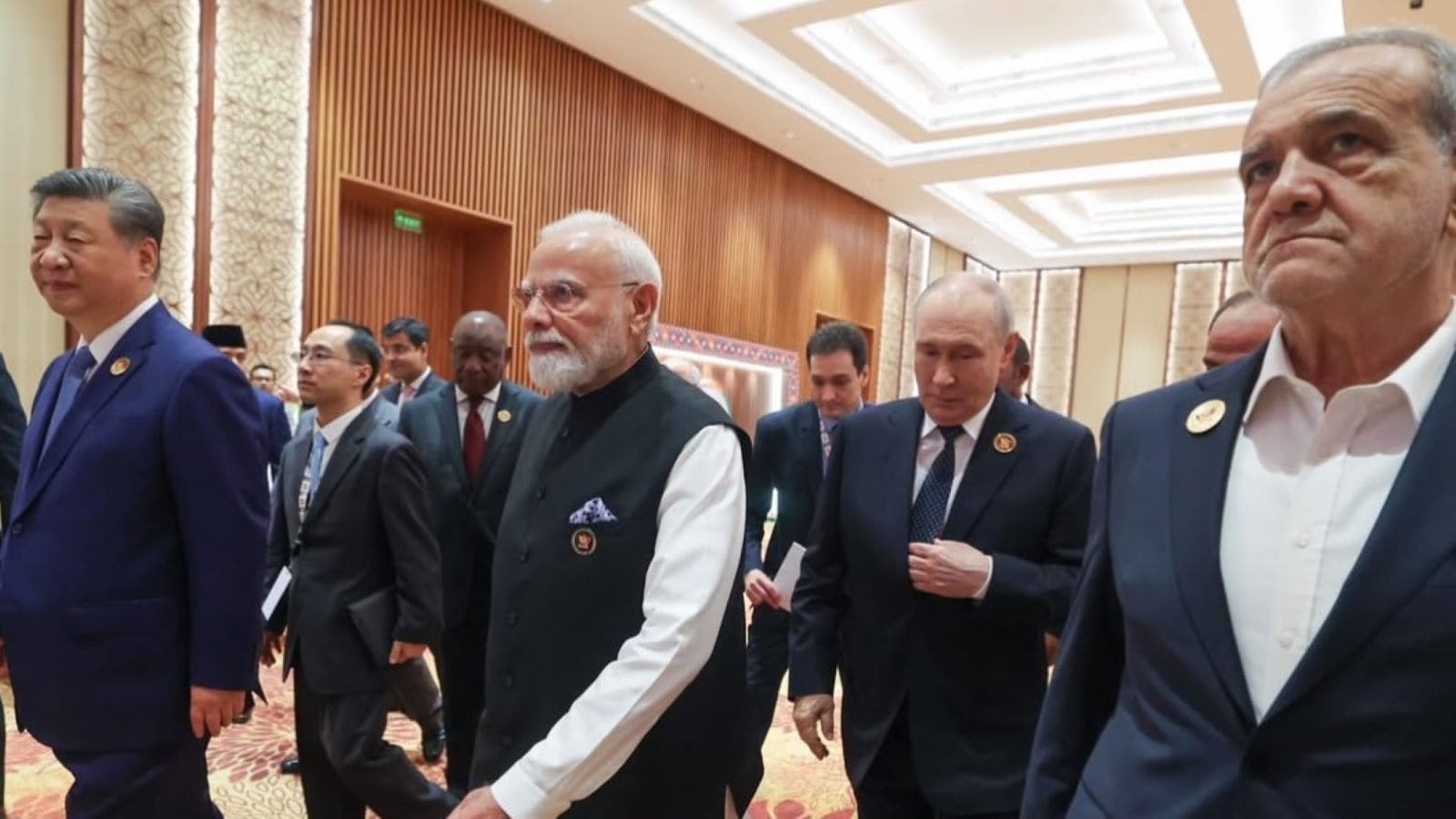
The unanimous adoption of the New Delhi Declaration at the 18th BRICS Summit in September 2026 was hailed by mainstream reports as a major diplomatic triumph for Prime Minister Narendra Modi. Yet beneath the veneer of handshakes at Bharat Mandapam and proclamations of unyielding solidarity, the reality of the bloc tells a far more complicated story. Sherpas and foreign ministry negotiators spent grueling nights running on zero sleep until the early hours of Saturday morning just to salvage a joint statement. The primary friction point was not abstract trade theory, but an acute regional crisis: the bitter diplomatic fallout between Iran and the United Arab Emirates following the outbreak of the US-Iran war earlier that year.
For an expanded bloc now juggling eleven distinct national interests, manufacturing consensus is no longer an administrative exercise. It is high-stakes diplomatic surgery.
The Mechanics of an Fragile Consensus
To understand why the New Delhi Declaration matters, one must examine how close it came to complete collapse. Foreign ministers had previously met under India's chairship and failed to produce a unified communiqué, primarily due to irreconcilable positions on West Asian security architecture. Tehran and Abu Dhabi arrived in New Delhi locked in deep antagonism following months of regional cross-fire. India’s diplomatic machinery had to pull off a delicate balancing act, maintaining traditional partnerships with Persian Gulf capitals while keeping the expanded coalition from fracturing along sectarian and geopolitical fault lines.
The resulting text addresses this by leaning heavily on generalized calls for maximum restraint, dialogue, and adherence to international law. But broad diplomatic phrasing often masks underlying paralysis. When member states with divergent security dependencies sit at the same table, the lowest common denominator becomes the only currency they can afford to trade.
Weaponized Tariffs and the Structural Defiance of Global Trade
Beyond regional security flashpoints, the New Delhi Declaration targeted the architecture of global commerce with unusual bluntness. The bloc issued a sharp rebuke against unilateral tariff and non-tariff measures, explicitly calling out practices that bypass World Trade Organization rules.
For years, developing economies have watched trade multilateralism erode under the weight of protectionist policies and secondary sanctions. The declaration calls for the immediate restoration of a fully functioning, two-tier binding WTO dispute settlement mechanism and the appointment of stalled Appellate Body members. Critics often dismiss these declarations as rhetorical posturing, but the economic weight of the expanded BRICS gives these grievances teeth. When nations representing a massive share of global GDP and critical supply chains formally declare that unilateral coercive measures undermine international law, the signaling ripples directly through international financial markets.
Terrorism, Geopolitics, and the Weight of Specificity
Unlike previous joint communiqués that often relied on bloodless boilerplate regarding security threats, the New Delhi Declaration forced specific historical grievances into the open. The document explicitly condemned the April 2025 terrorist attack in Pahalgam, Jammu and Kashmir, which claimed twenty-six civilian lives.
By inserting direct references to cross-border terrorism, terrorism financing, and safe havens into a multilateral consensus document, New Delhi ensured its primary national security concern received bloc-wide endorsement. This inclusion required careful diplomatic navigation, proving that India leveraged its chairship to align multilateral priorities with its core strategic doctrines. Yet, whether this collective condemnation translates into synchronized counter-terrorism frameworks across member states remains an entirely separate question, given the divergent intelligence-sharing priorities within the group.
The Illusion of a Uniform Counterweight
Mainstream commentary frequently frames BRICS as a monolith poised to dismantle Western financial hegemony. The reality on the ground in New Delhi exposed the limits of that narrative. While the declaration advocates for practical solutions for cross-border payments and resilient economic integration, it avoids committing to a concrete timeline for a unified currency or an outright abandonment of traditional financial systems.
Internal friction remains an unacknowledged anchor on the bloc's ambitions. Bilateral friction points, such as the persistent strategic competition between New Delhi and Beijing, continually test the structural integrity of the grouping. Even as Modi and Xi Jinping reaffirmed the importance of mutual respect, mutual sensitivity, and mutual interest on the sidelines of the summit, structural mistrust cannot be erased by a joint photo opportunity.
The New Delhi Declaration successfully papered over the cracks, proving that the grouping's members still find immense utility in projecting collective strength to the Global South. Whether that projection can survive the next major geopolitical shock test is a question the declaration conveniently leaves unanswered.


