Breath.
We take twenty thousand of them every single day without once considering the sheer mechanical violence required to pull oxygen across a microscopic membrane into our bloodstream, until a wall of superheated carbon monoxide steals the privilege away in a fraction of a second.
Consider a hypothetical nineteen-year-old private—let us call him Marcus—lying in a sterile intensive care bed in Edmonton, two hundred kilometers northwest of the prairie garrison where his lungs were scorched. He went to sleep expecting the mundane ache of morning physical training, the smell of damp wool, and the endless, flat horizon of east-central Alberta. Instead, he woke up to the rhythmic, mechanical hiss of a positive-pressure ventilator doing the only job his body can no longer perform on its own.
Around him, fourteen other Canadian soldiers are fighting the exact same silent war. Nine of them are clinging to life in critical condition.
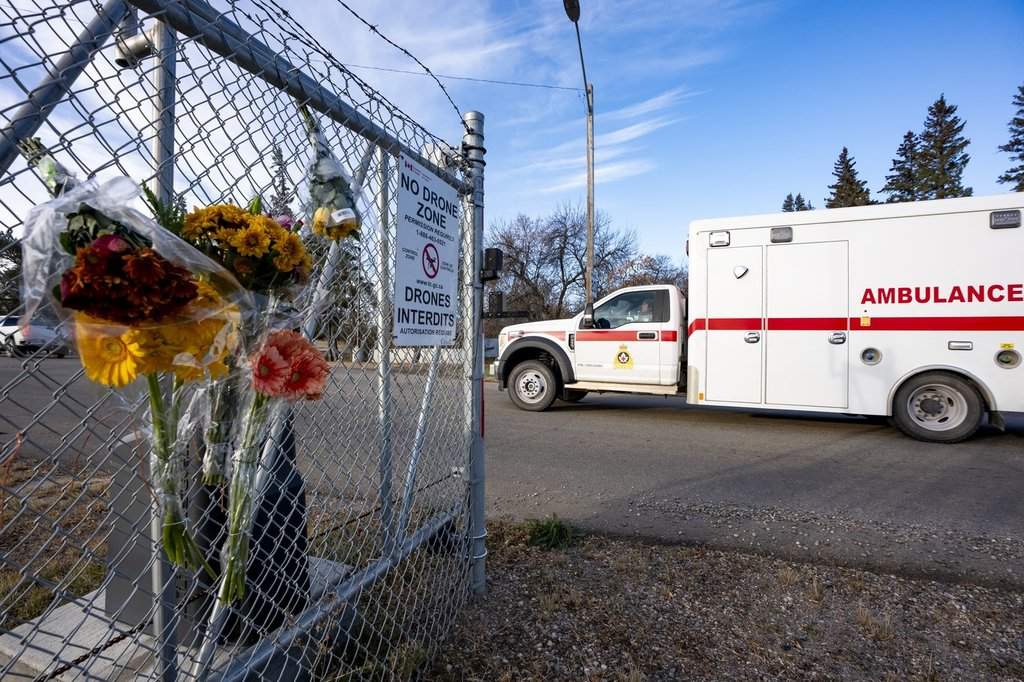
When news broke of the deadly fire at Canadian Forces Base Wainwright, the initial dispatches read like every other breaking emergency bulletin: cold numbers, clinical classifications, and official statements from defense spokespeople. One dead. Fifteen on ventilators. Nine critical. Those numbers are real, verified, and devastating, yet they suffer from a fatal flaw—they sanitize the horror. Numbers allow us to nod sympathetically over our morning coffee and scroll past, completely insulated from what happens inside a military barracks when fire turns a place of rest into a sealed furnace.
The Architecture of a Trap
To understand why a fire at CFB Wainwright carries such catastrophic weight, you have to understand the geography of endurance. Located roughly two hours southeast of Edmonton, Wainwright is not a ceremonial posting with manicured lawns and stone monuments. It is the beating, dust-choked heart of Canadian Army training—a sprawling expanse of scrub brush, tank tracks, and modular housing where thousands of troops cycle through every year to prepare for deployment.
I have spent nights in temporary garrison quarters not unlike the ones that burned in Alberta, and there is a specific, heavy stillness to a barracks at three in the morning. You are surrounded by dozens of exhausted bodies, sleeping behind thin doors, separated from the outside world by long, narrow corridors designed for efficiency rather than grace. When you are twenty years old and worn down to the bone from field exercises, you do not sleep lightly. You drop into a coma-like exhaustion, trusting completely in the walls around you and the watchfulness of the institution you serve.
Now, picture what happens when ignition occurs in that environment.
Modern military quarters, despite rigorous safety inspections, contain dense concentrations of synthetic materials—foam mattresses, polymer gear bags, treated fabrics, and electronics. When those materials burn, they do not produce the clean wood smoke of a campfire. They release a dense, black, neurotoxic cocktail of hydrogen cyanide, carbon monoxide, and superheated gases that can reach six hundred degrees Celsius near the ceiling within three minutes.
One inhale of that air does not merely make you cough. It sears the delicate mucosal lining of your trachea like boiling water, triggering an immediate, catastrophic swelling that slams the airway shut before you can even reach the doorframe.
What "On a Ventilator" Actually Means
When the headlines tell us that fifteen soldiers are on ventilators, most civilians picture someone peacefully asleep while a machine gently helps them rest. That is a comforting fiction. The reality of acute inhalation injury is a brutal, hour-by-hour negotiation with cellular collapse.
Think of the human lung not as a pair of empty balloons, but as an upside-down tree with millions of microscopic, wet grapes hanging from the finest twigs. Those tiny sacs, called alveoli, are where oxygen crosses into your blood. In a healthy body, a delicate soap-like fluid keeps those sacs from sticking together every time you exhale.
Superheated smoke strips that fluid away in seconds.
Without it, the alveoli collapse like wet paper bags, and the damaged blood vessels begin weeping fluid directly into the lungs. The patient is effectively drowning from the inside out, even while lying in a dry hospital bed. To keep those fifteen soldiers alive, medical teams in Edmonton and surrounding trauma centers have had to sedate them deeply, thread rigid plastic tubes past their swollen vocal cords, and use mechanical ventilators to force pressurized, oxygen-rich air deep into tissue that wants desperately to shut down.
And for the nine soldiers listed in critical condition, the danger is not static. Inhalation injuries are notorious for a cruel, delayed ambush. A soldier can walk out of a burning building looking relatively unscathed—perhaps coughing up a little black soot, complaining of a raspy voice—only for their airways to swell completely shut twelve hours later. Doctors call it the silent progression, and it turns every single hour in the intensive care unit into a high-stakes vigil.
The Invisible Weight on the Unit
Military culture is built entirely on the architecture of mutual survival. From the first day of basic training, soldiers are stripped of their individual instincts and rewired to think as a single organism. You do not leave a flank exposed. You do not sleep until your buddy has ammunition. You share the mud, the cold, and the boredom equally.
That bond is an extraordinary weapon in combat, yet it becomes an agonizing liability when tragedy strikes at home.
Consider what is happening right now inside the surviving ranks at CFB Wainwright. Unlike a civilian apartment fire, where neighbors might barely know each other's last names, the men and women who escaped that building knew the exact cadence of the victims' footsteps. They knew who kept a photo of a newborn taped inside their locker, who always burned the coffee in the morning, and who cracked jokes when the rain turned the training fields into knee-deep clay.
Survivor's guilt in a tight-knit military unit does not arrive as a quiet sadness; it arrives as an accusation. Every soldier who made it through the smoke is replaying those thirty seconds in the dark, asking the same unanswerable questions. Did I check the bunk next to mine? Could I have held the door open three seconds longer? Why did my lungs clear while his closed?
And then there is the silence of the families. Across Canada, mothers, fathers, and spouses received the kind of late-night phone call that divides a life neatly into a before and an after. They boarded emergency flights to Alberta with half-packed suitcases, sitting in sterile hospital waiting rooms where the only sound is the hum of vending machines and the soft footsteps of trauma nurses walking down linoleum halls.
Why Home-Soil Tragedies Cut Differently
We have a cultural script for soldiers who fall overseas. We understand the grammar of foreign deployments, armored convoys, and distant horizons. There is a tragic, painful logic to risk when it happens in a combat zone.
A barracks fire in Alberta violates that entire moral contract.
When young men and women sign up to serve, they accept the possibility of danger in the field, yet they assume that the garrison itself—the place where they hang up their rucksacks and close their eyes—is a sanctuary. When that sanctuary fails, it exposes a profound vulnerability at the heart of military life. Even the most formidable defense force on earth is still bound by the unforgiving laws of physics, aging infrastructure, and split-second human fate.
Investigative teams from the Canadian Forces National Investigation Service and fire marshals are now combing through the charred remains of the Wainwright structure, examining electrical conduits, smoke suppression systems, and structural materials. Their findings will eventually fill hundreds of pages of technical reports, leading to updated building codes, stricter inspections, and revised emergency protocols across every base in the country. Those reforms are necessary, urgent, and non-negotiable.
Yet no engineering report can restore the life that was lost in the flames, nor can it accelerate the agonizingly slow healing of scarred lung tissue.
The Long Road Out of the Dark
Recovery from severe smoke inhalation is not measured in days; it is measured in seasons. Even after the breathing tubes are finally removed and the ventilators are wheeled out of the room, the soldiers who survive this fire will face months of grueling respiratory therapy, vocal cord rehabilitation, and psychological trauma that lingers long after the smell of smoke has washed out of their skin.
To walk out of an intensive care unit after a catastrophic fire is to relearn the most basic functions of being human—how to swallow without choking, how to speak above a whisper, how to climb a single flight of stairs without your chest feeling as though it is wrapped in iron bands.
Right now, in darkened hospital rooms across Alberta, monitors are blinking in steady, green arcs. Nurses are adjusting drip lines, checking oxygen saturation levels, and watching the slight rise and fall of chests beneath white cotton sheets. Outside, the prairie wind sweeps across the empty training grounds of CFB Wainwright, indifferent to the silence left behind in the barracks.
Fifteen soldiers are fighting for every single breath, and somewhere down a quiet hospital corridor, a mother is holding her son's hand, waiting for the machine to finally fall silent so he can breathe on his own.