Most commodity traders treat Brazilian elections like simple binary bets on the real or the Ibovespa index. That's a rookie mistake.
When voters in Brazil head to the ballot box, they aren't just picking a president or shuffling seats in Brasília. They're rewriting the operating rules for the world's largest soy exporter, one of the few viable alternatives to Chinese rare earth dominance, and a rapidly expanding offshore oil powerhouse. If you run a supply chain, manage an energy desk, or track agricultural inputs, the political pendulum in Brazil directly dictates your margins for the next four years.
I've watched procurement teams get blindsided by Brasília's policy swings more times than I can count. They focus on headline GDP numbers while ignoring quiet regulatory changes at the National Mining Agency (ANM) or subtle tax tweaks on crude exports. Let's break down what actually moves when Brazil votes, why the market misprices the fallout, and how you can position yourself before the next legislative session begins.
Why Brasília Holds the Keys to Global Resource Flows
Brazil sits in a rare geopolitical sweet spot. It isn't firmly locked into the US orbit, nor is it a junior partner to Beijing, even though China buys roughly a third of its exports. That diplomatic balancing act gives whichever administration holds the Planalto Palace enormous pricing power over physical commodities.
Think about the sheer scale here. According to the U.S. Department of Agriculture (USDA), Brazil accounts for over half of global soybean exports. In energy, Petrobras and international majors operating in the pre-salt basins have pushed Brazil into the top tier of non-OPEC oil producers. Meanwhile, the U.S. Geological Survey (USGS) ranks Brazil among the top three countries globally for rare earth reserves, holding roughly 21 million metric tons.
Yet the rules governing how these materials leave the country change drastically depending on who controls Congress and the presidency.
A market-friendly, fiscally conservative administration tends to fast-track environmental licensing, privatize port infrastructure, and keep export taxes at zero. A populist or state-interventionist government leans into local content mandates, slaps windfall taxes on crude oil, tightens enforcement on the Amazon and Cerrado biomes, and pushes for domestic value-added processing before raw minerals leave the port of Santos.
Neither approach stops the flow of resources completely. Ships still sail. What changes is the cost structure, the speed of permitting, and which international buyers get first dibs on long-term offtake agreements.
Soybeans and the Friction Between Yield and Deforestation Rules
If you want to see how fast Brazilian politics hits global food prices, look at the soybean belt in Mato Grosso and Goiás.
On paper, Brazilian agribusiness—known locally as the bancada ruralista—is an unstoppable lobbying machine. Regardless of who sits in the presidential chair, the agricultural caucus holds massive sway in Congress. They secure subsidized credit through the Plano Safra and block legislation that threatens land tenure.
So why does the vote matter so much for soy? Two words: compliance and logistics.
When an administration prioritizes environmental enforcement, agencies like IBAMA receive bigger budgets and sharper teeth. Satellite monitoring ramps up. Farms flagged for illegal clearing in the Amazon or the Cerrado get hit with embargoes, cutting them off from state-backed financing and blocking their beans from major trading houses like Cargill, Bunge, and ADM.
At the same time, European buyers operate under strict anti-deforestation import regulations (such as the EU Deforestation Regulation, or EUDR). A Brazilian president who clashes openly with Brussels over sovereignty and environmental standards creates friction that slows down certification systems. Traders end up splitting supply chains—routing fully traceable, deforestation-free soy to Europe at a premium while sending conventional cargoes to Asian crushers.
Then there's the infrastructure bottleneck. Brazil's harvest doesn't fail in the field; it gets stuck on muddy highways like the BR-163 or backed up at northern ports in Arco Norte. State-led governments favor public-private partnerships with heavy regulatory oversight, which often stalls road paving and rail concessions like the Ferrogrão railway. Pro-market administrations strip back the red tape, accelerating export capacity and depressing global basis prices.
If you're buying soy meal or vegetable oil, don't just watch rainfall in Paraná. Watch the federal budget allocated to the Ministry of Transport and the Ministry of Environment right after an election. That tells you whether export costs are heading up or down.
The Rare Earths Gamble Nobody Outside Mining Talks About
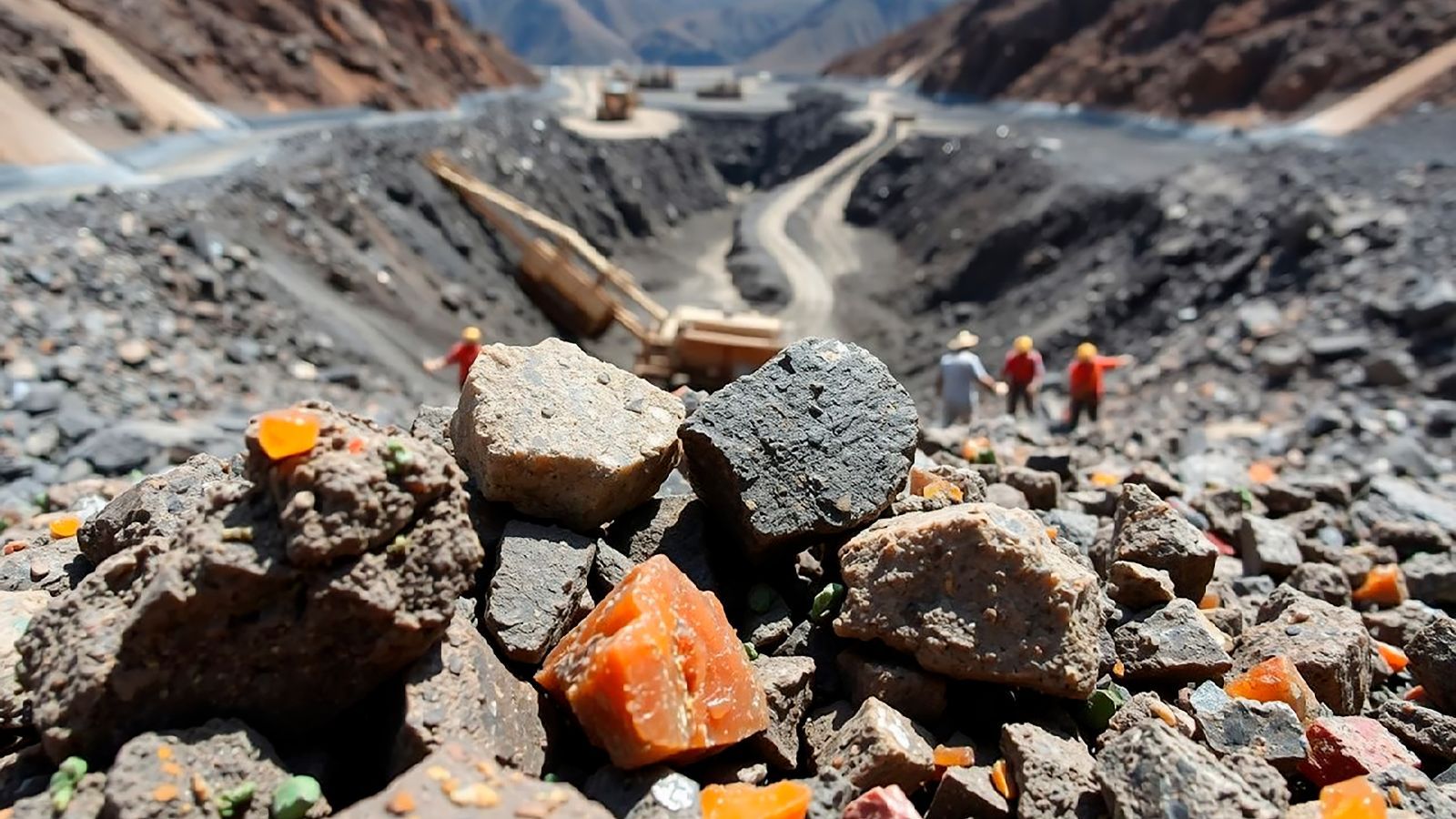
Everyone in Washington and Brussels wants to break China's stranglehold on rare earth elements—the neodymium, praseodymium, and dysprosium needed for EV motors, wind turbines, and defense systems. Brazil has the geology to make that happen, particularly in ionic clay deposits in states like Minas Gerais and Goiás, which are much cheaper and cleaner to process than hard-rock deposits.
Projects like Serra Verde have already started commercial production, proving Brazil can supply critical minerals outside the Chinese ecosystem.
Here is where the election throws a wrench into Western supply chain planning.
Mining in Brazil operates under a federal concession model. While the geology is world-class, the permitting timeline is brutal—often stretching seven to ten years from discovery to first production. An administration focused on resource nationalism immediately looks at rare earths and asks a simple question: Why are we shipping raw carbonate concentrate abroad so someone else can capture the margin?
When that mindset takes over in Brasília, you see immediate pushback against exporting unprocessed critical minerals. Lawmakers start drafting bills requiring domestic refining capacity, higher royalty rates (known as CFEM), and stricter indigenous land consultation protocols.
For Western automakers and defense contractors trying to sign long-term offtake deals, political shifts create massive financing headaches. Development banks like the U.S. International Development Finance Corporation (DFC) want regulatory certainty before writing nine-figure checks. If a new Brazilian Congress threatens to rewrite mining codes or hike royalties mid-construction, capital freezes.
Honestly, most energy transition models assume Brazilian rare earth output will scale smoothly through 2030. That assumption ignores how easily a populist shift in Brasília can trap those minerals in regulatory limbo—or push miners back toward Chinese buyers who are willing to accept higher political risk and fund the processing plants themselves.
Crude Oil, Biofuels, and the Petrobras Tug-of-War
Nowhere is the ideological divide in Brazilian politics more visible—or more expensive for global markets—than in the energy sector.
Brazil’s offshore pre-salt fields produce some of the lowest-cost, lowest-carbon-intensity crude in the world. Because Petrobras is state-controlled, every presidential election doubles as a referendum on the company's strategy.
Under a free-market mandate, Petrobras sells off refineries, focuses strictly on high-margin deepwater exploration, tracks international import parity pricing for domestic fuel, and pays out massive dividends. Global oil markets love this setup because it maximizes Brazilian crude exports and keeps investment flowing into floating production storage and offloading (FPSO) vessels.
Flip the political script, and the playbook changes overnight.
A state-interventionist administration views Petrobras as an engine for national development and inflation control. Instead of exporting raw crude and importing refined diesel, the government orders Petrobras to pour billions into building domestic refineries—projects that historically suffer from massive cost overruns. They scrap import parity pricing, forcing the company to subsidize gasoline and diesel at the pump whenever global oil spikes.
For global fuel markets, that shift does two things at once:
- It reduces the volume of Brazilian sweet crude hitting the Atlantic Basin spot market because more barrels stay home for domestic refining.
- It alters global diesel and gasoline trade flows. When Brazil subsidizes local fuel prices, independent importers get priced out of the market, forcing Petrobras to absorb the import losses and distorting Atlantic shipping rates.
And don't forget ethanol and biodiesel. Brazil is the undisputed king of sugarcane ethanol, and its RenovaBio program sets carbon credit targets for fuel distributors. Political shifts determine the mandatory blending ratios for biodiesel in diesel (the B14/B15 mandates) and anhydrous ethanol in gasoline. Raising the biodiesel blend by just one percentage point absorbs millions of tons of soybean oil domestically, tightening global vegetable oil supplies almost instantly.
How China and the West Play the Brasília Chessboard
A common misconception among U.S. commentators is that a left-leaning Brazilian president automatically aligns with China, while a right-leaning one aligns with the United States.
That's far too simplistic. In reality, Brazil’s foreign policy establishment at Itamaraty prides itself on pragmatic non-alignment.
Even conservative leaders who bash Beijing on the campaign trail quickly realize they cannot alienate the buyer that absorbs over 70% of Brazil's soybean exports and huge volumes of iron ore and crude. Conversely, left-leaning presidents welcome Chinese infrastructure investment in ports and power grids, yet still court European green funds and American tech capital.
The real shift isn't about picking one superpower over the other. It's about terms of trade.
When Brazil leans toward economic nationalism, it demands technology transfer and local industrial investment as the price of admission. Chinese state-owned enterprises—like State Grid, BYD, and major grain traders like COFCO—are uniquely equipped to play that game because they operate on long-term state-backed timelines. Western publicly traded companies, obsessed with quarterly earnings and strict ESG compliance, often balk at building local factories just to secure mineral or agricultural access.
That asymmetry means political shifts toward heavier state involvement in Brazil naturally tilt resource flows eastward, even without an explicit anti-Western policy.
What You Should Actually Watch After the Votes Are Counted
Stop wasting time reading generic political commentary about speeches and approval ratings. If your business touches agriculture, critical minerals, or energy, track the specific operational levers that move physical supply.
- The Petrobras Board and Capex Plan. Watch who gets appointed CEO and CFO, and look at the five-year strategic plan. If capital expenditure shifts heavily from exploration and production (E&P) toward refining and fertilizer plants, expect tighter crude exports and distorted South American fuel margins.
- B30 and Biodiesel Blending Mandates. Keep a close eye on the National Energy Policy Council (CNPE). Any move to accelerate mandatory biodiesel blending directly cannibalizes Brazilian soybean oil exports, driving up global edible oil prices from Chicago to Kuala Lumpur.
- ANM Staffing and CFEM Royalty Proposals. For rare earths and lithium, track the budget of the National Mining Agency. A starved agency means multi-year permitting backlogs regardless of how rich the ore body is. Also watch Congress for any bills proposing export taxes on unprocessed mineral concentrates.
- IBAMA Enforcement Budgets and Plano Safra Rates. Look at the interest rates and environmental strings attached to the annual Plano Safra farm credit package. High enforcement paired with strict compliance rules will widen the price spread between certified sustainable soy and conventional cargoes.
Brazil isn't going to stop feeding, fueling, and electrifying the world. Its resource base is simply too massive to sideline. Your job isn't to predict who wins the next election—it's to map how the winners' regulatory instincts will tax, delay, or reroute the commodities your bottom line depends on. Adjust your hedging and supplier diversification before the new cabinet takes office, not after the port queues start building.