Brazil's 2026 presidential election broke a four-decade structural rule: for the first time since the end of the military dictatorship in 1985, the candidate who finished second in the first round captured the presidency in the runoff. Standard election coverage frames the contest between incumbent Luiz Inácio Lula da Silva and Senator Flávio Bolsonaro as a clash of personalities or ideological tribes. That framing misses the operational reality. The outcome was determined by three measurable mechanisms: voter abstention compression between rounds, asymmetric scandal absorption during the final runoff window, and extreme fiscal-institutional constraints that immediately neutralize executive mandate power.
The Turnout Inversion Mechanism
In two-round runoff systems, the first-round leader holds a structural psychological and organizational advantage, particularly in a mandatory-voting jurisdiction like Brazil where abstention represents active disengagement rather than passive friction. During the first round of the 2026 election, Flávio Bolsonaro of the Liberal Party (PL) outperformed pre-election expectations, capturing roughly 47 percent of valid votes against Lula’s 45 percent—a raw deficit of approximately 2.2 million votes for the Workers' Party (PT) incumbent.
Reversing a 2.2-million-vote deficit in a polarized electorate where undecided voters represent a single-digit fraction requires either massive vote-switching or targeted turnout mobilization. The data from the October 25 runoff demonstrates that Lula executed the latter.
- Abstention Compression: Between the first and second rounds, national voter abstention dropped from 21.08 percent to 19.21 percent. This marked the lowest runoff abstention rate since 2006, injecting roughly 3 million additional ballots into the electorate.
- Net Margin Reversal: Lula secured 51.79 percent of valid votes in the runoff against Bolsonaro’s 48.21 percent, translating to a victory margin of over 4.3 to 4.4 million votes.
- Asymmetric Mobilization Yield: Adding 3 million net voters while swinging the total margin by roughly 6.5 million votes (from minus 2.2 million to plus 4.3 million) indicates that the newly activated voters broke overwhelmingly toward the incumbent, supplemented by tactical consolidation from minor first-round candidates.
The operational takeaway is straightforward: in hyper-polarized electorates with low persuasion elasticity, campaign capital allocated toward swaying committed opponents yields near-zero return. Victory depends entirely on reducing logistical and motivational friction among low-propensity voters who skipped the initial ballot.
Brand Inheritance Versus Candidate Durability
Flávio Bolsonaro entered the 2026 race operating under a dual-edged asset structure: immediate name recognition inherited from his father, former President Jair Bolsonaro, paired with inherited ceiling constraints. Early in the cycle, Lula's campaign apparatus viewed Flávio as an optimal opponent precisely because the Bolsonaro surname carried high negative rejection ratings alongside its mobilized base.
While that brand floor propelled Flávio to a first-round plurality, runoff elections function as binary referendums on rejection rather than pluralistic tests of base enthusiasm. During the final week before the October 25 vote, the Bolsonaro campaign suffered an acute reputational shock when Brazilian investigative magazine Piauí published allegations detailing Flávio’s attendance at a 2020 boat gathering with vaccine lobbyists and sex workers during the peak of the COVID-19 pandemic.
In low-margin contests separated by 3.58 percentage points, late-breaking scandals do not need to convert core partisans to alter the result. They operate by degrading marginal coalition cohesion:
- Centrist De-mobilization: Moderate, anti-PT voters who held their noses to back Bolsonaro in the first round faced higher psychological costs to return to the polls in the runoff.
- Message Hijacking: Instead of prosecuting an economic or public security critique against an 80-year-old incumbent, the challenger’s communications infrastructure was forced into defensive damage control during peak persuasion hours.
- Asymmetric Narrative Vulnerability: Because the Bolsonaro political brand relies heavily on anti-establishment moralism, hypocrisy-based revelations inflict disproportionate damage compared to policy failures.
The Structural Constraints on Lula's Fourth Term
Winning a fourth non-consecutive term—beginning January 5, 2027—does not grant Lula unilateral governing capacity. Analyzing the incoming administration solely through executive victory creates a severe forecasting error. Lula’s operational bandwidth is boxed in by three rigid structural bottlenecks.
Fiscal Rigidity and Legislative Friction
Brazil’s federal budget is heavily earmarked by constitutional mandates, leaving barely 10 percent of total expenditure as truly discretionary. Simultaneously, the newly elected Congress features a record concentration of right-wing legislators hostile to environmental regulations, Indigenous land demarcations, and tax expansion.
This creates a mathematical dead end for traditional stimulus-driven governance. Congress will block new tax hikes, and debt-service obligations restrict deficit expansion. Consequently, any expansion of social programs during the 2027–2030 cycle cannot rely on top-line revenue expansion; it must come from expenditure reallocation and efficiency gains within existing budget lines.
Institutional Trust Erosion and Supreme Court Politics
The 3.6 percent margin separating the two blocs reflects a society split down the middle, accompanied by declining public confidence in Brazil's Supreme Federal Court (STF). During the election, procedural controversies—such as Justice Cristiano Zanin’s decision delaying vote tallying by two hours to accommodate extended voting windows, and the subsequent rejection of results by Bolsonaro and external observers like U.S. President Donald Trump—further weaponized institutional legitimacy.
By 2030, Lula is projected to fill up to four vacancies on the Supreme Court. However, each nominee requires 41 votes in the Senate for confirmation. Given the conservative composition of the upper chamber, the Senate holds direct veto leverage over judicial appointments. Expect transactional gridlock: senators will trade confirmation votes for institutional guardrails, such as fixed judicial terms and mandatory full-court rulings on constitutional suspensions.
Geopolitical Hedging Between Washington and Beijing
The post-election trajectory immediately complicated Brazil's external posture. Following the runoff, Flávio Bolsonaro departed Brazil via Argentina for the United States, where he contested the election's legitimacy from Florida while Donald Trump publicly questioned the vote's integrity.
Lula’s fourth term begins amid overt diplomatic friction with Washington, yet Brazil holds the world's second-largest reserves of rare-earth minerals. Both the United States and China require access to these supply chains. Rather than aligning exclusively with Beijing or capitulating to Washington, Brasília’s optimal strategy relies on resource nationalism—conditioning foreign capital access from either superpower on domestic value-chain processing and industrial transfer inside Brazil.
Strategic Assessment and Portfolio Positioning
For institutional observers, policy analysts, and capital allocators evaluating Brazil between 2027 and 2030, treating Lula's re-election as a green light for unchecked left-wing fiscal expansion is a misread of institutional mechanics.
- Discount Legislative Radicalism: A conservative Congress acts as a hard ceiling against sweeping tax increases, labor rollbacks, or aggressive state intervention. Executive action will remain concentrated in regulatory decrees, environmental enforcement—where Amazon deforestation already fell by over 70 percent during Lula’s third term—and targeted industrial policy.
- Price In Chronic Institutional Volatility: The combination of a razor-thin electorate split, post-election exile politics in the United States, and looming Senate-Supreme Court confirmation battles guarantees recurring headline volatility. Markets must distinguish between political noise from abroad and actual legislative deadlock at home.
- Focus on Value-Chain Localization: Capital deployment in Brazilian critical minerals, energy transition infrastructure, and agribusiness must align with domestic processing mandates. The administration’s geopolitical leverage rests on playing U.S. and Chinese industrial demand against each other to capture domestic manufacturing capacity.
Investors and policy strategists should anchor their 2027–2030 Brazil models on fiscal constraint and legislative gridlock rather than executive rhetoric, pricing assets for high political noise paired with low structural policy variance.
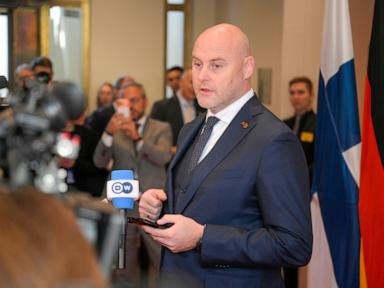
For further context on the runoff results and immediate geopolitical reactions, watch the DW News report on Lula's fourth-term victory, which outlines the post-election political dynamics.