The air along the border changes flavor when the sun drops. Dust settles on the tin roofs of Kaptangunj, mixing with the smell of woodsmoke and damp earth. In ordinary times, this stretch where Nepal meets India hums with a restless, shared heartbeat. Bicycles laden with sacks of grain cross back and forth. Shopkeepers shout across narrow lanes in a mashup of Bhojpuri, Nepali, and Hindi. Laughter spills from tea stalls where men debate politics over small, steaming glasses of milk tea.
Then a stone flies.
Then another.
And suddenly, the invisible line drawn on a map becomes a wall of steel and silence.
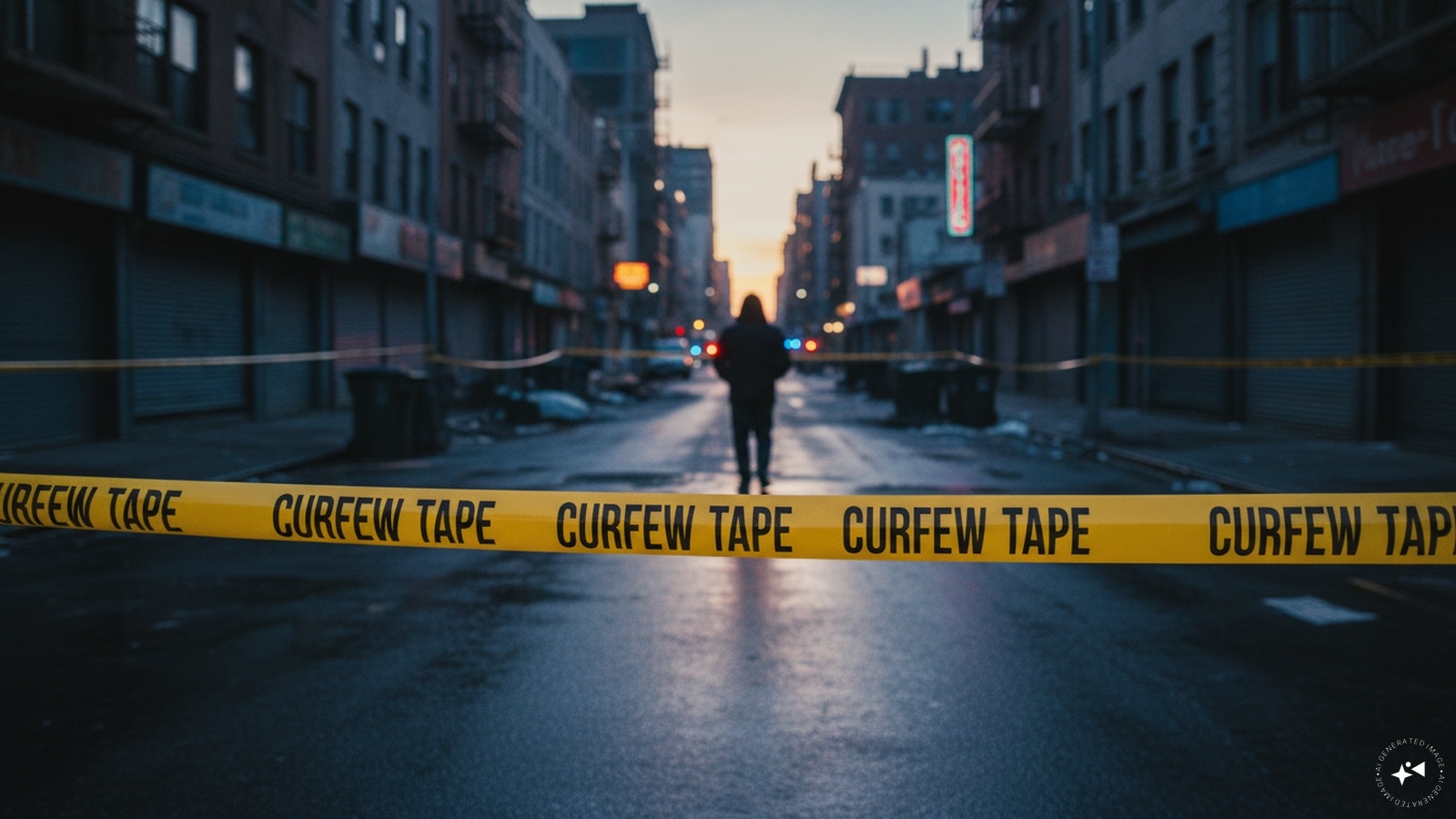
Following violent clashes that flared up in the Kaptangunj area, local authorities did not hesitate. They drew a hard line across the map. An indefinite curfew descended upon parts of the Rupandehi district in Nepal, tightening a noose around the porous, intertwined borderlands.
To read about it in a morning dispatch is to see cold statistics. Curfew extended indefinitely. Security forces deployed. Movement restricted under Section 144 equivalents.
Those words are clean. Sanitized. They fit neatly into a headline. But they miss the raw, pulsing reality of what it means to live inside a district holding its breath.
Consider Ramesh. This is a hypothetical portrait, yet it is stitched together from the lived realities of a hundred real men who woke up yesterday morning expecting to sell tomatoes and ended up staring at a rifle barrel instead. Ramesh is fifty-two. His knees ache when the humidity climbs. His livelihood depends on the morning market in the border town, where buyers from across the Indian frontier cross the dry riverbed to haggle over prices.
Yesterday, Ramesh packed his cart. He walked down the familiar dusty lane, expecting the usual chaotic symphony of commerce. Instead, he found an empty street. The tea stall shutters were bolted shut with thick iron padlocks. A pair of paramilitary police officers stood near the crossroads, their lathis resting casually against their thighs, though their eyes scanned every rooftop with predatory focus.
"Go home," one of them said. It wasn't spoken with malice. It was spoken with the flat, tired certainty of a man who had not slept in forty-eight hours.
Ramesh turned his cart around. Every tomato he carried was an investment. Every rupee he failed to earn today meant a thinner meal tonight for his grandchildren. But economics matter very little when the alternative is a brick to the temple or a baton to the ribs.
This is the hidden cost of communal friction in border regions. It is not just the property damage, the shattered glass of storefronts, or the burned tires marking the aftermath of a riot. It is the sudden, terrifying paralysis of daily life.
Why does violence erupt so easily in these specific pockets of the world?
To understand Kaptangunj, or any of the fragile border zones where two nations bleed into one another culturally, we have to look past the immediate spark. People often search for the single match that lit the fire—a rumor on social media, a disputed remark, a scuffle at a festival. But matches only start fires when the wood is bone dry and stacked high.
The wood here is stacked by geography and history.
Imagine an old family home where two brothers live under the same roof, but a bitter property dispute has festered for decades. They share a kitchen garden, they breathe the same air, and their children play in the same dirt yard. Yet, every minor annoyance—a stray goat eating a flower, a boundary line moved by an inch during the monsoon rains—feels like an existential threat.
That is the Nepal-India border. It is an open border by treaty, a remarkable geopolitical experiment where millions of citizens cross freely for work, marriage, and trade without visas. It is a testament to shared heritage. But that same openness makes it intensely vulnerable. When a spark jumps the fence in one country, it lands in the dry grass of the other before anyone has time to reach for a fire extinguisher.
When the local administration imposes an indefinite curfew, they are applying a tourniquet to a bleeding limb. It stops the immediate hemorrhaging. It keeps rival factions apart. It prevents stones from turning into bullets and bullets into body bags. But a tourniquet is not a cure. Left on too long, it kills the tissue it is meant to save.
Behind closed doors, the human drama plays out in whispers.
In a small concrete home three lanes away from the main intersection, a young mother named Sunita listens to the heavy boots of patrol units crunching on the gravel outside. Her six-month-old baby has a rising fever. In normal times, the clinic just across the border in India is a ten-minute walk down the path. The doctors there are familiar, the medicine cheap.
Today, the border crossing is sealed. Razor wire glints under the harsh glare of a security floodlight.
She holds her child tighter, feeling the heat radiating from his small body. Her husband is trapped on the other side, caught out of town when the curfew slammed shut without warning. He is stranded in a relative's house, staring at his phone, watching battery percentages drop while his wife sends frantic text messages that barely crawl through the congested, jittery local network.
This is what a curfew feels like from the inside. It is isolation in the middle of a crowd. It is the profound helplessness of watching your world shrink to the four walls of your living room while forces beyond your control dictate whether you can buy milk, see a doctor, or hold the hand of the person you love.
The authorities are caught in an impossible bind. If they lift the curfew too soon, the embers of violence could fan back into a roaring blaze. If they keep it clamped down indefinitely, the economic starvation of the working class threatens to spark a different kind of desperation—one born of empty stomachs and crushing debt.
Day four of the lockdown brings a heavy, suffocating quiet. The stray dogs have learned to own the streets, trotting down the middle of asphalt roads that usually swarm with motorcycles and pedestrians. Shop owners sit on their doorsteps behind half-open grates, watching the empty horizon with hollow eyes.
We talk endlessly about geopolitics, diplomatic channels, and bilateral relations between Kathmandu and New Delhi. We analyze troop movements and administrative decrees as if they were pieces on a chessboard.
But sovereignty and security are ultimately felt on the soles of shoes worn thin by waiting. They are measured in the silence of a marketplace that has forgotten how to bargain, in the quiet anxiety of a mother nursing a sick child behind a bolted door, and in the heavy, lingering dust of a street that is waiting for the world to remember how to live together again.