Every morning before dawn, the air at the southern tip of the Iberian Peninsula smells of salt, espresso, and diesel exhaust. For decades, a physical line carved this landscape. On one side lies La Línea de la Concepción, a Spanish town where the unemployment rate has historically hovered near a bruising thirty percent. On the other looms the Rock of Gibraltar, a 426-meter limestone monolith of British sovereignty, home to thriving international offices and forty thousand residents.
For the fifteen thousand people who cross this threshold daily, the border has never been an abstract line on a map. It has been a clock-stealing, nerve-fraying reality. For a more detailed analysis into this area, we recommend: this related article.
Now, the fence is gone.
http://googleusercontent.com/lmdx_content/XNXcQaAsZakQGphLWJOryIaQDvxDAcBxfqFsBzJJkCbiEzpWcxsWERljfoZTijVluGUbylYJyFYMFtFAlSIPIfYUskoFiKStaKLmGWBdZPIQxyMzHpOMpbVYpChaYEIymbGQDOpeqtlmwgpzJrRYXtyOaZeSFyPqCiZWkWfiXM61514 For additional background on the matter, extensive coverage can also be found at Associated Press.
The Daily Walk Across the Line
Consider Maria. She is a hypothetical composite of the thousands of Spanish citizens who clean hotel rooms, serve pints, and staff offices in Gibraltar. Every single day, Maria has left her home in La Línea, walked toward the border checkpoint known as La Verja, and prepared for the gamble.
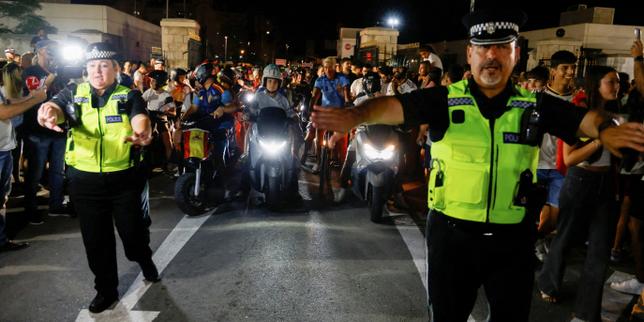
Sometimes, the crossing took ten minutes. During political flare-ups, it took three hours. Under the blazing Andalusian summer sun or in the whipping winter rain, thousands of workers stood in slow-moving queues, holding passports that had to be physically inspected and stamped.
This daily ordeal was the last unresolved loose end of Brexit.
When the United Kingdom formally exited the European Union, the status of Gibraltar was left in a fragile limbo. While the UK mainland adjusted to its new barriers, Gibraltar—which had voted ninety-six percent to remain in the EU—faced a terrifying prospect. A hard border here would have strangled the local economy. Gibraltar relies on Spanish labor; La Línea relies on Gibraltarian wages. They are economically codependent, joined at the hip yet separated by history.
For four long years, negotiators in Brussels, London, Madrid, and Gibraltar bickered over sovereignty, security, and who would police the entrance to Europe. Then, a historic treaty dissolved the physical barrier.
The land border has vanished. Gibraltar has effectively joined Europe’s passport-free Schengen travel area.
Moving the Wall to the Sky
The disappearance of the land border does not mean the end of security. It is a relocation.
Instead of checking passports at the pedestrian gate, the outer frontier of the Schengen zone has shifted to Gibraltar's airport and seaport. This is where the physical meets the digital. Travelers flying into Gibraltar from non-Schengen countries—including the United Kingdom—now face biometric scanners and joint checkpoints.
But for Maria, and the fifteen thousand workers like her, the daily commute is now as simple as walking down the street. No stamps. No queues. No midday anxiety about whether they will make it home in time for dinner.
The details of the transition show just how much everyday lives have changed:
- For Cross-Border Workers: Total freedom of movement. Spanish citizens enter Gibraltar using only a national ID card, while Gibraltar residents cross into Spain with simplified residency cards.
- For Travelers from the UK: A shift in expectations. British tourists flying to the Rock must now go through the EU's digital Entry/Exit System (EES) at the airport, registering fingerprints and facial scans.
- For the Economy: A massive relief. Businesses can now recruit and retain staff without the persistent threat of border delays disrupting operations.
The geopolitical dispute over who owns the Rock remains untouched. Spain still claims sovereignty; the UK still fiercely maintains it. But in a rare moment of modern political pragmatism, both sides agreed to put the abstract argument aside to let the people breathe.
It is a quiet, monumental shift. The concrete posts and wire fences that have defined the landscape since 1908 have been dismantled.
As the sun sets over the Mediterranean, the shadow of the Rock still falls across the Spanish towns below. But for the first time in generations, the people living in that shadow can cross into the light without having to ask for permission.