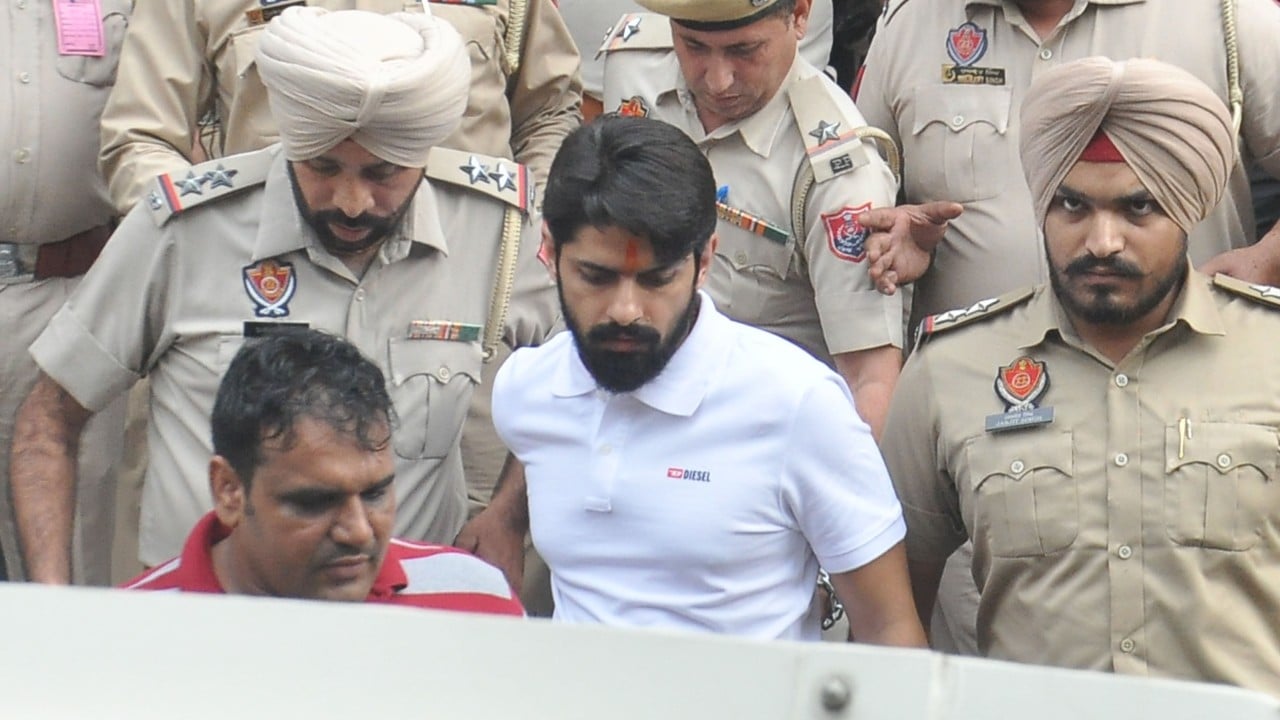
Armored SUVs, Y-plus government security details, and former commandos flanking A-list actors at Mumbai airport terminals make for great paparazzi optics. They also signal a massive strategic failure.
Mainstream media coverage loves a tidy narrative. Right now, the lazy consensus across newsrooms is simple: organized crime syndicates are back, extortion threats are rising, and Bollywood is responding by throwing money at heavier physical armor. The surface-level takeaway treats high-profile security upgrades like an impenetrable shield.
It is not a shield. It is a neon sign.
When a celebrity upgrades to a convoy of blacked-out Toyotas and armed guards, they are not neutralizing modern criminal syndicates. They are announcing their exact location, confirming their panic, and playing an obsolete 1990s defensive game against an adversary that operates on 2026 digital asymmetry.
The 1990s Playbook Is Dead
To understand why Mumbai’s elite are wasting millions on visible muscle, you have to separate nostalgia from operational reality.
During the 1990s, underworld extortion in Mumbai—driven by figures like Dawood Ibrahim and Abu Salem—relied on physical proximity, local street networks, and direct intimidation on film sets. Back then, putting armed guards outside a producer’s office in Juhu or Bandra actually disrupted the threat chain. You blocked the physical doorway, and you stopped the extortionist.
Today’s transnational syndicates—most notably the network operated by Lawrence Bishnoi from behind prison walls—do not care about your lobby security. They do not need to get past a bodyguard to ruin a star's life, tank a film’s box office, or execute a hit.
Modern syndicate operations rely on asymmetric remote logistics:
- Disposable Foot Soldiers: Shooters are recruited via encrypted messaging apps from entirely different states—often Haryana, Punjab, or Rajasthan—with zero prior criminal records in Maharashtra. They have no connection to the local underworld, making traditional Mumbai Police informant networks blind until after shots are fired.
- Crowdsourced Reconnaissance: Syndicates do not need an insider on set to track a star's movements. Fans, paparazzi, and minor crew members broadcast real-time locations on Instagram Stories every single minute.
- Reputational Terrorism: The goal of a modern syndicate is rarely the actual elimination of a high-value target. Killing an A-lister brings down the full weight of central intelligence agencies. Firing bullets outside a residence—like the April 2024 incident outside Salman Khan's Galaxy Apartments—achieves the exact same extortion value through pure psychological terror and viral media amplification.
Adding six more armed guards to a convoy does nothing to stop a teenager on a stolen motorcycle firing three rounds at a balcony at 5:00 AM and vanishing into suburban traffic.
Security Theater vs. Actual Risk Mitigation
I have watched major talent agencies and production houses burn obscene amounts of capital on what executive protection specialists call security theater—visible, intimidating measures designed to soothe the client's ego rather than reduce actual vulnerability.
Real executive protection is invisible. Security theater is loud.
Consider the mechanics of a standard Bollywood public appearance. A star arrives at a promotional event in Bandra. Ahead of them, an advance team clears the barricades. Dozens of private bouncers in tight black t-shirts push back photographers, creating a chaotic, bottlenecked perimeter. The star steps out of a bulletproof Land Cruiser surrounded by state-issued commandos holding automatic weapons.
From a tactical standpoint, this is a nightmare.
- Predictability: Heavy convoys cannot move quietly. They require specific routes, advance clearances, and predictable staging areas. Any competent spotter can track a five-car motorcade three miles away.
- Perimeter Collapse: Private bouncers are trained for crowd control—pushing fans away—not threat detection. When fifty people are screaming and shoving against a velvet rope, an armed operative blending into the crowd has total visual cover.
- The Ego Trap: Many actors genuinely enjoy the status symbol of a government-sanctioned security detail. In an industry obsessed with hierarchy, having armed state guards signals that you are too important to lose. You cannot protect a principal who insists on announcing their arrival to the press three hours before they leave their house.
"If your security detail is making the evening news, your security detail has already failed."
What People Get Wrong About Celebrity Extortion
Whenever a high-profile threat hits the headlines, public search queries flood with the same predictable questions: How much do Bollywood bodyguards cost? Which actors have Y-plus security? Are underworld gangs taking over Mumbai again?
Every single one of those questions misses the actual mechanism of the threat.
Are underworld gangs taking over Mumbai again?
No. The localized, territorial mafia that once financed Hindi cinema in the late eighties and nineties is gone, dismantled by the Mumbai Police encounter specialists of the early 2000s and replaced by corporate studio financing. What exists today is not a parallel government running Mumbai; it is a decentralized, franchise-style extortion model run by gangsters operating out of northern Indian jails and safe houses in Canada or Europe. They do not want to produce movies. They want quick liquidity and clout.
Does government Y-plus security actually keep stars safe?
It makes assassinations harder, not impossible—and it does zero to stop intimidation campaigns. State-provided security operates under strict bureaucratic rules of engagement. Furthermore, having state police assigned to your residence turns your home into a permanent fortress, which destroys normal family life while still leaving secondary targets—extended relatives, managers, business partners, and film distributors—completely exposed.
Why don't stars just pay the extortion quietly?
Because in the age of social media, silence no longer buys peace. In the 1990s, a producer paid a quiet settlement, and the threat went away. Today, syndicates actively claim responsibility on Facebook and Telegram immediately after an incident. They want the public spectacle because publicity is their primary marketing tool to extort mid-level builders, jewelers, and businessmen who cannot afford front-page police protection.
The Real Vulnerability Is Digital, Not Physical
If Bollywood production houses wanted to genuinely dismantle the current wave of threats, they would fire half their physical bouncers tomorrow and hire counter-intelligence analysts and cybersecurity firms.
Watch how a modern threat unfolds. It does not start with a guy in a dark alley. It starts with an open-source intelligence (OSINT) sweep.
A star’s personal staff—spot boys, drivers, makeup artists, junior PR executives—are notoriously underpaid and hyper-active on social media. A driver posts a selfie next to a distinct vanity van outside a studio in Goregaon. A junior publicist leaks a flight itinerary to paparazzi handles so photographers show up at the airport terminal on time. A gym trainer tags a location every morning at 7:30 AM.
Criminal syndicates do not need sophisticated spyware when a celebrity's own payroll voluntarily publishes their pattern of life online.
Imagine a scenario where a syndicate wants to target a top director. They do not bribe a cop for his address. They simply monitor the public Instagram accounts of his assistant director, his wife's fitness instructor, and his favorite restaurant in Khar. Within seventy-two hours, they have a complete map of his weekly habits, vehicle registration numbers, and unguarded transition points.
By the time the director steps out of his armored car, the adversary already owns the timeline.
How Real Risk Management Works
If you strip away the glamour and treat a major film star like a high-risk corporate executive or a diplomatic target, the protocol changes entirely. Heavy muscle moves to the background, and operational discipline takes over.
1. Kill the Paparazzi Pipeline
The single most dangerous habit in Mumbai’s entertainment industry is the coordinated paparazzi call-out. Talent agencies routinely tip off photographers about airport arrivals, gym visits, and dinner dates to maintain algorithmic relevance. You cannot claim your life is in danger while simultaneously paying publicists to broadcast your GPS coordinates to the public. Until agencies enforce strict blackouts on real-time location sharing, every physical guard on the payroll is working with one hand tied behind their back.
2. Compartmentalize Logistics
True executive protection relies on low-profile transit. Instead of a signature armored SUV with a recognizable license plate flanked by sirens, high-threat principals move in rotating, unremarkable mid-size sedans driven by evasive-driving specialists. The principal’s schedule is compartmentalized—drivers do not know the destination until ten minutes prior to departure, and domestic staff are separated from transit logistics.
3. Lock Down the Supply Chain
Extortionists rarely strike the hardest target; they strike the softest adjacent target. For a film studio, that means the exhibitor, the overseas distributor, or the mid-level line producer. Studios must stop treating security as an individual perk for the lead actor and start implementing enterprise-wide risk protocols—encrypted communications for production schedules, vetted vendor lists, and strict non-disclosure agreements backed by digital audits.
4. Financial Counter-Intelligence
Syndicates survive on money laundering and hawala networks. When studios and stars panic and hire unvetted private "fixers" to negotiate back-channel peace deals with gangsters, they fund the very ecosystem threatening them. Working exclusively through specialized federal anti-extortion units—such as the Mumbai Crime Branch’s Anti-Extortion Cell and the National Investigation Agency (NIA)—is slow, frustrating, and bureaucratic, but it is the only mechanism that cuts off the financial oxygen of transnational gangs.
The Trade-Off Nobody Wants to Admit
Taking the invisible, disciplined approach to security comes with an undeniable cost, and it is the exact reason most celebrities refuse to adopt it: it destroys the celebrity business model.
Modern stardom is built on hyper-visibility, constant accessibility, and algorithmic dominance. If an actor stops tipping off photographers, stops posting real-time gym selfies, rotates unmarked cars, and vanishes from public red carpets for six months, their brand engagement drops. Endorsement deals cool off. Box office buzz fades.
For a Bollywood star, fading into obscurity feels like professional death.
So they choose the compromise. They keep the airport photo-ops, keep the public appearances, and try to buy their way out of the resulting danger by slapping armor plating onto their SUVs and hiring more guards to stand in the frame.
It is an understandable human reaction, and a completely predictable business choice. Just stop calling it security. It is PR with body armor—and the people making the threats know the difference.


