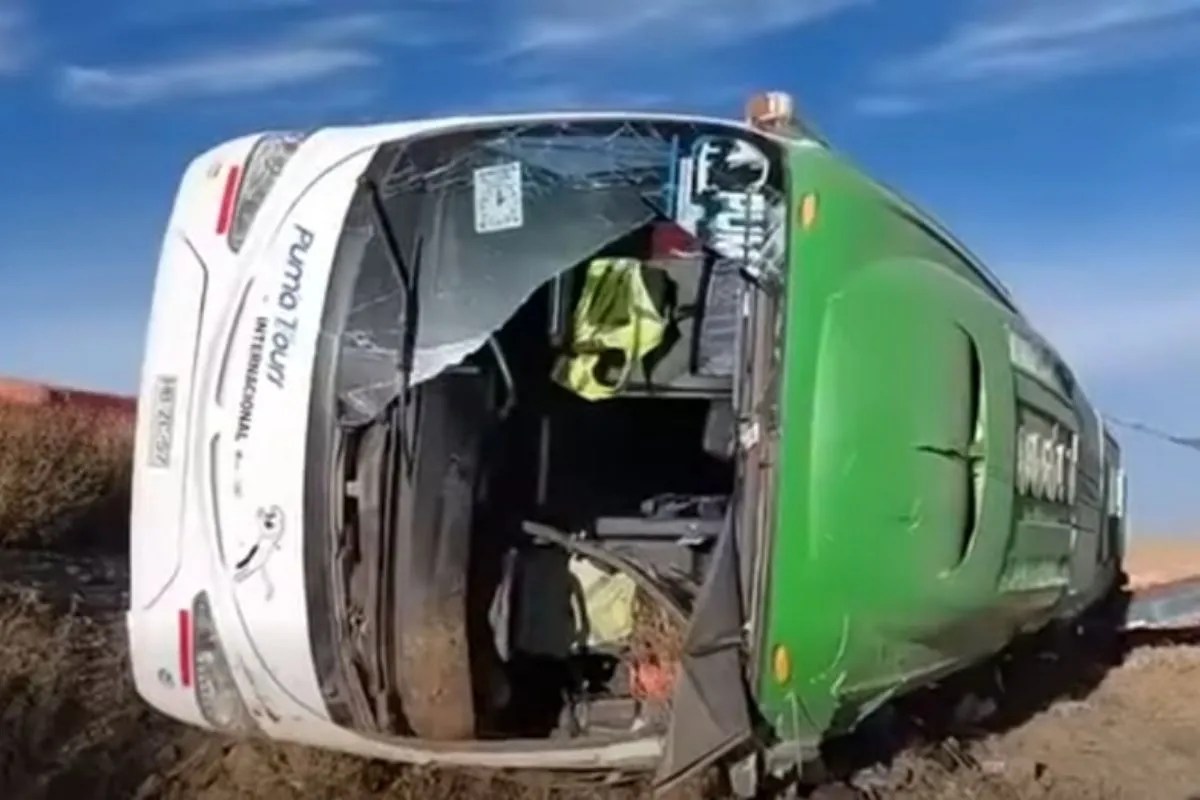
The wreckage of a passenger bus lying on its side on a Bolivian highway is a recurring image that the nation has grown dangerously accustomed to. On a stretch of asphalt connecting the lowlands to the high-altitude peaks, nine people recently lost their lives and 22 others were left with life-altering injuries when a transit bus flipped at high speed. While the immediate cause is often dismissed as driver error or mechanical failure, a deeper investigation into the Bolivian transport sector reveals a systemic breakdown of safety protocols, predatory labor practices, and a total lack of oversight that turns every intercity journey into a gamble with fate.
The incident occurred on the route between Santa Cruz and Cochabamba, a notorious corridor where the geography is as unforgiving as the vehicle maintenance schedules. When a bus rolls over on a clear highway, it is rarely a single moment of bad luck. It is the end result of a long chain of failures.
The Myth of Driver Error
Official police reports almost always lead with "excessive speed" or "distraction." It is a convenient narrative for the authorities because it places the blame on an individual rather than the system. However, the reality behind the steering wheel tells a different story.
Drivers in Bolivia’s intercity transport unions frequently work shifts that exceed eighteen hours. To make ends meet in a hyper-competitive market where ticket prices are capped by the government, drivers must complete "turnarounds" with almost zero rest. Fatigue is not a mistake; it is a requirement of the job. A driver falling asleep at 3:00 AM on a mountain pass is not an anomaly. It is a mathematical certainty when the labor laws regarding transport workers are treated as suggestions rather than mandates.
Furthermore, the mechanical state of these buses is often appalling. Many of the vehicles currently operating on long-haul routes are second-hand imports from Asia or Europe that have been modified to fit more seats than their original design intended. This shifts the center of gravity. When a top-heavy, overloaded bus hits a sharp curve or a patch of uneven pavement at the speeds required to stay on schedule, physics takes over.
The Regulatory Black Hole
The Vice Ministry of Transportation and the transit police have the power to inspect these vehicles, yet the "inspections" are notoriously superficial. At the major terminals, checks often consist of little more than a quick look at the tires and a verification of the driver’s license.
The underlying problem is the power of the transport federations. These unions are politically massive. Whenever the government attempts to implement stricter safety standards—such as mandatory GPS tracking to monitor speed or the installation of electronic logging devices for driver hours—the unions threaten a national "paro" or strike. These strikes can paralyze the country’s economy within forty-eight hours. Consequently, safety regulations are watered down to maintain political peace, leaving the passengers to pay the price in blood.
The tragedy of the nine dead on the highway is not just a news headline; it is evidence of a state that has surrendered its regulatory authority to the very industry it is supposed to police.
A Failure of Emergency Response
Survival in a Bolivian bus crash is largely determined by where you are sitting and how fast the local "comunarios" or villagers can reach the site. The "Golden Hour" of emergency medicine—the period where prompt treatment can prevent death—is non-existent in rural Bolivia.
- Lack of Air Ambulances: There is no dedicated national medevac system for highway accidents.
- Equipping the Police: Most transit police units lack hydraulic "jaws of life" tools to extract victims from crushed metal.
- The Bystander Dilemma: In many cases, the first people on the scene are other travelers who, despite their best intentions, may cause further spinal injuries by moving victims without proper equipment.
The Economics of Blood and Asphalt
We must look at the ticket prices to understand why safety is a luxury. A ten-hour trip through some of the most dangerous terrain on earth often costs less than fifteen dollars. At that price point, something has to give. Usually, it is the maintenance budget.
Brake pads are worn down to the metal. Tires are retreaded until they burst under the heat of friction. Suspensions are welded together after breaking rather than being replaced. The passengers, many of whom are low-income workers or farmers transporting goods to market, accept these risks because they have no other choice. There is no rail alternative, and domestic flights are priced far beyond the reach of the average citizen.
The Infrastructure Trap
While the current administration has spent billions on paving roads, the engineering of these highways often ignores the reality of the traffic they carry. Many "highways" are actually single-lane roads in each direction with no physical median.
When a driver attempts to overtake a slow-moving truck on a blind curve—a common practice known locally as "jugarse la vida"—there is no margin for error. The road shoulder is often soft or non-existent, dropping off into steep ravines. Improvements in pavement quality have ironically led to higher speeds, which, when combined with old vehicles and tired drivers, results in higher fatality rates.
The focus has been on "kilometers paved" as a political metric of success, while the "safety per kilometer" remains an ignored statistic.
Why the Insurance System is Broken
Bolivia has a mandatory traffic accident insurance known as SOAT. While it provides a basic level of coverage for medical expenses and funeral costs, it does nothing to incentivize safety. The premiums are flat. A transport company with a history of ten fatal crashes pays the same rate as a company with a perfect safety record.
In a functioning market, insurance companies would demand safety audits or refuse to cover high-risk fleets. In Bolivia, SOAT is a bureaucratic checkbox, a socialized band-aid that pays for the burial but never questions why the death happened in the first place.
Necessary Steps for Reform
If the Bolivian government wanted to end this slaughter, the blueprint is not complicated. It requires the political will to confront the transport unions.
First, the installation of independent, government-monitored GPS units on every intercity bus is non-negotiable. This would allow for real-time speed monitoring and heavy fines for companies that exceed limits. Second, the "two-driver" rule for any trip exceeding six hours must be strictly enforced with biometric check-ins at multiple points along the route to ensure the second driver is actually present and rested.
Third, the government must establish a dedicated highway patrol that is separate from the standard police force, equipped with specialized trauma training and modern extraction tools.
Finally, there must be a tiered licensing system for transport companies. Those that invest in modern fleets and rigorous maintenance should be allowed to charge a premium, while those that fail safety audits must be stripped of their operating permits immediately.
The nine families currently mourning their loved ones deserve more than a press release and a promise of an "investigation." They deserve a transport system that does not view their lives as an acceptable cost of doing business. The wreckage on the side of the highway is a monument to a decade of neglect. Until the mechanics of the industry are dismantled and rebuilt, the next bus is already on its way to the same end.
Stop treating these deaths as accidents. They are the predictable results of a broken system.