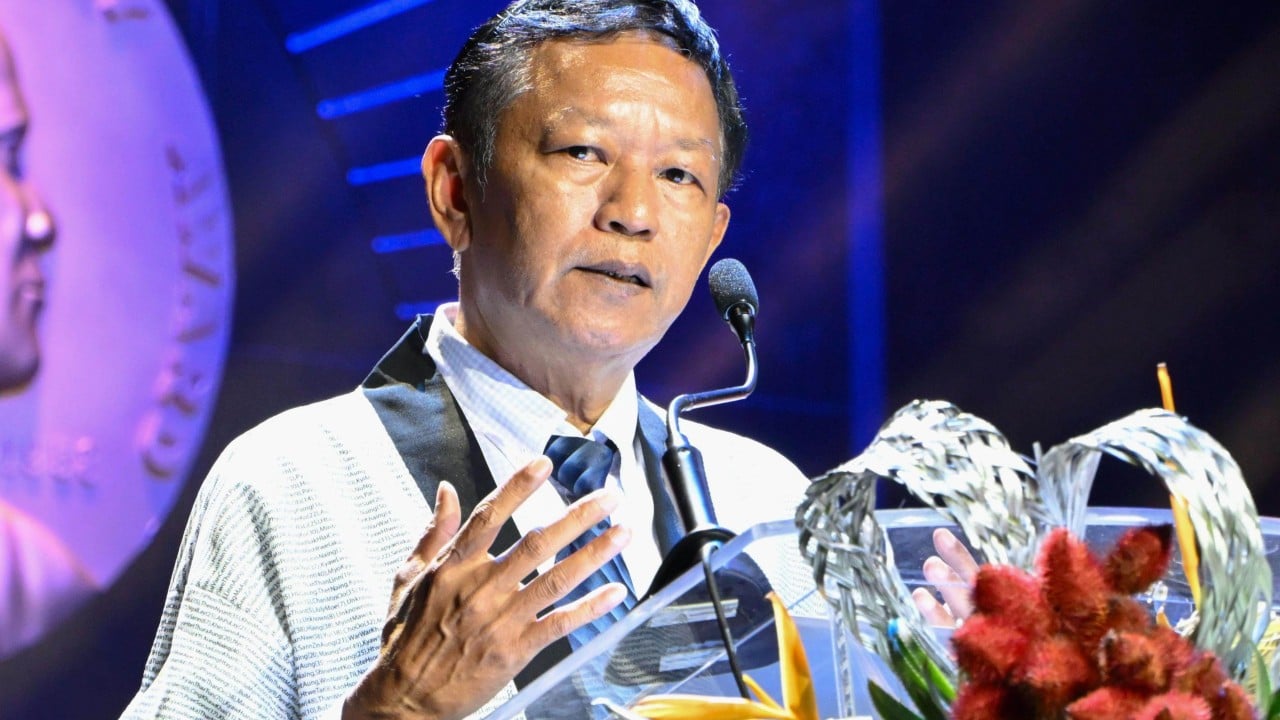
Most international prizes end up collecting dust on a shelf while diplomatic speeches evaporate before the applause stops. Not this one. When Myanmar human rights activist Bo Kyi walked onto the stage at the Manila Metropolitan Theater on November 15, 2026, to accept the 68th Ramon Magsaysay Award, he didn't offer polite platitudes about regional harmony. He used Asia's most respected civic honor—widely called the Asian Nobel Prize—to call out the Association of Southeast Asian Nations (ASEAN) directly.
His message was blunt. Stop giving legitimacy to Myanmar's military junta, help restore democracy, and secure the release of more than 15,000 political prisoners still locked away.
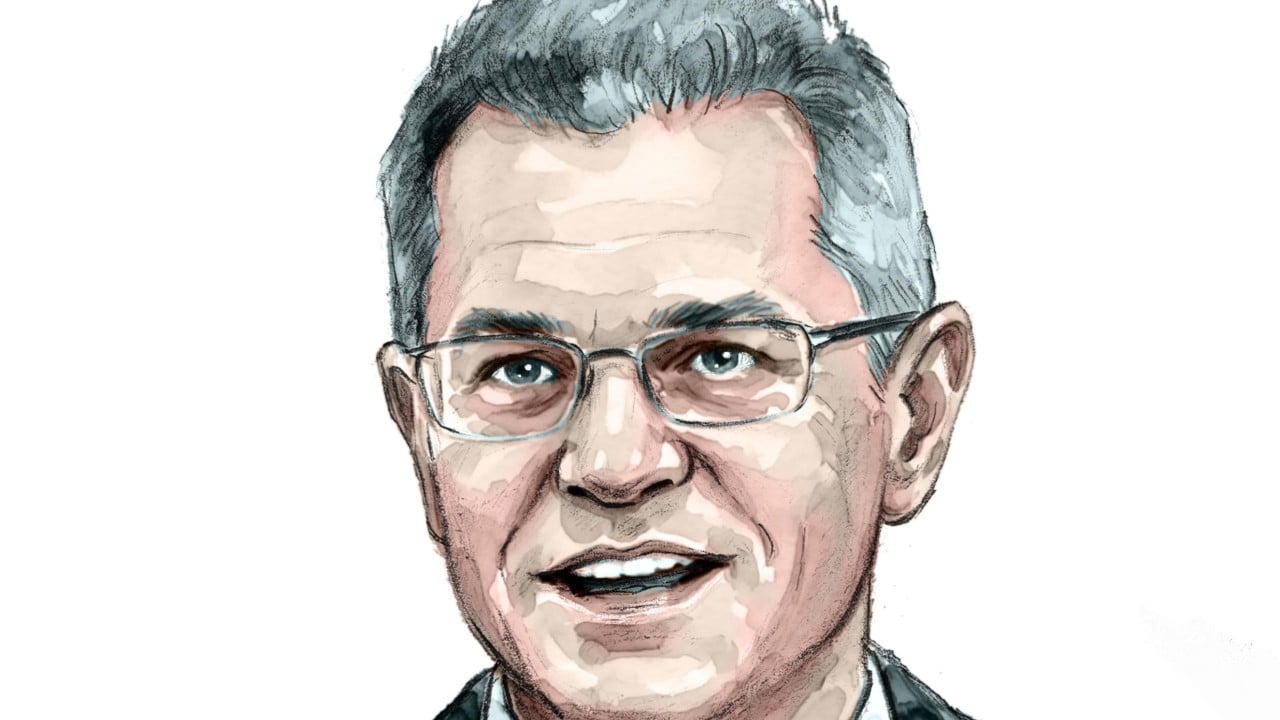
If you only follow Myanmar headlines casually, it's easy to miss why this single ceremony matters so much. Bo Kyi isn't a career diplomat or a politician trading favors in air-conditioned conference rooms. He's a guy who spent seven years in brutal military prisons, refused a deal to inform on fellow students even when it meant going straight back to a cell, and built an underground documentation network that keeps tabs on dozens of detention centers from exile. By honoring him alongside Singaporean diplomat Tommy Koh and Bangladeshi social entrepreneur Runa Khan, the Ramon Magsaysay Award Foundation handed Myanmar's pro-democracy movement its biggest regional megaphone in years.
What Actually Happened at the 2026 Magsaysay Ceremony
On Sunday, November 15, 2026, the Ramon Magsaysay Award Foundation (RMAF) formally conferred its 2026 medallions and certificates in Manila. Established in 1957 in memory of the seventh Philippine president, the award has recognized 331 individuals and 28 organizations across 24 Asian countries and territories.
During his acceptance remarks, Bo Kyi dedicated the honor to the more than 15,000 political prisoners currently held across Myanmar following the February 2021 military coup—a figure that includes ousted civilian leader Aung San Suu Kyi, who remains under detention. Depending on reporting cutoffs and verification cycles, Bo Kyi and his organization have noted that the broader toll of detainees still behind bars sits between 15,000 and over 20,000 people.
He didn't mince words about what regional neighbors need to do next. Speaking in Manila, he urged ASEAN member states and the broader international community to step up, pressure the military regime, and push for the immediate freedom of political detainees. Days later, in a November 19 interview on The Howie Severino Podcast, he sharpened that point even further, warning that ASEAN countries must support the Burmese people rather than lending legitimacy to the generals in Naypyidaw.
Why does a speech in Manila rattle cages across Southeast Asia? Because ASEAN operates on consensus and non-interference, and for years its Five-Point Consensus peace plan for Myanmar has stalled out while civilians bear the brunt of airstrikes, mass arrests, and torture. Having a Philippine-based institution—inside an ASEAN founding member state—elevate one of the junta's fiercest critics turns a quiet diplomatic embarrassment into front-page regional news.
Who Is Bo Kyi and Why Did He Refuse Freedom?
To understand why Bo Kyi carries moral authority that politicians can't buy, you have to look at what happened to him in the 1990s.
Growing up under military dictatorship, Bo Kyi went through an education system designed to reward blind obedience rather than critical thinking. Student unions were banned. Travel was restricted. When students rose up during the 1988 nationwide pro-democracy demonstrations, soldiers opened fire in the streets. Bo Kyi watched classmates get shot down right in front of him—an image he later told the Philippine Daily Inquirer he has never been able to erase.
The regime arrested him for the first time in 1990. He wasn't released until January 21, 1993.
After getting out, he tutored high school students in English and eventually returned to university to finish his final year, roughly five years older than his classmates. Military intelligence watched his every move. They ordered him to stay away from regular classes so he wouldn't radicalize younger students. Then, when fresh campus protests broke out, intelligence officers cornered him with an ultimatum: act as an informant, tell the protesting students to go home, and keep his freedom.
Bo Kyi said no. Instead, he countered with a proposal that the military release all political prisoners and open talks with Aung San Suu Kyi.
That refusal cost him five more years of his life. At age 30, he was arrested a second time and thrown back into prison, bringing his total time behind bars to seven years across two stints. Looking back on that choice in an October 2026 interview with Tatler Asia, he put it simply: "I did not want to send other colleagues to prison because of my freedom. Instead, I had to go to prison. That was the best way for me."
Prison didn't break him. It educated him. Inside those cells, he met ethnic Karen detainees and saw firsthand how the military tortured minority communities away from the eyes of urban Burmans. That realization reshaped his activism from a student movement into a nationwide push for human rights and the rule of law.
Inside the Assistance Association for Political Prisoners
After his second release in 1998, Bo Kyi fled across the border to Mae Sot, Thailand, knowing another arrest was only a matter of time. In March 2000, alongside fellow former detainees, he co-founded the Assistance Association for Political Prisoners (AAPP) and took on the role of Joint Secretary.
Their operating motto has stayed identical for more than a quarter-century: "As long as political prisoners exist inside Burma, Burma will not be free."
Most people assume an exile group living in a Thai border town just issues press releases from afar. That's a massive misconception. Even though AAPP's leadership operates outside Myanmar for security, its real engine runs inside the country through covert networks. Here is how that work actually functions on the ground:
- Prison reach and verification: Myanmar has 49 prisons and detention centers. Through confidential channels, AAPP maintains active contact with 33 of those facilities, tracking conditions and delivering assistance to roughly 5,000 current political prisoners and their families.
- Forensic documentation against erasure: During a November 11, 2026, lecture at the Ramon Magsaysay Center in Manila, Bo Kyi hammered home a three-part rule: "Remember the past. Document the present. Defend the future." Every name, arrest date, torture testimony, and prison death gets logged so the military can't scrub its crimes from history.
- Trauma and mental health care: Surviving interrogation leaves scars that don't heal when the cell door opens. AAPP runs secret counseling teams trained by a professor from Johns Hopkins University, providing psychological care to torture survivors, released detainees, migrant workers, and displaced families along the Thailand-Myanmar border.
- Grassroots capacity building: AAPP alumni quietly train local civil society groups, women's organizations, and ethnic youth inside Myanmar on human rights law and transitional justice.
International news outlets—from the Democratic Voice of Burma (DVB) to global human rights monitors—rely on AAPP's daily tallies because almost no independent observers are allowed inside the country's penal system. Without Bo Kyi's network, thousands of detainees would vanish into black holes without even a footnote.
Why ASEAN's Myanmar Policy Keeps Failing
When Bo Kyi stood in Manila and urged ASEAN to help restore democracy, he was poking at Southeast Asia's biggest diplomatic sore spot.
Since the military seized power in February 2021, ASEAN has tried to manage the crisis through its Five-Point Consensus—a framework calling for an immediate end to violence, constructive dialogue among all parties, and humanitarian aid. On paper, it sounds reasonable. In practice, the junta has ignored it completely while bombing villages, planting landmines, and locking up over 15,000 critics.
Civil society coalitions like the Network for Human Rights Documentation-Burma (ND-Burma), which congratulated Bo Kyi and AAPP on November 3, 2026, have repeatedly pointed out that ASEAN's obsession with "non-interference" lets member states stall while people die. Worse, some regional governments still engage with junta officials in ways that hand the generals credibility they haven't earned.
Bo Kyi has been crystal clear on this point: you cannot expect Myanmar's military to reform itself from the inside. True justice requires accountability, removing the military from politics permanently, and building genuine rule of law. By bringing that argument directly to Manila during the 68th Magsaysay Awards, he forced regional leaders and journalists to confront an uncomfortable truth—diplomatic neutrality in the face of mass imprisonment isn't neutrality at all.
What You Can Actually Do to Follow and Support This Work
Reading about political prisoners halfway across the world often leaves people feeling helpless, like the only option is shaking your head and scrolling to the next headline. You don't have to leave it there. If you want to track accurate data on Myanmar or support survivor-led networks directly, start with these concrete steps:
- Check verified detention data directly: Bookmark the Assistance Association for Political Prisoners (AAPP) website to read their monthly chronologies and daily arrest logs rather than relying on vague social media rumors.
- Follow independent Burmese reporting: Read daily updates from frontline outlets like the Democratic Voice of Burma (DVB) and regional monitoring coalitions like ND-Burma to see how grassroots groups document abuses on the ground.
- Watch the full Manila lecture and interviews: Look up the Ramon Magsaysay Award Foundation coverage of the 2026 laureates—including Tommy Koh and Runa Khan alongside Bo Kyi—to hear his full arguments on historical memory and regional accountability.
- Support mental health and survivor aid: Look into vetted border-based humanitarian organizations that fund trauma counseling and emergency relief for released prisoners and displaced families along the Thailand-Myanmar border.
Awards don't unlock prison doors on their own, and Bo Kyi knows that better than anyone alive. What the 2026 Magsaysay Award actually does is strip away any excuse that ASEAN leaders didn't know what was happening behind those walls.