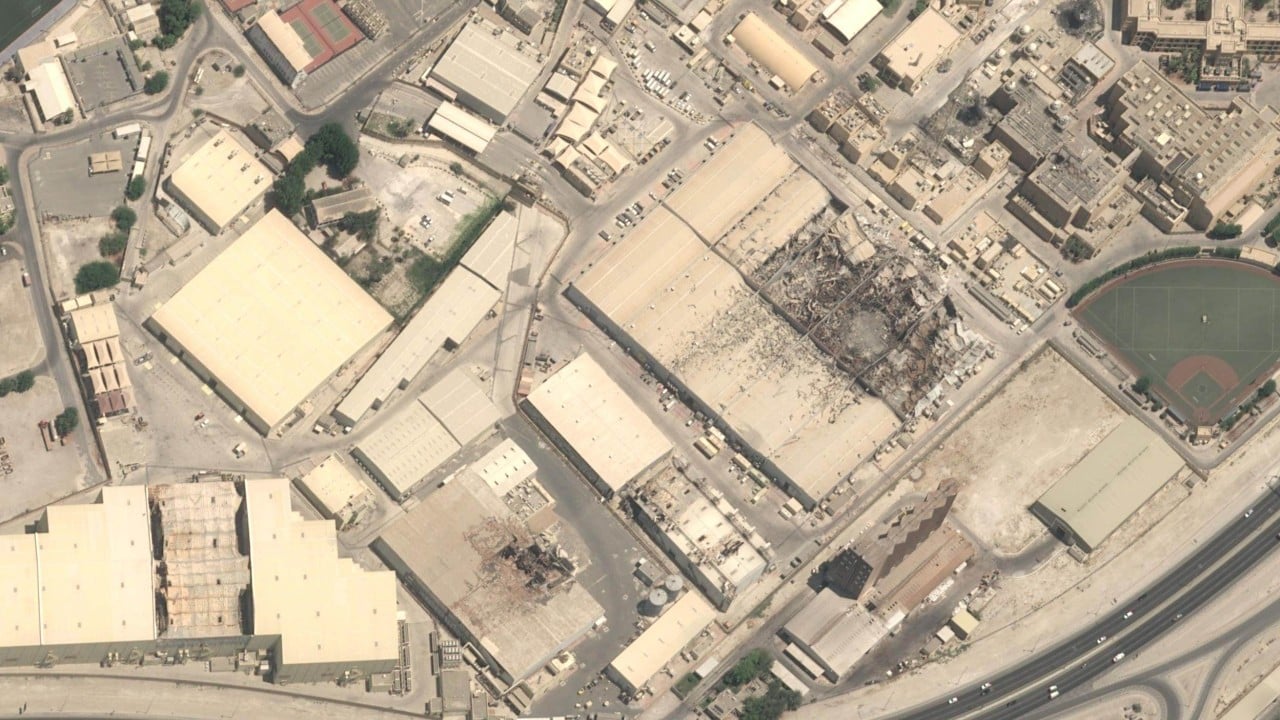
Blaming twenty-year-old soldiers on TikTok for multi-billion-dollar missile strikes on Middle Eastern bases is the oldest trick in the defense contractor playbook. It is clean. It is convenient. And it completely absolves the brass of architectural failure.
Every few months, a glossy defense-tech piece makes the rounds explaining how Iranian intelligence scraped commercial ad-tech data, fitness apps, or stray social media posts to pinpoint American troop concentrations across Iraq, Syria, and Jordan. The narrative writes itself: careless Gen-Z troops leak their GPS coordinates, adversaries harvest the open-source intelligence, and precision munitions rain down on hardened infrastructure.
That story is half-true at best, and catastrophically misleading at worst.
I have spent over a decade auditing operational security architectures and commercial telemetry exposure for defense and critical infrastructure teams. When an airfield or logistics hub takes a direct hit, blaming the smartphone in a private’s pocket is like blaming a match for burning down a building soaked in gasoline. The digital footprint of individual troops did not put those bases on a targeting map. Fixed geography, predictable logistics, and commercial satellite imagery did.
The Myth of the Secret Desert Outpost
The lazy consensus assumes that Middle Eastern bases are hidden needles in a vast sandy haystack, only exposed when a specialist logs onto Strava or broadcasts a workout loop.
Anyone who has looked at commercial Synthetic Aperture Radar or high-resolution electro-optical satellite imagery knows this is nonsense. You cannot hide a runway. You cannot hide a Patriot battery, a fuel farm, or a hardened aircraft shelter from a commercial imaging constellation passing overhead every ninety minutes. Companies like Maxar, Planet Labs, and Capella Space sell sub-meter imagery on the open market. Iranian state-backed front companies do not need to buy shadowy data broker packets to find out where Al Asad Airbase or Tower 22 sits. The concrete has been poured for decades.
What commercial telemetry actually provides is pattern-of-life verification and force density estimation.
Here is the distinction the mainstream coverage misses:
- Targeting coordinates come from overhead reconnaissance, human intelligence, and fixed infrastructure mapping.
- Timing and occupancy come from electronic emissions and commercial data exhaust.
When an adversary watches a sudden spike in cellular handoffs, ride-share pings, or ad-exchange bid requests around a known airfield, they are not discovering a secret base. They are confirming that a rotation just landed or that a high-value command element has moved into a specific building. That is an intelligence edge, certainly. But framing it as the primary cause of billions in structural damage flips cause and effect on its head.
The Real Leak Is the Supply Chain, Not the Soldier
If you want to know how adversaries actually map operational tempo in the Middle East, stop looking at the barracks and start looking at the contractors.
I have watched defense organizations burn millions on mobile device management software and draconian phone bans for uniformed personnel, only to leave the front gate wide open to third-party logistics vendors. A base in the Levant or the Gulf does not run on soldiers alone. It runs on local nationals driving fuel trucks, third-country contractors servicing HVAC units, and commercial freight forwarders moving pallets through regional ports.
Every single one of those supply nodes generates massive, unencrypted commercial data exhaust:
- Automatic Identification System and ADS-B transponders on chartered cargo vessels and aircraft moving into regional hubs.
- Commercial fleet telematics installed on contracted water, fuel, and waste trucks entering and exiting base perimeters daily.
- Unvetted personal devices carried by local maintenance staff who walk past sensitive hangars every morning and go home to unregulated telecom networks every night.
Restricting a soldier from posting a selfie at the gym while a contracted waste-hauler transmits live GPS telemetry from inside the wire is pure security theater. The Pentagon loves blaming troop discipline because troop discipline is a free scapegoat. Fixing defense logistics opacity and hardening static base infrastructure costs tens of billions of dollars and threatens lucrative procurement contracts.
Why Ad-Tech Surveillance Is an Industry-Wide Self-Own
Let us talk about the mechanics of how commercial location data actually gets harvested, because most commentary treats it like magic cyber-espionage.
Iranian intelligence agencies are not hacking into Apple or Google to pull GPS logs. They are buying them—or scraping them—from the exact same real-time bidding ecosystem that serves you sneaker ads. Every time a free weather app, flashlight utility, or game fires an ad request through a Software Development Kit, it broadcasts a bundle of metadata to dozens of ad exchanges: the device’s Mobile Advertising ID, precise latitude and longitude, IP address, and timestamp.
Western intelligence agencies pioneered the practice of buying this bulk commercial telemetry to track targets abroad. The U.S. government spent years arguing that purchasing publicly available commercial data required no warrant because the data was technically on the open market.
Now that regional adversaries like Iran and non-state militias are using the exact same commercial data brokers to monitor American installations, Washington wants to treat it as an exotic asymmetric threat. It is not. It is blowback from an unregulated surveillance-capitalism market that Western policymakers refused to shut down because their own intelligence apparatus liked having access to the firehose.
The Precision Munition Reality Check
There is another glaring hole in the "smartphones caused billions in damage" narrative: the physics of modern strike packages.
When Iran launched ballistic missiles at Al Asad in 2020, or when proxy drones struck bases across Iraq and Jordan in subsequent escalations, the munitions were not homing in on a soldier’s iPhone signal. Ballistic missiles use inertial navigation systems paired with satellite guidance aimed at pre-surveyed, static grid coordinates—hangars, barracks blocks, and radar arrays. One-way attack drones fly pre-programmed waypoints toward structures visible on Google Earth.
Did digital footprints help adversaries assess battle damage or identify which side of a compound had higher foot traffic? Yes. Did a fitness app guide a Fateh-110 missile onto a tarmac? No. Conflating signals intelligence with terminal weapon guidance is sloppy journalism that inflates the mystical power of open-source data while ignoring the much harder truth: air defense saturation and hardened base architecture have fallen behind the cost curve of cheap precision drones and ballistic missiles.
What People Get Wrong About Operational Security
When headlines scream about digital footprints costing billions, the public—and junior leaders—walk away with the wrong questions.
"Why doesn't the military just ban personal phones on deployment?"
They have tried. It fails every time. When you confiscate personal phones without providing secure, high-bandwidth morale communications, troops buy burner phones on the local economy. A soldier using a cheap Android phone bought at a bazaar in Baghdad or Erbil, running on a local carrier with zero endpoint protection, is infinitely more compromised than a soldier using an updated iPhone through an encrypted tunnel. Prohibition drives the behavior underground and destroys visibility.
"Can't a VPN hide a soldier's location?"
A VPN hides your IP address from the server you are talking to. It does nothing to stop a malicious SDK from reading your device’s hardware GPS chip, Wi-Fi BSSID scan results, or Bluetooth beacons and stuffing those coordinates into an ad-exchange bid packet. If an app has location permissions, a VPN is a screen door on a submarine.
"Are Iranian cyber capabilities really that advanced?"
You do not need elite zero-day exploits to buy CSV files from a shady data broker or scrape public social media APIs. Attributing basic commercial data aggregation to "sophisticated cyber warfare" gives adversaries credit they have not earned. It is cheap, off-the-shelf intelligence collection—and that is precisely why it is so hard to stop.
How to Actually Fix Signature Management
If military leadership and defense contractors actually want to stop bleeding operational security through digital exhaust, they have to abandon the fantasy of perfect individual compliance. Humans will always make mistakes. Systems have to absorb those mistakes without collapsing.
Here is what real signature management looks like in contested environments:
- Poison the commercial telemetry well. Instead of just trying to suppress emissions around forward operating bases, deploy electronic warfare and synthetic traffic generators that flood local cellular towers and ad exchanges with thousands of spoofed Mobile Advertising IDs. If an adversary’s data broker feed shows ten thousand phantom devices moving randomly across an empty desert grid twenty miles away, the signal-to-noise ratio collapses.
- Enforce zero-trust geofencing at the carrier level. Stop relying on twenty-year-olds to remember to toggle airplane mode. Use tactical cellular base stations inside base perimeters that intercept, strip, and proxy commercial metadata before it ever touches regional telecom infrastructure.
- Audit the contractor tail with the same rigor as combat units. Every third-party logistics vehicle, fuel truck, and maintenance vendor entering a base must have commercial telematics disabled at the gate and personal devices locked in Faraday bags. No exceptions.
- Disperse and harden the physical footprint. Accept that static bases in the Middle East are permanently visible from space. Stop concentrating billions of dollars of unhardened aircraft and command posts on predictable concrete pads within range of cheap regional munitions.
The Uncomfortable Trade-Off
There is a real cost to doing this right, and pretending otherwise would be dishonest.
Aggressive electronic spoofing and tactical cellular interception interfere with legitimate local communications, irritate host-nation governments, and complicate coordination with coalition partners. Hardening and dispersing bases across the Middle East requires tens of billions of dollars in civil engineering—money that defense primes would much rather spend building the next generation of exquisite, high-margin platforms.
As long as the Pentagon can convince Congress and the public that multi-billion-dollar base losses are the fault of careless troops on social media, those structural failures never have to be fixed.
Stop confiscating phones at the gate while leaving the fuel trucks tracked, the hangars unhardened, and the data brokers open for business.