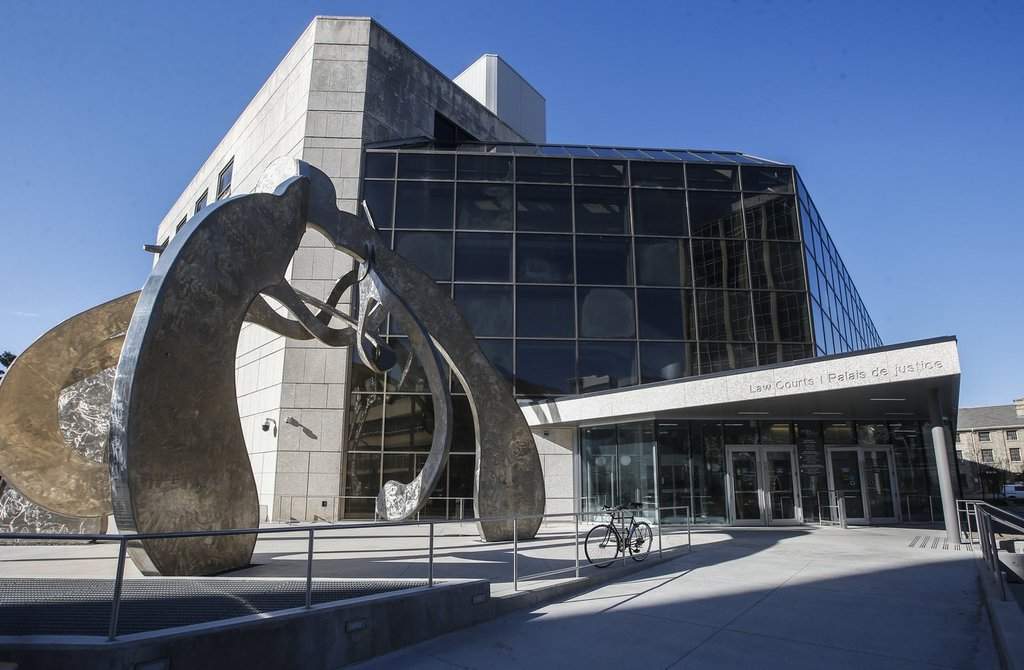
Putting one man behind bars for starting the Palisades Fire will not save a single home next summer.
The standard media coverage of a wildfire conviction always follows the exact same script. Prosecutors hold a press conference. Local news anchors read the mugshot details with solemn voices. The public breathes a collective sigh of relief, convinced that the villain has been caught and justice has been served. The competitor's take on this conviction leans heavily into that exact emotional arc, treating a criminal verdict as the final chapter of a tragedy.
That narrative is dangerously incomplete. It is a psychological security blanket designed to distract Californians from a much uglier truth. An arsonist might strike the match, yet decades of broken land management, reckless urban sprawl, and weaponized environmental litigation are what actually poured the gasoline.
The Scapegoat Economy
When a devastating fire tears through an affluent coastal enclave like Pacific Palisades, people demand a single face to hate. A solitary defendant in an orange jumpsuit fits the bill nicely. He has no lobbying firm. He has no public relations crisis team. He is an easy, tangible target for collective grief and fury.
Focusing entirely on the ignition source is like blaming a heart attack solely on the last cheeseburger a patient ate while ignoring thirty years of chain-smoking and zero exercise. Fire science does not care about criminal intent. A spark from a dragging trailer chain, a downed power line, a rogue lightning strike, or a deliberate match all produce the exact same thermal outcome once they hit dry brush.
In my years analyzing wildland-urban interface disasters and municipal risk assessments, I have watched cities spend millions on surveillance cameras and arson task forces while leaving ten-foot walls of dead chaparral pressed right against million-dollar cedar siding. The math simply does not work. You cannot arrest your way out of an ecological powder keg.
What Fire Ecologists Actually Know About Ignition
To understand why the single-culprit obsession fails, you have to separate ignition from propagation.
Ignition is the spark. Propagation is the spread. In Southern California, ignition is practically a statistical certainty. Between human carelessness, aging electrical grids, and criminal malice, something will always spark in the Santa Monica Mountains. Expecting zero ignitions across millions of acres of dry terrain is a fantasy.
Propagation, however, is a variable that humans directly control. Fire requires three elements to sustain itself, known in the field as the fire triangle: heat, oxygen, and fuel.
- Heat is provided by the spark and amplified by ambient temperatures.
- Oxygen is delivered at highway speeds by the seasonal Santa Ana winds.
- Fuel is the accumulated dead vegetation sitting on the hills.
We cannot stop the Santa Ana winds from blowing offshore in the autumn. We cannot turn down the California sun. We cannot police every square inch of rugged canyon trail twenty-four hours a day to prevent every human spark. Fuel is the only leg of the triangle we actually govern.
Yet, the fuel load in the coastal canyons surrounding Los Angeles has been allowed to reach historic, unnatural densities. Decades of aggressive fire suppression—putting out every small, natural brush fire immediately—interrupted the natural burn cycle. Instead of frequent, low-intensity fires clearing out the underbrush every ten to twenty years, the brush grew thick, woody, and choked with dead biomass. When a fire finally escapes initial attack in those conditions, it does not just burn. It explodes.
The Elephant In The Coastal Zone
If fuel management is the obvious answer, why are the hills still choked with dead brush? Because clearing it requires navigating a bureaucratic minefield that makes building a nuclear reactor look easy.
In California, cutting down native chaparral or grading firebreaks in the Coastal Zone triggers a cascade of regulatory hurdles. Environmental review processes under the California Environmental Quality Act (CEQA) routinely stall basic brush clearance for years. Well-funded preservation groups frequently sue municipalities and fire agencies to halt mechanical thinning and prescribed burns, arguing that these preventative measures disturb sensitive habitats or threaten local flora.
The irony is lethal. By fighting to preserve every square foot of untouched brush right up to the edge of dense residential neighborhoods, these policies guarantee that when a fire inevitably hits, it burns hot enough to sterilize the soil, incinerate the wildlife, and wipe out the very ecosystems they claimed to protect.
Meanwhile, local governments keep approving permits for sprawling luxury estates perched on narrow, winding canyon roads with single-lane access. We are building tinderboxes inside a chimney and acting shocked when the smoke rises.
Why Prosecuting Arsonists Does Not Lower Your Fire Risk
People often ask if harsher prison sentences for arsonists will deter future wildfires. The honest answer is no.
Deterrence relies on rational actors weighing consequences before acting. Many wildfire arsonists are driven by severe mental illness, substance abuse, or pyromania—none of which respond to sentencing guidelines. Others start fires accidentally through sheer negligence, like tossing a cigarette butt or using power tools during red-flag warnings, completely oblivious to the danger until it is too late.
Even if California somehow eliminated 100% of deliberate arson tomorrow, the state would still face catastrophic megafires every single year. Utility equipment failures, campfires, vehicle sparks, and dry lightning would effortlessly pick up the slack.
Treating a conviction as a victory gives politicians a free pass. It allows local officials to stand at a podium, praise law enforcement, and quietly shelve the expensive, politically unpopular work of thinning forests, burying power lines, and enforcing strict defensible-space mandates on wealthy homeowners.
The Hard Truth About Home Hardening
If you live in a fire-prone zone, waiting for the justice system or the state government to protect your property is a losing bet. The data from post-fire forensic investigations—conducted by organizations like the Insurance Institute for Business & Home Safety (IBHS)—shows a stark reality. Houses rarely burn down because a wall of flames washes over them like a tsunami. Most homes ignite from wind-blown embers landing in vulnerable spots hours before the main fire front even arrives.
A single glowing ember swept into an unscreened attic vent or landing on a pile of dry leaves in a rain gutter will burn a house to its foundation from the inside out.
Yet, walk through the canyon neighborhoods of Los Angeles today and look closely at the architecture. You will still see:
- Wood shake roofs and exposed wooden decks cantilevered over brush-covered slopes.
- Lush, flammable landscaping like juniper bushes and palm trees planted directly beneath eaves.
- Standard fiberglass window screens that melt instantly under radiant heat, allowing glass to shatter and embers to pour straight into living rooms.
Homeowners resist retrofitting because it is expensive and ruins the aesthetic. Nobody wants to replace their charming wooden patio with non-combustible stone, or swap out their manicured hedges for gravel and succulents. They prefer to believe that fire is an act of God—or an act of a lone criminal—rather than a predictable physical reaction to their own property maintenance choices.
The Downside Of The Contrarian Reality
Accepting that the system is broken rather than blaming one bad guy comes with a heavy, uncomfortable price tag. If we shift focus from criminal justice to structural resilience, everyone loses a convenient excuse.
For homeowners, it means mandatory, invasive inspections and tens of thousands of dollars in out-of-pocket home-hardening upgrades, or else losing insurance coverage entirely. For environmental activists, it means admitting that leaving nature completely untouched next to major cities is a death sentence for both humans and wildlife. For politicians, it means spending billions on unglamorous brush clearance and grid undergrounding instead of ribbon-cutting ceremonies for new public projects.
There is also a real risk of fatalism. When people realize that the problem is systemic, some throw their hands up and assume nothing can be done. That is just another form of laziness. Systemic problems are harder to fix than locking up one suspect, not impossible.
Stop Watching The Courtroom And Start Looking At The Hills
The next time a major fire breaks out in Southern California, watch how quickly the news cycle pivots to the search for a suspect. Watch how eagerly pundits debate motives, backgrounds, and criminal charges.
Recognize it for what it is: theater.
The verdict in the Palisades Fire case puts one dangerous individual behind bars, which is right where he belongs. It does not clear a single acre of dead chaparral. It does not put a single power line underground. It does not install a single ember-resistant vent on a canyon home.
Until California stops treating wildfire disaster as a crime problem and starts treating it as a physics problem, the next megafire is already scheduled. The fuel is sitting on the hills right now, waiting for the wind.