When Norway knocked Brazil out of the 2026 World Cup, fans didn't just criticize tactical errors or missed chances. Social media erupted with an unexpected target. Millions of Brazilians began blaming the growth of evangelical Christianity for destroying the nation's soccer dominance.
The viral phrase was everywhere within hours: "If we pray like a gringo, then we play like a gringo."
Critics argued that the rise of Protestantism—imported largely from North American influences—replaced the spontaneous, joyful style of traditional Brazilian soccer with a rigid, overly disciplined mindset. Memes contrasted the golden era of relaxed, street-smart players with today's devout squad, where 20 out of 26 players identify as evangelical.
It sounds like a compelling narrative for angry fans looking for a cultural scapegoat. But blaming faith for a tactical decline misses what's actually happening on the field.
The Real Shift in Brazilian Faith and Football
The demographic shift in Brazil is real. In 2002, when Brazil last won the World Cup, roughly 80 percent of the population identified as Catholic. Today, that figure has dropped to around 55 percent, while evangelicals make up over 25 percent of the country.
Inside the national team dressing room, that transformation is even more pronounced. Over three-quarters of the current roster actively practice evangelical Christianity.
| Year | Catholic Population | Evangelical Population | World Cup Result |
|---|---|---|---|
| 2002 | ~80% | ~15% | Champions |
| 2014 | ~65% | ~22% | Semi-finals (1-7) |
| 2026 | ~55% | ~26%+ | Round of 16 Exit |
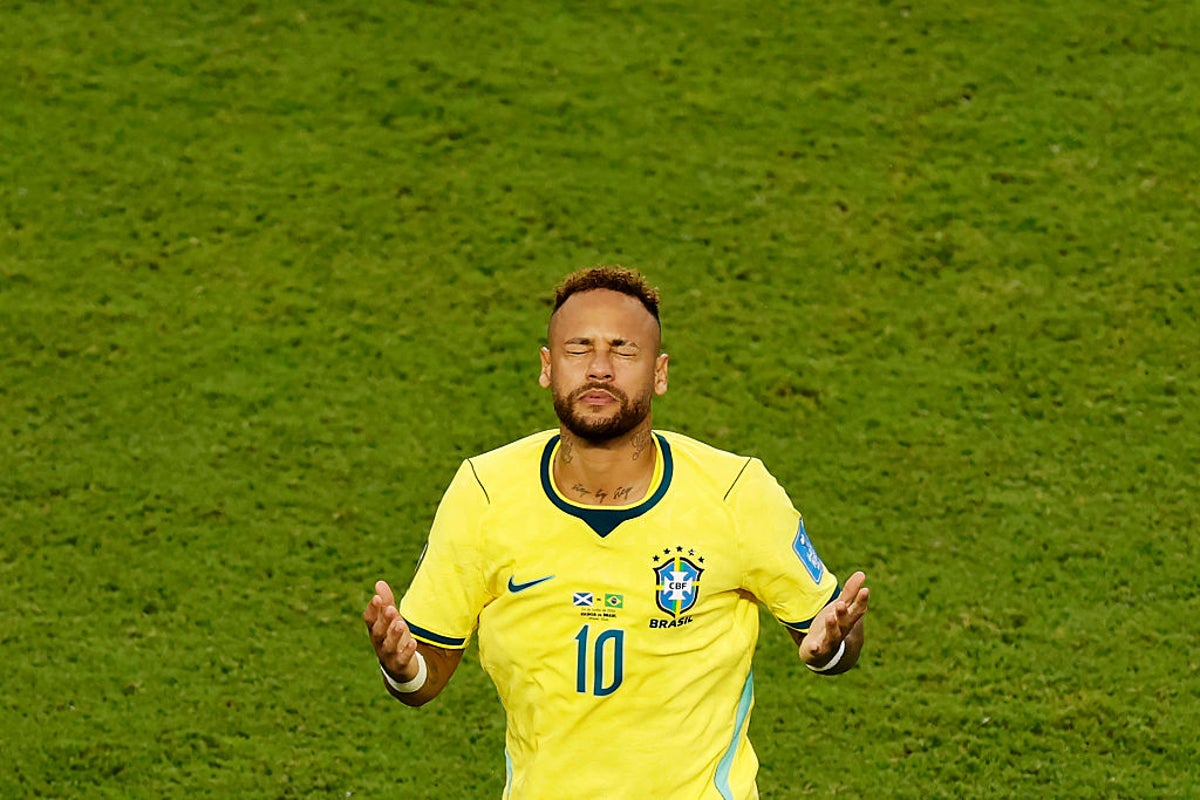
The timeline overlaps cleanly. That's why online commentators jumped on the correlation. They point to players like Endrick, who openly thanked God for the opportunity after missing a critical shot against Norway, claiming that this mindset lacks accountability.
Journalists and online traditionalists claim that "evangelical guilt is too permissive," suggesting that players outsource responsibility for their performance instead of striving for redemption.
It's a convenient story. But it ignores basic history.
Faith Has Always Been on the Field
The idea that older, winning Brazilian teams were secular or purely Catholic free-spirits is pure revisionism.
Look at the 2002 championship squad. Kaká famously wore his "I Belong to Jesus" shirt under his jersey during international finals. Lúcio and Edmílson led team prayer circles on the pitch right after beating Germany in Yokohama. Earlier generations, including the legendary 1970 team, routinely wore religious symbols and credited divine intervention for their skill.
Religion isn't new to Brazilian sports. What changed isn't the presence of faith—it's the structure of global soccer.
Why Brazil Actually Lost Its Swag
If religion isn't the culprit, what broke the traditional Brazilian style known as jogo bonito?
The answers lie in economics and modern sports science, not church pews.
1. Early Export to European Academies
Brazilian prodigies don't stay in domestic leagues long enough to refine the street-born dribbling style of past generations. European clubs buy teenagers before they turn 18. They enter tactical academies that prioritize:
- One-touch passing mechanics
- Strict pressing systems
- Physical conditioning over individual flair
By the time these players join the national team, they play European tactical football. They aren't "playing like gringos" because of church—they're playing that way because European coaching taught them to.
2. The Death of Pickup Street Soccer
The iconic favela street games that produced players like Pelé and Garrincha have shrunk. Urban development, security concerns, and structured youth academies replaced informal street games. The spontaneous improvisation that once defined Brazilian ball control was forged in unorganized, unstructured spaces. Those spaces barely exist in modern urban centers.
3. The Physicality of the Modern Game
Defensive structures across international soccer have tightened dramatically. Teams like Norway don't leave space for individual flair or lengthy dribbling sequences. Athleticism, defensive transitions, and set-piece efficiency win knockout games today. Relying purely on individual genius no longer works against organized European blocks.
What Needs to Change Next
Blaming church membership lets soccer administrators off the hook. If the Brazilian Football Confederation (CBF) wants to return to the top, they need practical fixes on the grass rather than sociological debates online.
- Overhaul domestic youth development: Focus youth coaching on spatial creativity and individual 1v1 skill alongside modern physical conditioning.
- Fix mid-match tactical adaptability: National team managers must build structured attacking schemes that don't rely entirely on isolated star wingers to create magic out of nothing.
- Stop searching for cultural excuses: Own the performance gaps. Recognize that winning international tournaments requires tactical discipline and tactical flexibility, regardless of what players do off the pitch.
Fix the tactical structure, update the youth pipeline, and the results will follow. The altar has nothing to do with it.
This video directly breaks down how faith, sports culture, and global athlete outreach intersect at the 2026 World Cup: Christian Athletes Taking Over the World Cup.