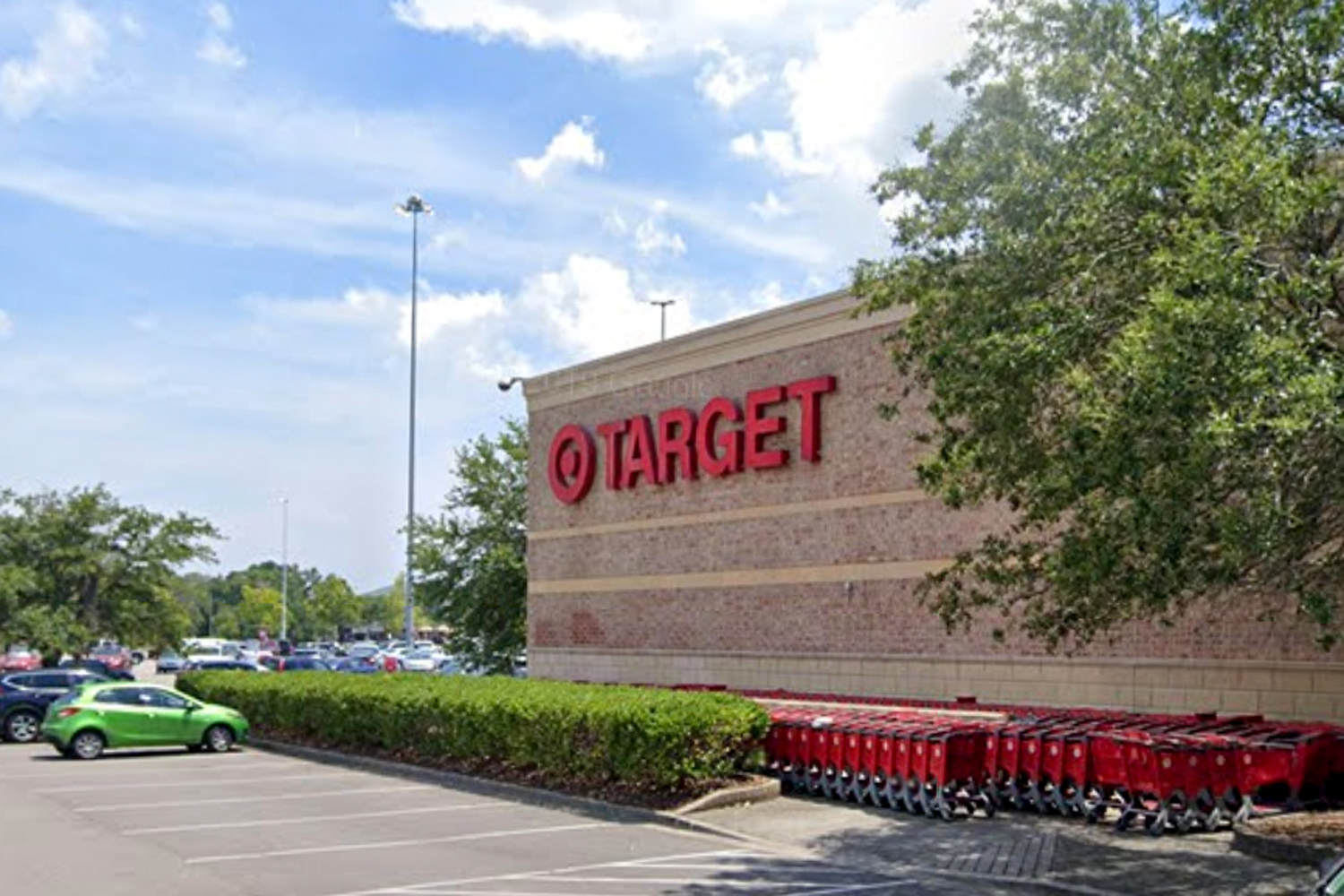
You saw the headline. You felt the immediate, visceral surge of moral superiority. A South Carolina father gets cuffed because he left his sleeping six-year-old daughter unattended in a retail queue just to secure a fresh drop of cardboard monsters.
The comment sections wrote themselves. Bad parent. Degenerate gambler. Put him under the jail. For an alternative view, see: this related article.
That is the lazy consensus. It is easy, it feels great, and it is completely blind to the structural rot that put that child on a cold floor at dawn.
Let’s get the obvious out of the way first so nobody accuses me of defending child neglect. Leaving a six-year-old alone in public is a catastrophic failure of basic parental duty. Full stop. The police did their job, and the father deserves every ounce of legal scrutiny coming his way. Further insight regarding this has been provided by BBC News.
If you stop your outrage at the guy in handcuffs, however, you are falling for the oldest trick in modern corporate PR. You are blaming the symptom while giving the disease a free pass.
The Manufactured Scarcity Engine
To understand why a grown man lost his mind over shiny cardboard, you have to stop looking at Pokémon as a children’s toy and start looking at it as an unregulated commodity market.
The Pokémon Company International—and its primary retail partners like Target, Walmart, and GameStop—do not have a "supply chain problem." They have a distribution strategy that weaponizes artificial scarcity.
I have spent over a decade watching secondary collectible markets warp human behavior. I’ve watched grown men throw elbows at security guards over limited-edition sneakers, and I’ve seen tech enthusiasts camp outside brick-and-mortar stores in freezing sleet for graphics cards that double in value the second they cross the threshold. When a corporation intentionally restricts supply on a high-demand asset to guarantee day-one sellouts, they are not just marketing a product. They are printing untaxed bearer bonds and tossing them into a crowded room.
Think about what a modern Pokémon Elite Trainer Box or booster bundle actually represents at retail. You pay fifty dollars at the register. Before you even reach your car in the parking lot, that exact box is worth eighty to a hundred dollars on TCGplayer or eBay. If you crack the packs and hit a Special Illustration Rare, that fifty-dollar buy-in suddenly morphs into a four-hundred-dollar payout.
This is no longer a hobby. It is high-frequency retail arbitrage.
When major manufacturers refuse to print to demand—or stagger wave releases so thinly that local stores receive twelve units for a metro area of half a million people—they create a zero-sum gladiatorial arena. The retail floor becomes a casino where the house takes zero risk, the scalpers get the profit, and the actual consumers get trampled.
Retail Cowardice and the Line-Cutting Economy
Look closely at the logistics of the South Carolina arrest. Why was a child in a line at all?
Because big-box retailers enforce brain-dead, arbitrary purchase limits—usually "two items per person"—without implementing any basic crowd-control infrastructure.
Let’s break down the math of the "per-person" limit:
- The Scalper Math: If a single collector stands in line, they get two boxes. Profit margin: roughly sixty dollars. Not worth sleeping on concrete.
- The Family Multiplier: If that same person brings a spouse, a cousin, and a six-year-old child, that single household suddenly controls eight boxes. Profit margin: nearly two hundred and fifty dollars in forty-five minutes.
Retail executives know this happens. Store managers see it every Friday morning at 8:00 AM. Yet, they refuse to switch to digital lottery systems, verified loyalty-account pre-orders, or behind-the-counter ticketing. Why? Because chaos drives foot traffic. A line wrapping around the building generates free local press, signals massive brand heat to shareholders, and guarantees that every square inch of shelf space clears out before lunch.
By refusing to modernize how high-heat releases are distributed, retailers actively incentivize adults to use children as human placeholders. The father in South Carolina made an unforgivable choice to walk away from his daughter, yes. He did so inside a physical environment deliberately engineered by multi-billion-dollar corporations to reward whoever is willing to act the most desperate.
Dismantling the "Just Buy Singles" Myth
Whenever an incident like this hits the news cycle, the self-righteous purists crawl out of the woodwork with the exact same tired talking points. Let’s dismantle the three most common misconceptions surrounding modern trading card mania.
"Why don't people just buy the individual cards online instead of camping out?"
This assumes the person in line is a collector. They aren't. Most of the people camping outside big-box stores at 4:00 AM are liquidity providers—scalpers, streamers, and "rip-and-ship" operators on platforms like Whatnot and TikTok Live. They cannot buy singles because their entire business model relies on selling the gamble of sealed product at a forty percent markup to viewers sitting at home. Telling a sealed-product flipper to "just buy singles" is like telling a bookie to just bet on the games himself. You fundamentally misunderstand the mechanism.
"It’s just a kids' game; adults have ruined it."
Pokémon hasn't been "just a kids' game" since the late 1990s, and the brand actively courts adult wallets. Look at the pull rates on modern sets. In recent expansions, pulling a specific top-tier chase card can require opening upwards of a thousand packs. No eight-year-old has four thousand dollars in allowance money to chase an alternate-art card. The Pokémon Company designs sets around ultra-low pull rates specifically to hook adult gamblers and high-end collectors. Adults didn't hijack the hobby; the corporation built a casino and hung a cartoon mouse over the entrance.
"Stores are doing their best to keep things fair for everyone."
No, they aren't. If Target or Walmart actually wanted to eliminate physical lines, scalper violence, and child endangerment, they could do it tomorrow. How? Put the inventory online, tie purchases to verified accounts with a minimum thirty-day purchase history, require a valid ID at pickup, and limit allocation to one unit per household billing address. They don't do this because implementing bot-protection and account verification costs money, whereas letting people fight in the electronics aisle is completely free.
The Psychological Trap of the Secondary Market
We need to talk about the addiction mechanics at play here, because standard news coverage treats this guy like a cartoon villain rather than an addict acting out a predictable behavioral loop.
Behavioral economists—most notably B.F. Skinner with his work on variable-ratio reinforcement schedules—proved decades ago that unpredictable rewards create the most compulsive behavior in mammals. A slot machine doesn't pay out every third pull; it pays out randomly. That unpredictability floods the brain with dopamine, overriding rational risk assessment.
Modern trading card releases stack two separate slot machines on top of each other:
- The Hunt: Will the store have stock? Will the vendor show up today? Will I beat the guy in the Honda Civic to the shelf?
- The Rip: What is inside the foil wrapper?
When you combine the adrenaline of physical scarcity with the financial lure of instant secondary-market equity, you hijack the human prefrontal cortex. A person deep in that loop stops seeing a dangerous parking lot or an unattended child. Their brain is locked onto one singular objective: secure the asset before the window closes.
Admitting this doesn't absolve the father. In the legal system, intent and impairment rarely excuse negligence, nor should they. As a society, however, if we pretend this is an isolated moral failing rather than a predictable outcome of gamified retail, we are going to keep reading this exact same headline every six months.
The Uncomfortable Downside of Fixing the System
Here is where the contrarian reality gets messy, and where I have to be honest about the trade-offs.
If you want to stop adults from dragging kids into dawn retail queues, you have to kill the secondary market thrill. That means manufacturers must print cards into absolute oblivion.
Imagine a scenario where every Walmart in America has three hundred Elite Trainer Boxes sitting on the shelf on a random Tuesday afternoon. The scalpers vanish overnight. Nobody camps out. Nobody leaves their kid in an aisle to grab a box.
Here is the catch nobody in the hobby wants to admit: if you print to demand, the hobby crashes.
We saw this happen in the sports card industry during the "Junk Wax Era" of the late 1980s and early 1990s. Topps, Upper Deck, and Donruss printed millions upon millions of cards to meet surging demand. Within five years, those cards became worthless kindling, local card shops went bankrupt in droves, and the entire industry flatlined for two decades.
Collectibles only hold cultural and financial gravity when they are hard to get. The Pokémon Company knows this. They walk a razor-thin tightrope between keeping shelves empty enough to maintain hype and full enough to keep casual buyers from quitting entirely. Every time a headline like the South Carolina arrest goes viral, it is proof that they slipped off the wire—and the public ends up paying the price.
How to Actually Break the Cycle
You cannot legislate bad parenting out of existence, and you cannot expect publicly traded corporations to voluntarily kneecap their own profit margins out of the goodness of their hearts. If you are a parent, a collector, or a store manager tired of watching this circus play out, stop waiting for the system to fix itself.
- If you are a retail manager: Stop putting high-heat trading cards on open floor displays. Move them behind the customer service desk, issue numbered wristbands at 7:45 AM, and enforce a strict one-per-adult-ID policy. If someone doesn't have a government-issued ID, they don't get an allocation. Watch the "family multiplier" scam evaporate in ten seconds.
- If you are a consumer: Boycott the local scalper ecosystem entirely. Every time you pay ninety dollars on Facebook Marketplace for a fifty-dollar box just so your kid can open packs on their birthday, you are funding the exact person who pushed a child out of line at 6:00 AM. Buy Korean or Japanese booster boxes directly from reputable overseas distributors for a fraction of the price, or wait six months for the inevitable reprint wave when prices crater.
- If you are a parent: Never bring your child into a speculative retail environment. Period. Treat a hyped card release the exact same way you would treat a crowded casino floor or a Black Friday doorbuster stampede. If the item requires standing in a line before sunrise, it is not a family outing.
The South Carolina police department arrested the guy who left his daughter alone, and the courts will handle his punishment. Meanwhile, the executives who engineered the scarcity and the retailers who profited from the stampede are already prepping next month's release schedule.
Locking up one bad dad doesn't fix a broken market; it just clears one more body out of the line for next Friday.