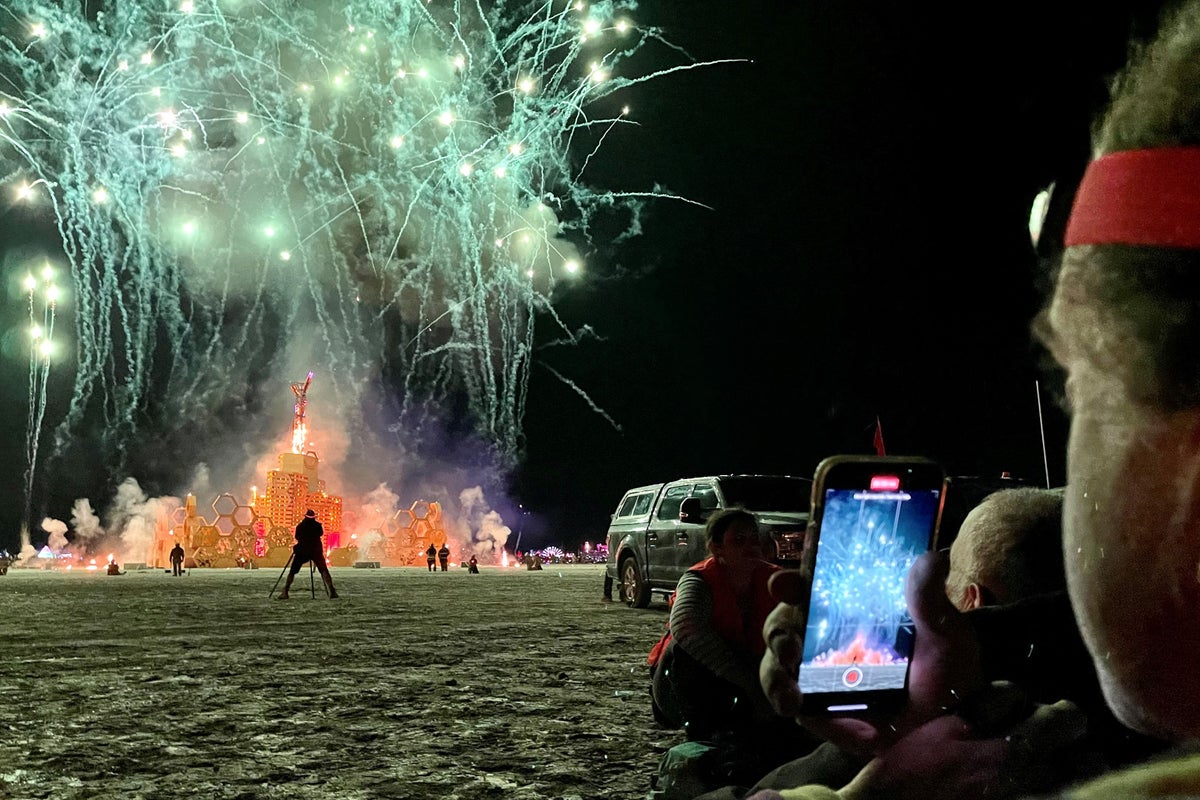
The headlines always follow the exact same predictable, lazy script. A tragedy strikes in the middle of the Nevada desert, and the media machine immediately whirs into motion to point a collective, trembling finger at the event itself. When reports surface about a fatality at Black Rock City, the lazy consensus writes itself within minutes. Pious columnists crawl out of the woodwork to decry the lawlessness, the heat, the dust, and the supposed moral decay of a temporary metropolis that operates outside the bounds of conventional municipal safety.
It is easy to blame the festival. It is comfortable. It requires zero critical thinking to declare that gathering tens of thousands of people in an extreme environment is an invitation for disaster.
Except that framing is entirely backwards.
I have spent years studying mass gatherings, emergency logistics, and high-intensity human systems from the inside. I have watched organizers sweat over multi-million-dollar contingency plans while critics sitting in air-conditioned newsrooms typed out moral panics about desert heat. The uncomfortable truth that nobody in mainstream media wants to admit is that Burning Man is statistically safer than almost any major American city of comparable size.
When a person dies at an event like this, the knee-jerk public reaction demands a scapegoat. The machinery of outrage turns the individual into a symbol of systemic failure. But let us look at the actual data instead of relying on emotional panic. Black Rock City operates as a temporary municipality. It builds its own infrastructure, manages its own emergency medical services, and handles trauma care that rivals small regional hospitals.
The Fallacy of the Controlled Environment
The core misunderstanding driving these sensationalized news cycles is the naive belief that safety is something you can mandate into existence through heavy-handed bureaucracy and perimeter fences. Critics look at the wide-open playa and see a lawless wasteland. They assume that because there are no traditional traffic lights or police officers stationed on every corner, chaos must reign supreme.
That assumption collapses under the weight of basic statistics.
Imagine a scenario where a city of seventy thousand people spends a week operating under standard urban conditions. The baseline rates of medical emergencies, cardiac events, and accidental injuries in a standard population of that size are predictable, baked-in statistical certainties. Human biology does not take a vacation just because you put on goggles and ride a mutant vehicle. Hearts give out. Chronic conditions flare up. People make poor decisions regarding hydration and physical limits.
When these inevitable medical events happen inside a traditional municipality, they are quietly absorbed by the background noise of daily life. They become local news blurbs on page four, processed through standard bureaucratic channels. But when the exact same statistical inevitability happens inside the boundaries of a high-profile counter-culture gathering, the event brand becomes the narrative. The media treats a medical emergency not as a tragic fact of human mortality, but as an indictment of a lifestyle.
This is intellectually dishonest. It treats individual autonomy as a design flaw.
Personal Responsibility Versus Corporate Nanny States
We live in an era obsessed with risk elimination. Modern society has been engineered by risk-averse bureaucrats who treat every scraped knee or fatal health event as a lawsuit waiting to happen. Every public space must be padded, regulated, monitored, and sterilized until all agency is stripped away from the individual.
Burning Man stands as one of the last major cultural resistance points against this antiseptic nanny state. The entire social contract of the event—enshrined in principles like radical self-reliance—is built on a foundational premise that has vanished from mainstream civic life: you are responsible for yourself.
The critics hate this because it scares them. They want a world where an organization can guarantee your safety from cradle to grave. They want warning labels on the desert dust, safety briefings for the sunrise, and liability waivers for the weather.
When you strip away personal responsibility, you do not actually make people safer. You just make them careless. You foster a false sense of security that causes individuals to ignore their own biological limits because they assume someone else is watching out for them. The harsh environment of the Black Rock Desert strips away that illusion immediately. It forces you to confront reality. If you fail to drink water, you suffer the consequences. If you fail to prepare for extreme temperature swings, your body pays the price.
That is not a bug in the system. That is the entire point.
The Real Cost of Sanitizing Culture
Let us look at the heavy hitters in public safety research. Urban planners and disaster management experts frequently point out that dense, highly regulated environments often breed complacency. When people believe a system is entirely foolproof, they take larger risks. Conversely, environments that present visible, upfront hazards—like mountains, oceans, or deserts—frequently see lower rates of baseline carelessness because the danger is transparent.
Yet, every time a tragedy occurs in these spaces, the immediate cry from the cultural sidelines is for more control. More gates. More rules. More overseers telling adults how to manage their own existence.
Admitting the downsides of a radical self-reliance model requires intellectual honesty. Yes, decentralized, high-autonomy environments carry risks. You cannot eliminate tragedy from human existence unless you eliminate freedom entirely. A completely safe society is a completely locked-down prison.
When we hyperventilate over every tragic incident at a gathering of free-thinkers, we are signaling to event organizers everywhere that they must choose between two paths: lock everything down into a boring, sanitized festival clone, or face endless media crucifixion. We are punishing the very spaces that allow human beings to test their limits, build real community, and step outside the mundane matrix of daily consumerism.
Stop looking at the desert through the lens of a corporate risk assessor. Stop pretending that human mortality can be legislated out of existence if we just put enough warning tape around the sunset.
The next time a tragedy makes the news cycle, resist the urge to nod along with the chorus of pearl-clutchers. Understand that living a life of actual agency means accepting the inherent fragility of being human—whether you are sitting in a sterile office park or dancing in the dust.