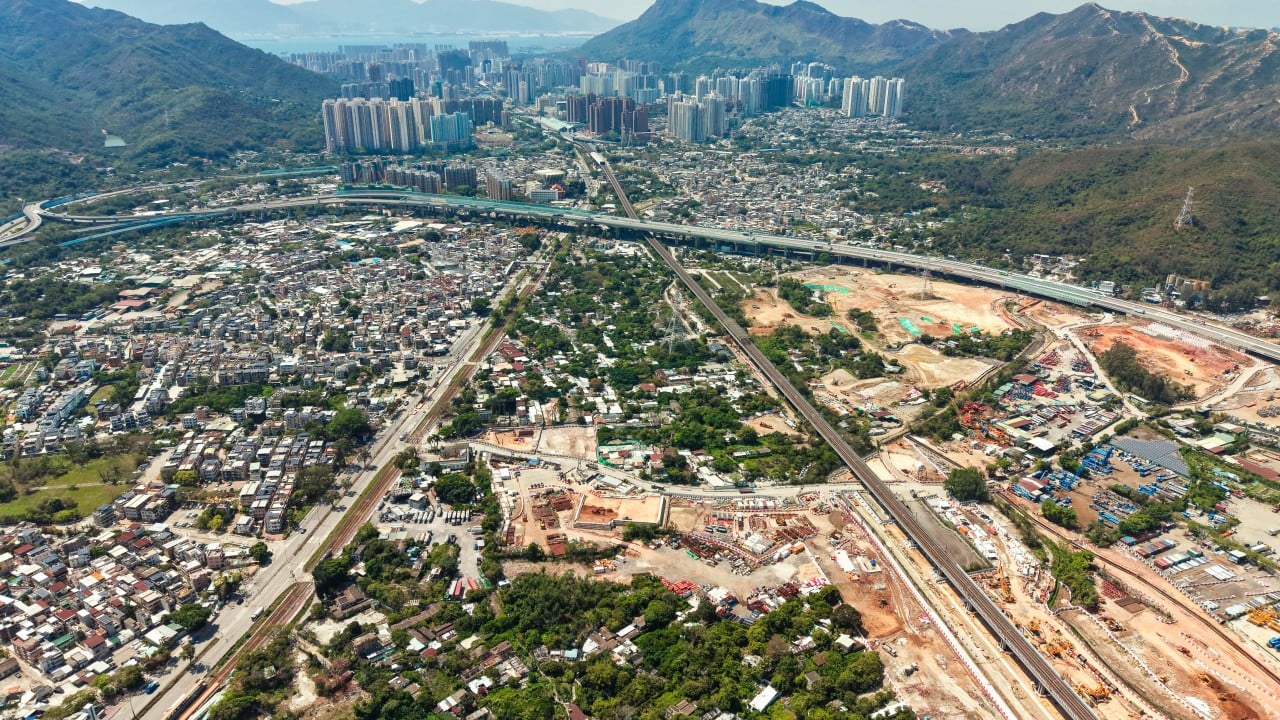
The ink has barely dried on the contracts, yet the underlying anxiety remains palpable across the territory. When major property heavyweights secure massive government parcels for over one billion dollars, official press releases always frame the transaction as an unmitigated vote of confidence. They talk about future economic corridors, strategic positioning, and visionary urban planning. Veteran market observers know better than to swallow corporate and bureaucratic spin without checking the ledger.
This specific land transaction within the much-hyped Northern Metropolis initiative highlights a deeper, far more complex financial gamble. Real estate syndicates are not charities. When top-tier developers deploy massive capital into unproven suburban frontiers, they are hedging against structural shifts in the local economy. Strip away the glossy artist renderings and municipal press conferences. You find a high-stakes calculation balancing immense development costs against shifting demographic realities and prolonged interest rate pressures. If you found value in this piece, you might want to read: this related article.
For decades, urban development in the region followed a predictable blueprint. Developers acquired prime urban plots, built luxury high-rises, and cashed in on immediate residential demand. That old playbook is showing cracks. The Northern Metropolis represents a starkly different trajectory. It pushes deep toward the border, aiming to integrate local commerce with neighboring Shenzhen. Yet, bridging infrastructural divides takes years, sometimes decades. Building a self-sustaining economic engine from scratch requires more than pouring concrete. It demands corporate tenants and resident populations willing to anchor themselves far away from traditional downtown cores.
Market heavyweights stepping into these early tenders do so from a position of calculated leverage. They secure prime positioning at depressed entry costs compared to historical urban land prices. They shape the initial master planning to favor their long-term portfolios. If the government eventually accelerates infrastructural spending on cross-border rail links and highway grids, these early movers reap exponential rewards. For another perspective on this event, see the recent coverage from Business Insider.
Conversely, the risks hiding beneath the surface are substantial. Construction timelines stretch longer when dealing with remote lots lacking foundational utility connections. Financing costs eat into profit margins every single month a project sits idle in the approval queue. Smaller developers cannot absorb this kind of multi-year capital lockup. Only the largest conglomerates possess the balance sheets required to weather prolonged periods of macroeconomic uncertainty. This dynamic threatens to concentrate even more market power into the hands of a few entrenched corporate giants.
Public officials lean heavily on these high-profile land sales to project stability and forward momentum. Every successful tender gets paraded as proof that private capital believes in the regional vision. Analysts tracking actual ground-level absorption rates and commercial leasing demand offer a more tempered outlook. Residential supply pipelines are expanding rapidly. Absorption capacity must keep pace with construction output to avoid oversupply traps that depress property values across the board.
Urban transformation is never a straight line. It stumbles through bureaucratic delays, financing bottlenecks, and shifting public sentiment. The recent billion-dollar commitments signal that corporate titans are willing to place their chips on the table. Whether that bet pays off depends entirely on execution speed and cross-border integration policies that remain largely untested. The real story is not about corporate optimism. It is about an elite tier of developers locking down future territory while absorbing risks that would break anyone else.