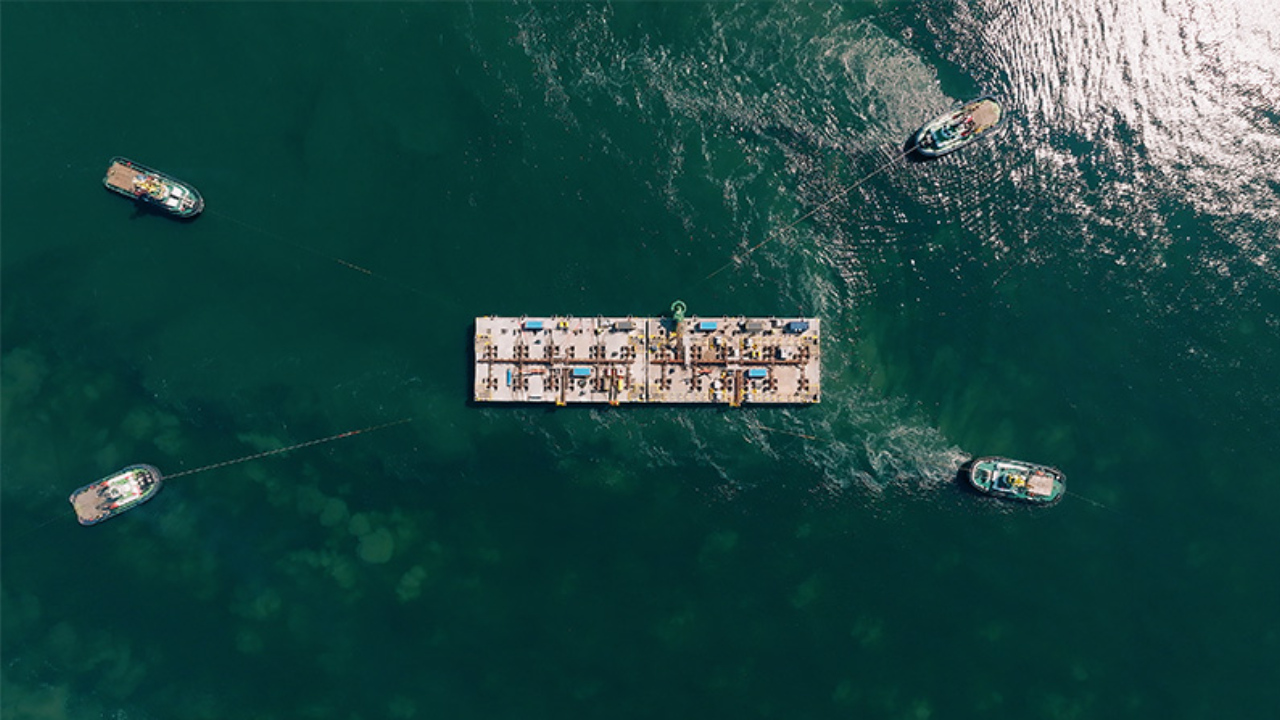
Everyone is losing their minds over twenty-three giant concrete blocks.
The media calls it a masterstroke. Seven billion euros of taxpayer and corporate capital channeled into sinking massive caissons off the Belgian coast to anchor the world's first artificial energy island. They tell you it is the dawn of a new era. They tell you we are finally engineering our way out of the climate crisis by pouring enough aggregate into the North Sea to pave a parking lot over marine ecosystems.
I have watched companies burn money on grand infrastructure theatre for two decades. I have seen boardrooms applaud vanity projects that look magnificent in a glossy slide deck and fail miserably on a balance sheet. This project is not a triumph of green engineering. It is a monument to sunk-cost fallacy wrapped in slick PR.
Let us look at the mechanics of what is actually happening.
The Structural Fallacy of Fixed Offshore Hubs
The core premise of the Princess Elisabeth Island is simple: collect offshore wind power, convert it to high-voltage direct current, and beam it to the mainland. Sounds clean. Sounds modern. It also ignores every lesson we should have learned from decades of offshore oil and gas production.
Fixed-bottom artificial islands are static investments in a dynamic, volatile environment. You are anchoring a multi-billion-dollar electrical substation to a static pile of sand and concrete in a marine zone battered by North Sea storms, shifting currents, and rising sea levels.
Imagine a scenario where a localized seabed failure occurs or maintenance bottlenecks paralyze the caissons during a harsh winter gale. You cannot simply tow a concrete island to a dry dock. You are locked into a fixed asset that exposes project developers to catastrophic repair costs and long-term asset degradation.
The lazy consensus claims we need massive physical real estate in the middle of the ocean to manage high-voltage direct current electricity transmission. The data says otherwise. Floating offshore substations achieve the exact same power-routing capabilities at a fraction of the capital expenditure, while remaining entirely mobile. If demand shifts or wind lease areas are redrawn, a floating platform moves. A twenty-three-block concrete island stays put, draining cash long after its operational efficiency peaks.
The Economics Nobody Wants to Print
Seven billion euros is a staggering price tag for an intermediate transmission node. When you divide that figure by the energy capacity it services, the levelized cost of electricity does not drop; it gets heavily subsidized.
Proponents love to hide behind macro numbers. They talk about gigawatts of green capacity unlocked like those gigawatts arrive free of financial friction. But capital efficiency dictates that every euro tied up in pouring monumental concrete blocks in deep water is a euro not deployed into grid digitalization, local storage, or demand-response architecture closer to the point of consumption.
Distributed energy networks win because they are agile, redundant, and modular. Centralized mega-projects like this one rely on single points of failure. If the transmission corridor running off this island experiences a catastrophic fault, a massive chunk of offshore generation capacity gets stranded overnight.
I have sat across the table from project financiers who privately admit that the economics only pencil out because state guarantees cushion the downside. When the government steps in to backstop construction overruns, market discipline dies. You stop optimizing for efficiency and start optimizing for budget consumption.
What We Should Be Doing Instead
The smart money is moving away from monumental civil engineering and toward software-defined grid management and decentralized modular nodes.
Instead of sinking billions into localized real estate to bundle cables, the focus should be on native subsea modular hubs that require zero artificial landmass creation. We already possess the technology to place power electronics directly on the seabed or on modular floating hulls that integrate with existing turbine infrastructure.
Building artificial islands is an analog solution to a digital problem. It satisfies the political urge to cut ribbons and unveil massive physical structures that look great from a helicopter. But industrial strategy should not be dictated by what photographs well in a corporate annual report.
Belgium spent seven billion euros to plant twenty-three concrete blocks in the middle of the sea. History will look back at this not as the birth of energy independence, but as an expensive monument to how hard it is to let go of twentieth-century thinking.