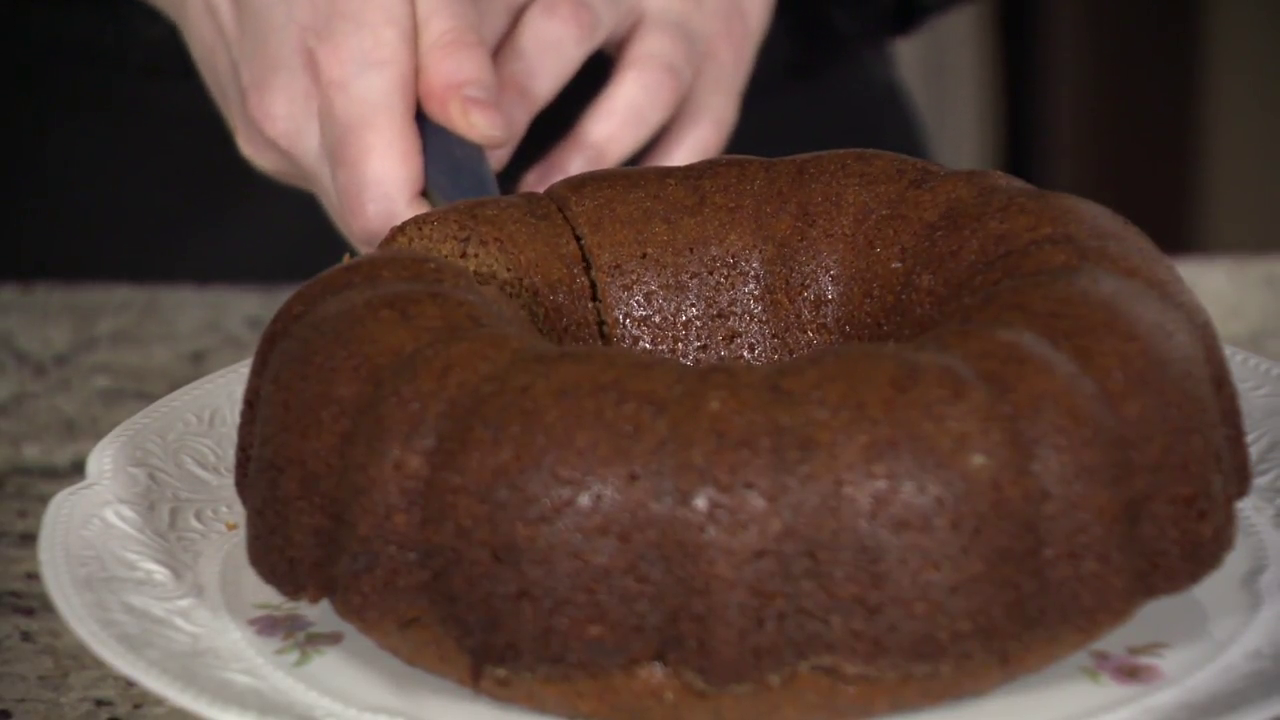
Cloves.
That is the smell that stops people cold in a hallway three houses down, long before anyone sees a fork or a plate or a cooling rack. Recently making waves recently: Why Chasing Meaning Too Soon Traps Your Ears in Silence.
I have stood in kitchens where the air felt heavy with old wood, rain against single-pane glass, and the quiet terror of trying to bake something that belongs to someone who is no longer in the room. Baking is supposed to be gentle. Sometimes it feels like walking a tightrope over a canyon while holding a fragile glass bowl. You measure flour with hands that are slightly too tense. You listen to the oven fan like a doctor listening to a slow pulse. You wonder whether a recipe written in faded blue ink on a torn index card actually contains the whole truth, or only the shorthand a person used after forty years of knowing how her own thumb felt on a wooden spoon.
A standard recipe card tells you what goes into the batter. It lists cups of flour, dark brown sugar, melted butter, eggs at room temperature, a pinch of salt, baking soda, cinnamon, nutmeg, cloves, maybe a splash of buttermilk or sour cream, and a glaze poured while the crumb still holds a whisper of heat. A dry list makes a spice bundt cake sound like arithmetic. Add A to B, stir until combined, bake at 350 degrees Fahrenheit for fifty to sixty minutes, cool ten minutes in the pan, turn out onto a plate. More details on this are covered by The Spruce.
Arithmetic does not explain why Becky’s great aunt’s spice bundt cake matters.
A recipe is never just a list of ingredients; it is a time capsule of attention, scarcity, habit, and love compressed into a repeatable ritual.
When people search for a favorite family recipe like a spice bundt cake, they rarely want mere chemical instructions. They want to know how to keep a dense cake tender without turning it into brick. They want to know why warm spices sometimes taste sharp and bitter instead of sweet and cozy. They want to know whether to use a glass bowl or a metal one, how to keep a ring cake from sticking to the fluted ridges, and how to make a simple glaze that sinks into the crumb rather than sliding off like wax. Most of all, they want the reassurance that when they pull that golden ring from the oven, the room will smell like home—even if they are baking it for the first time in an apartment with a crooked stove.
To understand what is really at stake in a kitchen like Becky’s great aunt’s, consider a hypothetical character named Clara, a thirty-four-year-old archivist who moved across the country two winters ago and inherited a shoebox of family recipes after her great-aunt passed away. Clara is not a pastry chef. On weeknights she eats toast over the sink and reads until her eyes burn. Yet on a gray Sunday in November, she pulls out a heavy aluminum bundt pan, sets a bundle of index cards on the counter, and decides she is going to bake the spice bundt cake everyone talked about at Thanksgiving.
Clara represents a quiet cultural shift. According to food historians and culinary surveys over the past decade, younger home cooks increasingly turn to inherited or vintage recipes not out of strict necessity—grocery stores sell spiced cakes year-round—but out of a hunger for continuity in an unsettled world. Memory is slippery. Photographs get buried on hard drives. Voices fade. A physical object you can taste, smell, and slice on a Sunday afternoon anchors people in ways a screen never can.
Still, baking from a family card is nerve-wracking. Old recipes often skip details because the writer lived inside the method. When Becky’s great aunt wrote "warm spices" or "a good glug of molasses" or "bake until done," she wasn't trying to be vague. She was writing from muscle memory. She knew what batter looked like when it ribboned off a spoon. She knew the sound of a cake gently pulling away from a greased pan. When Clara reads those same words forty years later, every missing detail feels like a trapdoor.
Let’s be honest about that fear. Baking has almost no room for bluffing once the oven door closes. If you add too much flour, the crumb dries out like sawdust. If you over-mix after the dry ingredients go in, gluten tightens and turns a tender cake tough. If your oven runs twenty-five degrees hot, the outside burns while the center stays gummy. Admitting that baking can feel intimidating—especially when emotional weight is attached to the outcome—is not weakness. It is the starting point of good cooking.
Why does a bundt pan in particular carry so much domestic drama?
Look at the geometry of a bundt cake. A central chimney runs straight up the middle of the pan. That hollow tube is a brilliant piece of thermal engineering: it lets heat reach the center of a thick, rich batter more evenly than a solid round cake pan ever could. Yet the fluted walls and tight corners create dozens of tiny pockets where butter, sugar, and flour can either release cleanly or cling stubbornly. If you brush melted butter into the grooves without dusting with flour or cocoa—or if you let the cake cool for two hours until sugar caramelizes against the metal like glue—turning the pan upside down becomes a suspense thriller. One ragged tear along the crust and your heart sinks before you even cut a slice.
Warm spices add another layer of craft. Cinnamon, nutmeg, cloves, and allspice contain volatile essential oils—cinnamaldehyde, eugenol, myristicin—that give autumn baking its unmistakable depth. Heat releases those aromatics, filling a kitchen with warmth long before a timer chimes. Yet spices have a personality of their own. Cloves are potent; too much turns a sweet crumb medicinal. Nutmeg is best freshly grated, because pre-ground nutmeg loses its bright edge over months in a dark cabinet. Brown sugar brings molasses, moisture, and a deep caramel note that white sugar alone cannot match.
Think of spice balance like a string quartet—a metaphor here, since a spice blend is not literally music, though the harmony works the same way. Cinnamon carries the long, steady melody. Nutmeg adds a nutty, woody warmth underneath. Cloves and ginger act like sharp plucked notes that keep the sweetness from going flat. When one instrument plays too loud, the whole piece feels off-balance. When they sit in proportion, nobody names the individual notes; they just lean back in their chairs and say, "That tastes right."
In Clara’s hypothetical Sunday afternoon, she makes a classic beginner’s mistake first. She rushes. She pulls cold butter from the fridge, beats it for thirty seconds instead of creaming it smoothly with brown sugar until pale and fluffy, and dumps the flour in all at once.
The batter looks lumpy. Doubt creeps in.
She pauses, sets the mixer down, and breathes. That pause is the turning point. Good baking rarely rewards panic. It rewards paying attention to cues: butter soft enough to leave a gentle fingerprint without melting into grease; eggs added one at a time so the emulsion stays smooth instead of curdling; dry ingredients folded in gently until no streaks of white flour remain.
When she slides the pan into the oven, something subtle happens in the room. Within twenty minutes, the sharp edge of raw spice softens into something round and comforting. Thirty-five minutes in, the cake rises above the rim, dome-shaped and golden. Around forty-five to fifty-five minutes—depending on the pan and oven—a skewer inserted into the thickest part comes out clean or with a few moist crumbs, never wet batter.
Waiting is the hardest part.
Letting the cake rest in the pan for about ten to fifteen minutes allows the structure to set slightly and steam to loosen the edges without letting the crust glue itself to the metal. Then comes the flip: a plate pressed firmly over the top, a quick confident turn, a lift of the pan. Sometimes a tiny patch of crust stays behind in a flute. You patch it back with a warm spoonful of glaze and nobody on earth notices.
Speaking of glaze, that simple finish—often confectioners' sugar whisked with a splash of cream or milk, a drop of vanilla, and a pinch of cinnamon or maple—does more than decorate. As it trickles down the ridges while the cake is still slightly warm, it creates a thin, sweet crust over the tender spice crumb underneath.
By the time Clara cuts the first slice, the kitchen window has fogged along the bottom edge from the cooling cake. The crumb is moist, dark with brown sugar and spice, and sturdy enough to hold its shape on a plate without crumbling into dust. She takes a bite. It is not a showy restaurant dessert spun with spun sugar and edible gold. It is better than that. It is steady. It tastes like patience, warmth, and someone who cared enough to feed the people at her table.
Family recipes survive not because they are frozen in amber, but because someone keeps showing up at the stove to translate them for a new generation. Every time a home baker measures out cinnamon, grates a little nutmeg, greases the grooves of a bundt pan, and waits for the oven light to glow, an old story gets written in fresh flour.
Long after the last crumb is brushed off the plate and the sink is scrubbed clean, the scent of cloves and warm sugar lingers in the dish towel—quiet proof that love doesn't have to shout to stay in the room.