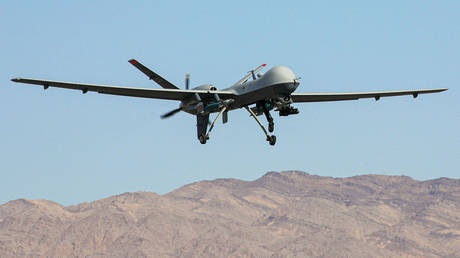
A grainy photograph from 2007 changed how we look at the sky. In the photo, a white, bat-winged aircraft sat on a runway in Afghanistan. It didn't look like a Predator or a Reaper. It had no tail. It had no visible propeller. It looked like a miniature B-2 bomber, and the aviation world lost its mind. This was the RQ-170 Sentinel, quickly nicknamed the Beast of Kandahar.
For years, the Pentagon didn't even acknowledge it existed. They didn't have to. The "Beast" was doing its job in the shadows, vacuuming up signals and peering over borders where it wasn't supposed to be. But the real story isn't just about a cool-looking drone. It’s about a massive intelligence failure that happened in 2011 when one of these multi-million dollar machines fell into Iranian hands. If you think stealth is an invisible shield that lasts forever, you're wrong. The capture of the RQ-170 proved that even the most advanced tech is vulnerable to a simple GPS trick.
The Secret Life of the RQ-170 Sentinel
Before it became a trophy in Tehran, the RQ-170 was the crown jewel of the Air Force's 30th Reconnaissance Squadron. Lockheed Martin’s Skunk Works built it. That's the same group that gave us the SR-71 Blackbird and the F-117 Nighthawk. They know how to hide things from radar.
The Beast of Kandahar wasn't armed. It didn't carry Hellfire missiles. Its only weapons were its sensors and its shape. By using a "flying wing" design, the drone lacks vertical surfaces like tail fins, which are usually the biggest reflectors of radar waves. It was designed to loiter over "denied" airspace—places like Iran, North Korea, and Pakistan—without being noticed.
We know it played a massive role in the 2011 raid that killed Osama bin Laden. While SEAL Team Six was on the ground in Abbottabad, an RQ-170 was circling high above. it provided live video feeds to the White House Situation Room. It watched the Pakistani military to see if they were scrambling jets. It was the ultimate eye in the sky. Then, seven months later, the unthinkable happened.
How Iran Actually Hijacked the Beast
On December 4, 2011, an RQ-170 took off from a base in Afghanistan and crossed into Iranian airspace. It never came back. A few days later, Iranian television showed the drone sitting on a stage, seemingly intact, draped in anti-American banners.
The US initially claimed it was a mechanical "malfunction." They said it probably crashed and broke into pieces. The photo evidence said otherwise. The drone looked pristine. How did they get it down without a scratch?
The answer is GPS spoofing. Iranian engineers claimed they jammed the drone’s communications link with its operators back in Nevada. When a drone loses its "brain," it usually goes into an autopilot mode designed to bring it home. It relies on GPS to find its way back to base.
The Iranians reportedly tricked the drone. They broadcasted a fake GPS signal that was stronger than the real one. They told the drone it was already at its home base in Afghanistan, when it was actually over Iran. The drone’s computer thought it was landing at a safe friendly runway. Instead, it touched down gently on an Iranian dry lake bed. It was a digital kidnapping.
What the World Learned From the Captured Drone
When the Beast of Kandahar landed in Iran, the secret was out. China and Russia were likely invited to take a look. If you’re an engineer trying to beat American stealth, this was the ultimate Christmas gift.
The capture revealed three massive vulnerabilities in modern warfare:
- GPS Dependence: Our most expensive assets rely on a civilian-grade timing system that can be faked with relatively cheap equipment.
- The "Check Engine" Problem: If a stealth drone has a software glitch over enemy territory, the pilot can't just eject. The plane becomes a gift for the enemy.
- Materials Science Leak: Stealth isn't just about shape; it’s about the radar-absorbent material (RAM) coated on the skin. Scaping off a sample of that coating lets adversaries develop sensors specifically tuned to detect it.
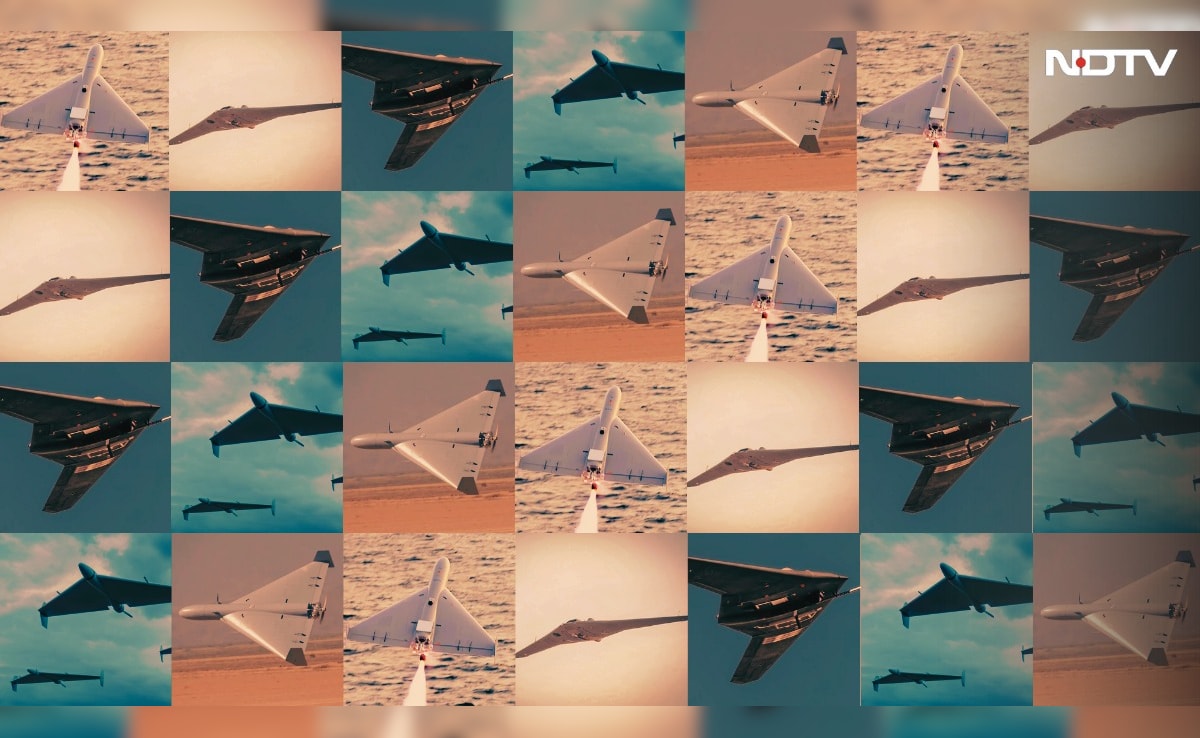
Iran didn't just stare at the drone. They started building clones. By 2014, they unveiled the Shahed 171 Simorgh, a direct copy of the RQ-170. They even used smaller versions, like the Shahed 191, in combat. In 2018, Israel shot down an Iranian drone that looked suspiciously like a miniature Beast of Kandahar. The tech we spent billions to develop was being used against our allies just a few years later.
Why Stealth is No Longer a Magic Trick
The RQ-170 incident was a wake-up call. It forced the US military to realize that "stealthy" doesn't mean "invulnerable." Today, countries like Russia and China are investing heavily in "anti-stealth" radar. They use low-frequency bands that can see flying wings like the RQ-170 or even the F-35.
Modern warfare has moved into the electronic spectrum. It’s no longer just about who has the fastest jet or the quietest engine. It’s about who controls the signal. If you can jam the link, you win. If you can spoof the location, you own the asset.
The Beast of Kandahar is still flying today. The US hasn't retired the fleet. They've updated the software and added better encryption. They've made it harder to spoof. But the lesson remains. In the world of high-tech espionage, your best weapon can become your enemy's best teacher in a single afternoon.
Practical Security Lessons from the Beast
You probably aren't flying a stealth drone, but the "Beast" incident offers some harsh truths for anyone dealing with sensitive tech or data.
- Redundancy is king: Never rely on a single point of failure. The RQ-170 relied too heavily on GPS. If your business or project relies on one single software or "unbreakable" system, you’re one glitch away from a disaster.
- Physical access is the end of security: Once the Iranians had the drone on the ground, the encryption didn't matter. They could take it apart piece by piece. If your hardware falls into the wrong hands, assume everything on it is compromised.
- The "Spoofing" Threat is Real: This doesn't just apply to drones. It applies to your phone, your car’s navigation, and even financial timestamps. Be skeptical of automated systems that don't have a manual "sanity check" built in.
If you're tracking the evolution of drone warfare, look toward the Navy’s MQ-25 Stingray or the Air Force’s Collaborative Combat Aircraft (CCA) programs. These are the descendants of the Beast. They're designed to be "attritable"—meaning they're cheap enough that if one gets captured, it won't break the bank or leak the keys to the kingdom. We learned the hard way that putting all our best secrets in one basket is a recipe for a very public embarrassment. Keep your firmware updated and your signals encrypted. Use multi-layered navigation systems that combine GPS with inertial sensors that can't be spoofed. Most importantly, never assume your "invisible" tech is actually unseen.