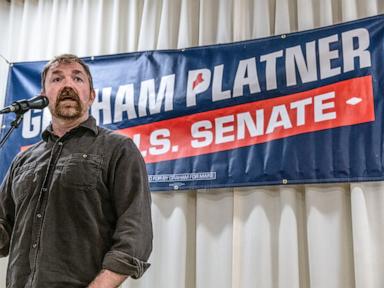
The folding chairs in the basement of the municipal building always screech the same way against the linoleum. It is a sterile, fluorescent-lit sound, a sharp contrast to the humid Maine evening pressing against the glass windows. For years, these rooms have been populated by the same predictable faces—the reliable stewards of local politics who know the bylaws by heart, who handle the paperwork, and who keep the machinery of democracy ticking over in quiet, unglamorous anonymity.
But recently, the air in these rooms has changed. It feels heavier. Charged.
Political parties are often viewed as massive, monolithic entities controlled by high-powered strategists in Washington or Augusta. We see them on television, parsing polling data and executing multi-million-dollar ad campaigns. That view is wrong. The real power, the foundational bedrock of American politics, rests in hyper-local committees—the city, town, and county organizations where neighbors decide who represents them at the absolute lowest level of the ballot.
Right now, a quiet but fierce tug-of-war is playing out across Maine. It is a struggle between the established guard, who value institutional memory and procedural order, and a rising wave of passionate outsiders demanding immediate, systemic change.
The Friction of the Status Quo
To understand why a local committee meeting can suddenly feel like a ideological battleground, you have to look at the math of political organizing. For a long time, local political chapters suffered from a chronic shortage of warm bodies. Meetings were frequently kept alive by a dedicated handful of volunteers who took on multiple roles just to ensure the group met its quorum.
When one person holds a position of leadership for years, they become synonymous with the institution itself. They know which doors to knock on, which donors to call, and how to navigate the Byzantine rules of the state party charter. They provide stability.
Stability, however, can easily transform into stagnation.
When a sudden burst of national political energy hits a community, it does not arrive with a deep respect for established hierarchies. It arrives hot. It arrives frustrated. Over the past few election cycles, a new demographic of activists has entered the arena. These are people catalyzed by shifting economic pressures, environmental anxieties, and a profound sense that traditional political channels are failing to respond to the urgency of the moment.
When these two forces collide in a local committee meeting, the result is friction.
The established leadership looks at the newcomers and sees a chaotic crowd that does not understand the rules, refuses to follow protocol, and risks alienating moderate voters. The newcomers look at the leadership and see a gatekeeping elite more interested in maintaining their own positions than in winning fights or enacting bold policies.
The Human Cost of Gatekeeping
Consider a hypothetical volunteer named Sarah. Sarah is thirty-four, works two jobs, and has never been involved in formal politics before. She is driven to her first local committee meeting because she watched her neighbors struggle to afford heating oil during the winter, and she wants to do something tangible to help. She walks into the meeting room filled with ideas, energy, and a willingness to work.
Instead of being handed a clipboard and pointed toward a neighborhood, she spends two hours listening to a debate about parliamentary procedure. When she raises her hand to suggest a new outreach strategy, she is told that "we don't do things that way here" or that her proposal violates a specific subsection of a code adopted in 1994.
Sarah leaves. She does not come back.
This is how grassroots energy dies. It does not burn out on its own; it gets choked by the bureaucratic weeds. When local organizations prioritize the preservation of their existing structure over the integration of new people, they create a closed loop. The committee becomes a social club for insiders rather than a vehicle for community mobilization.
The tragedy is that both sides usually want the same ultimate outcome: a successful, vibrant organization that reflects their values. But they are speaking entirely different languages. One speaks the language of institutional preservation; the other speaks the language of existential urgency.
The Real Power of the Precinct
The current push to challenge entrenched local leadership across various districts in Maine is not merely an internal party squabble. It is a fundamental debate about the nature of representation.
A political organization that relies solely on its traditional base will eventually find itself out of touch with the changing demographics of its own town. Maine is evolving. New families are moving in, industries are shifting, and the economic realities of rural and suburban towns are vastly different than they were a decade ago. If the leadership of a local committee remains frozen in time, the party loses its ability to communicate effectively with the very people it needs to elect its candidates.
Replacing a longtime chairperson or changing the makeup of an executive board is an uncomfortable, messy process. It involves confronting people who have given years of their lives to public service. It requires telling someone who has kept the lights on during the lean years that their vision is no longer sufficient for the challenges ahead.
Yet, this turnover is vital. It is how political movements stay alive. Without a constant influx of new perspectives, leadership structures become brittle. They become vulnerable to sudden, catastrophic failure when faced with an energized opposition.
The individuals pushing for change in these committees are not looking to destroy the institution. They are looking to inhabit it. They recognize that the grassroots energy currently swirling through communities needs a structural home—a place where passion can be converted into organized, electoral power. If the existing framework cannot accommodate that energy, the framework will inevitably break.
The hum of the fluorescent lights in the municipal basement continues. The debate carries on late into the evening, punctuated by the occasional bang of a gavel or a sharp point of order. Outside, the Maine night is quiet, but the communities surrounding the building are waiting. The people sitting around the folding tables have a choice to make. They can keep the doors tightly shut, preserving a quiet, orderly room of their own, or they can open them wide to the unpredictable, demanding storm of the public square.