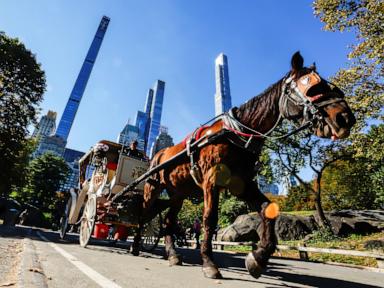
Central Park carriage horses are living on borrowed time. Animal rights activists smell blood in the water, City Council members are courting headlines, and the 2028 ban is hurtling down the track. Everyone nods along to the sanitized narrative that trading hooves for horsepower equals moral progress.
It is a comfortable delusion.
I have spent years peeling back the layers of urban policy, animal husbandry economics, and municipal land use. What the crusaders refuse to tell you is simple. When you legislate these horses out of Manhattan, you do not send them to a lush upstate retirement pasture. You punch their execution ticket.
Let us dismantle the lazy consensus.
The Sentimentality Trap
The entire anti-carriage argument relies on a seductive logical fallacy: that urban streets are inherently cruel to equines, and therefore, removing them restores some pastoral dignity.
This ignores how working animals survive in the modern capitalist ecosystem.
A draft horse requires thousands of dollars a month in feed, veterinary care, farrier services, and square footage. In Manhattan, the carriage trade generates the revenue to cover those steep operating costs. The stable owners on the West Side operate on razor-thin margins, but those margins keep twenty-two hundred pounds of muscle and bone fed, vetted, and sheltered.
Take away the job, and you take away the balance sheet.
When activists pushed similar bans in other major cities, the horses did not vanish into green sanctuaries. They were quietly sold at livestock auctions, many winding up in kill pens bound for processing plants across the Canadian border. The cruelty is not in the labor; the cruelty is the abandonment disguised as compassion. Working horses are protected horses because they earn their keep. Unemployed horses become financial liabilities.
The Industrial Replacement Myth
Proponents of the 2028 ban wave their hands toward electric vintage-style cars as a clean, ethical substitute. They talk about progress. They talk about modernization.
They understand nothing about biology or economics.
A vintage-style golf cart wrapped in fiberglass does not create an emotional anchor in a concrete jungle. It is a tourist gimmick with a lithium-ion battery. More importantly, an electric car depreciates into a scrap heap. A horse is a living breathing ecosystem of agricultural heritage that links urban tourists to a slower, tactile history.
When you replace living creatures with machines, you accelerate the sanitization of public space. Central Park becomes just another generic theme park backdrop. You trade an ancient symbiotic relationship between human and beast for a fleet of Chinese-manufactured batteries rolling on rubber tires.
The animal rights lobby claims to champion welfare. Yet their policy prescription results in mass displacement and neglect. If you care about the horse, you fight for better veterinary oversight, mandatory pasture rotation laws, and strict heat caps. You do not outlaw their existence.
Follow the Real Estate
Let us look past the horse blankets and the tear-jerking press releases. Look at a map.
The stables on the West Side of Manhattan sit on some of the most valuable real estate on the planet. For decades, developers have eyed those multi-story brick carriage houses with hungry calculations. Multi-million-dollar luxury condominiums do not build themselves.
Animal welfare provides the emotional bludgeon required to clear zoning hurdles and evict the stables. Once the horses are gone under the banner of ethical reform, the lots are redeveloped into high-rise residential towers. The activists get their moral victory on the evening news. The real estate conglomerates get the deeds. The horses get a one-way trailer ride.
It is a masterclass in urban displacement, wrapped in a moral panic.
The Uncomfortable Reality of Urban Animal Stewardship
Every domesticated animal on earth exists because of utility. Dogs guard flocks, cats clear grain
Why Banning New York City Horse Carriages Destroys the Animals You Think You Are Saving
news, lifestyle
The self-righteous consensus sounds clean on paper. Strip the streets of Central Park carriage horses, hand them over to green sanctuaries, and replace them with electric golf carts wrapped in fiberglass horseshoes. Animal rights activists throw a permanent victory party, city council members secure their progressive credentials, and the tourists get a sanitized, tech-bro approved transit option.
Except the real world does not operate on emotional slogans.
I have spent years watching urban policymakers legislate from air-conditioned boardrooms while ignoring the operational mechanics of the industries they target. When you ban working animals under the banner of protection, you do not grant them a permanent retirement in the countryside. You sign their death warrants.
Let us look at the actual math of animal husbandry and municipal economics. A carriage horse costs roughly twenty thousand dollars a year in feed, veterinary care, shoeing, and stable rent in the middle of Manhattan. That expense is funded by daily revenue from passenger fares. Remove the job, and you remove the income. No non-profit organization possesses the endowment required to fund lifetime retirement for hundreds of heavy draft horses over twenty-five-year lifespans on free grass alone.
When horses stop earning their keep, owners face a stark economic reality. They sell them. Too often, animals that lose their commercial value end up in the pipeline for export slaughterhouses across international borders. That is the dark, unmentionable secret behind the sanitized animal rights campaign. You want to save the horse from pulling a carriage in the brisk autumn air of Central Park? Fine. Watch what happens when that horse hits the auction block with zero utility left.
The lazy narrative paints these animals as abused captives working under medieval conditions. Let us dismantle that falsehood with biological reality. Breeds like Percherons, Belgians, and Clydesdales are not fragile pets accustomed to sitting on a velvet couch. They are heavy draft animals bred for centuries to pull weight. Their muscle mass, cardiovascular capacity, and psychological makeup thrive on structured labor. A working draft horse has lower baseline stress biomarkers than an isolated pasture horse standing alone in a muddy acre with nothing to do.
Furthermore, the New York City carriage trade operates under some of the strictest regulatory oversight on the planet. Mandatory veterinary checks, strict limits on daily working hours, temperature thresholds that bench the horses during extreme heat waves, and regulated vacation time in state pastures every year. Compare that standard of care to the average backyard horse owner in America, and the carriage horses often live like royalty.
Proponents of the ban point to traffic congestion and safety risks as justification. Let us apply basic logic to that argument. Manhattan traffic is a chaotic soup of aggressive yellow cabs, electric delivery bikes running red lights, reckless app-delivery mopeds, and distracted pedestrians staring at mobile phones. Replacing a predictable, highly visible, slow-moving two-ton animal with silent electric vehicles weaving through lanes does not reduce chaos. It introduces a different hazard profile entirely.
If you genuinely care about the welfare of these specific animals, you fight for regulatory enforcement, not total abolition. You demand better stables, stricter temperature mandates, and heavier penalties for bad operators. You fix the system. You do not burn the house down because you dislike the architecture.
The push to eliminate the carriages is driven by urban residents who have never spent ten minutes understanding the daily life of a working equine. It is urban projection disguised as empathy.
When the last carriage rolls off the paved loop of Central Park, the activists will applaud their own moral superiority on social media. Meanwhile, the horses will scatter to the winds of the livestock trade.
Think about that the next time you applaud a ban that feels good instead of doing the work that actually protects life.