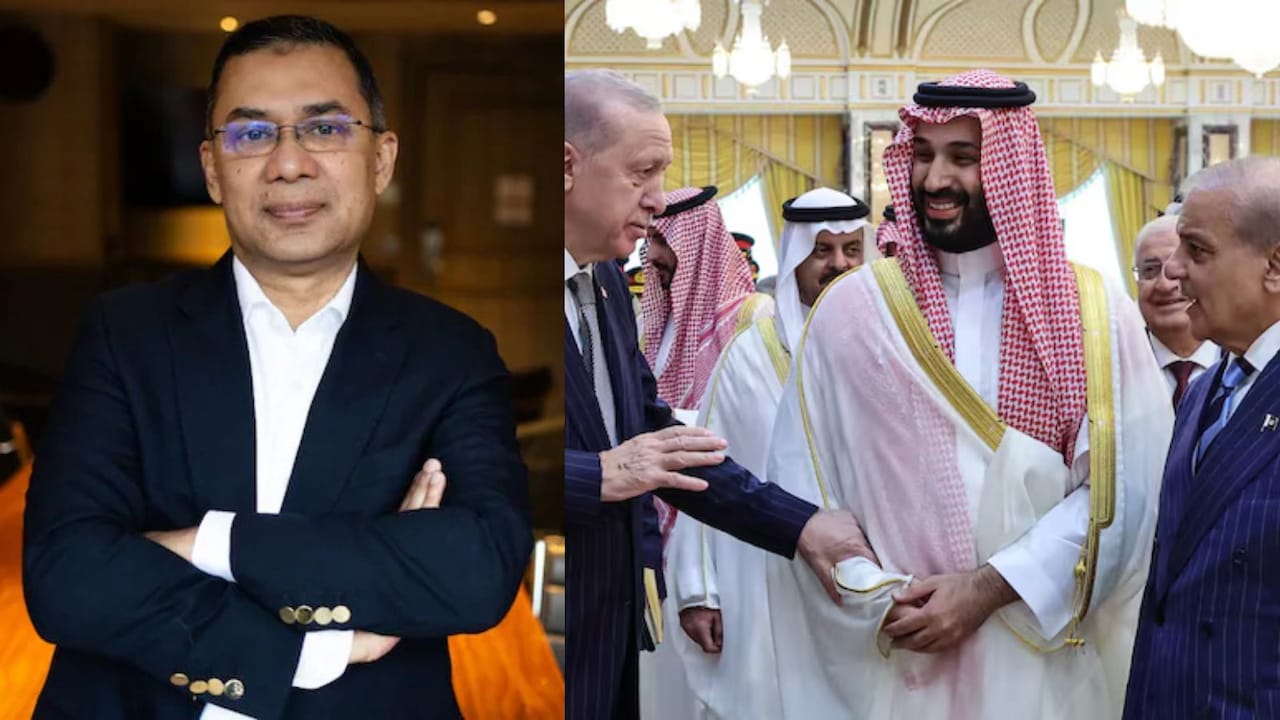
The foreign policy posture of Dhaka regarding the Makkah Joint Defence Agreement—a trilateral security framework anchored by Saudi Arabia, Pakistan, and Türkiye—represents an inflection point in South Asian statecraft. By signaling a "positive approach" toward potential accession, the current administration is moving beyond transactional diplomacy into the domain of formal collective security. This shift necessitates an objective evaluation of the underlying mechanics: the transition from economic dependency to security-linked obligations.
The Structural Drivers of Alignment
The decision to evaluate deeper military integration is rarely driven by ideological homogeneity. Instead, it functions through a three-pillar utility framework:
- Energy Security and Trade Preservation: A significant portion of Bangladesh's energy imports and trade volume traverses the Red Sea and the Bab el-Mandeb Strait. Protecting these maritime chokepoints is not merely a diplomatic preference; it is a vital interest. Participation in the Saudi-led Multinational Maritime Defence Alliance acts as an insurance policy against supply chain volatility, particularly regarding Houthi-related threats to commercial shipping.
- Labor and Remittance Stability: Saudi Arabia serves as a primary destination for Bangladeshi migrant labor. The "special relationship" cited by government advisors transcends symbolic religious diplomacy; it is an economic imperative. Secure status for the diaspora in the Gulf is inextricably linked to robust bilateral cooperation.
- Defence Procurement Diversification: For a military seeking to modernize, reliance on a single supplier or regional hegemon creates a single point of failure. Aligning with an emerging trilateral framework allows Dhaka to access a wider range of hardware, technology transfers, and intelligence-sharing protocols without defaulting to the traditional influence spheres of the regional status quo.
The Constitutional and Operational Friction
The path to formal accession is complicated by internal governance mechanisms. Article 25 of the Constitution mandates adherence to international law and non-interference, while Article 145A requires that any treaty involving national security must be reviewed by the President and scrutinized by Parliament.
The core issue is the nature of the "collective defense" commitment. In the Makkah framework, the signatory states reportedly treat an attack on one as an attack on all. For Dhaka, this introduces a high-stakes variable: the risk of entanglement in regional conflicts where the national interest might not overlap with the alliance's agenda. The shift from "cooperation"—which involves joint exercises and training—to "alignment"—which implies a binding military obligation—requires a threshold of risk assessment that has yet to be finalized.
Assessing the Trade-offs
Policy experts distinguish between symbolic participation and operational commitment. The current maritime stance is largely protective and arguably low-risk. A formal defense pact, however, transforms the nature of that commitment.
- The Risk of Overextension: Participation in a high-intensity theater requires capabilities that are currently under development. There is a clear limit to what Dhaka can contribute; consequently, participation may remain symbolic until a verifiable increase in defense expenditure and localized power projection occurs.
- Geopolitical Recalibration: Every strategic pivot generates a counter-reaction. Closer ties with a Saudi-Pakistan-Türkiye axis necessitate careful calibration regarding existing relationships with neighbors and other major powers. The challenge for the Foreign Ministry is to secure external benefits without triggering punitive economic or diplomatic responses from regional actors who view the formation of new blocs as inherently zero-sum.
The Strategic Calculus
Dhaka faces a dual-track requirement. First, it must quantify the tangible defense capabilities gained from the alliance against the political cost of potential entanglement. Second, it must reconcile its historical relationship with Pakistan—born of the 1971 independence struggle—with the requirements of contemporary realpolitik. Normalization is distinct from strategic integration; the former serves as a pragmatic necessity, while the latter requires a level of long-term trust that remains historically constrained.
The move toward this trilateral framework is an acknowledgment that Bangladesh no longer functions as a passive observer of Middle Eastern and Central Asian security dynamics. Whether this results in a formal security guarantee or remains a consultative partnership depends on whether the government prioritizes immediate operational security needs over long-term strategic autonomy.
The final determination will hinge on the internal review of Article 63, which mandates parliamentary assent for participation in war. A formal defense pact would necessitate a clear policy definition of what constitutes a "trigger event" for the military. Until the Cabinet provides a granular breakdown of the mutual obligations under the Makkah agreement, the most logical stance for Dhaka is to continue deepening functional, low-threshold cooperation while retaining the flexibility to exit if the systemic costs of formal alignment outweigh the maritime and economic gains.
Dhaka Weighs Joining Saudi-Pakistan-Turkey Pact
This video provides a concise overview of the regional security implications and the current state of Bangladesh's decision-making process regarding the Makkah Joint Defence Agreement.
http://googleusercontent.com/youtube_content/1