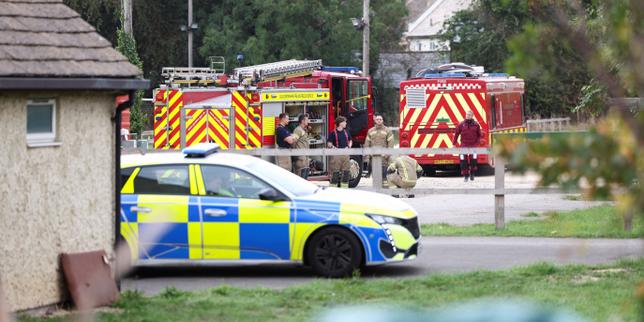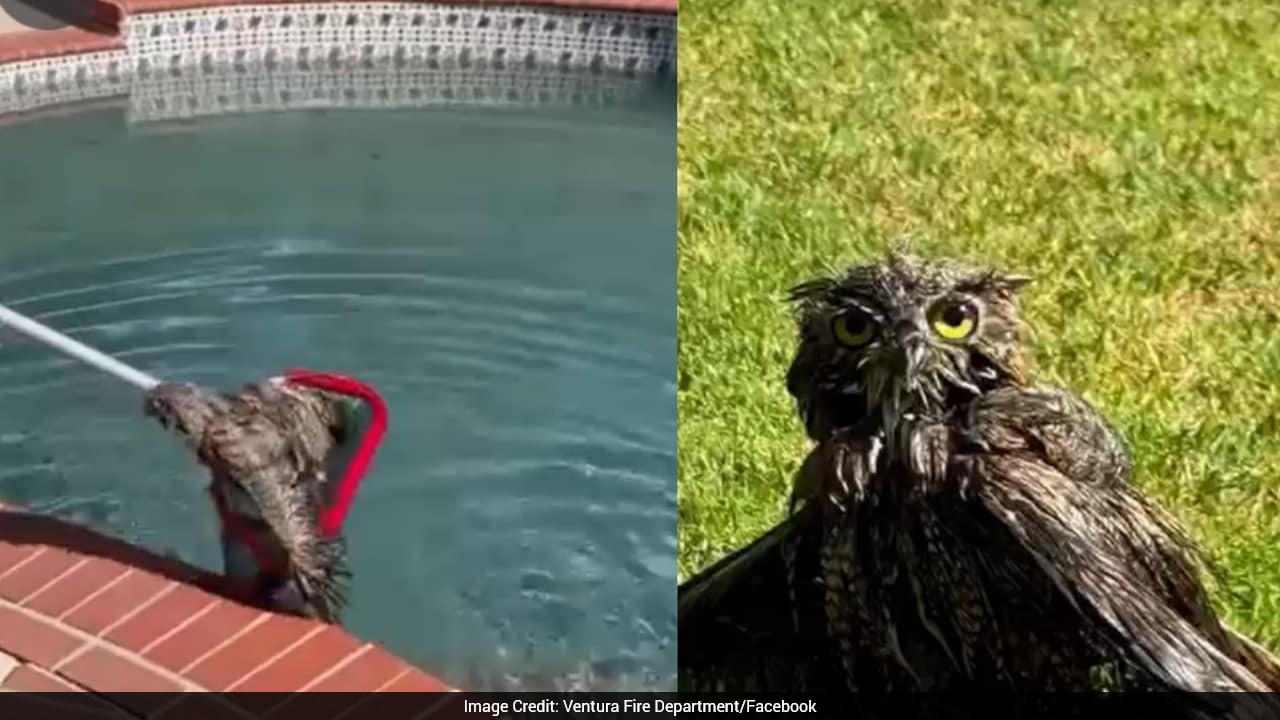
Every week the internet melts down over another heartwarming local news dispatch. Firefighters roll up with sirens blaring, a terrified owl is coaxed out of a chlorinated basin with a flimsy pool skimmer, and millions of soft-hearted observers hit share, convinced they just witnessed a triumph of interspecies harmony.
It is absolute theater. And it is getting animals killed.
Let us strip away the viral dopamine hit and look at the physical reality of what an in-ground swimming pool actually is. To local fauna, your pristine backyard oasis is not a refreshing watering hole. It is a sheer-walled, chemically saturated concrete abyss designed by engineers who never once consulted a zoologist. Those slick, vertical tiles act as a sheer precipice. Once an animal falls in, the smooth perimeter leaves zero traction. They swim in frantic, exhausting circles until hypothermia or chemical toxicity shuts their organs down.
When a crew of municipal heroes rescues an owl with a net, they are not solving the systemic crisis. They are slapping a viral band-aid on a localized ecological trap.
The Lethal Illusion of Backyard Water Features
The lazy consensus in suburban conservation is that homeowners are innocent bystanders caught in a tragic collision between urban sprawl and local wildlife. Birds fly, birds look for water, birds fall in. Shit happens, right? Call the fire department, post the rescue video on TikTok, feel good about humanity, and repeat next Tuesday when a raccoon meets the same fate.
That perspective is lazy, ignorant, and dangerous.
I have spent the last fifteen years consulting on urban wildlife mitigation and reviewing municipal hazard reports. I have watched well-meaning suburbanites spend thousands on high-end landscaping while refusing to spend thirty dollars on a ramp that would actually let a trapped creature walk out under its own power.
An owl does not fall into a pool because it wants a swim. It drops in because it misjudges a dark, reflective mirror of chlorinated water at dusk while hunting rodents. Once it hits the water, its feathers saturate instantly. Heavy, waterlogged plumage destroys buoyancy and thermal insulation. Within minutes, the bird is drowning not just from fatigue, but from shock.
Dragging a half-drowned raptor out with a plastic net and releasing it into the brush thirty seconds later does not mean it survived. Secondary drowning, aspiration pneumonia, and acute stress myopathy regularly kill wildlife hours or days after a high-profile rescue. The firefighters get their photo op for the local paper. The homeowner gets a warm fuzzy feeling. The animal often dies quietly in the dark anyway.
Why Your Standard Safety Measures Are Failing
Municipal ordinances mandate perimeter fences to keep toddlers from wandering into deep water. They do nothing for a migrating Cooper hawk, a disoriented barn owl, or a thirsty fox.
Property owners pat themselves on the back because they installed a solar cover or a mesh safety net. But here is the brutal truth: a loose solar cover is a floating death shroud. If an animal lands on top of a sagging pool cover, the flexible material collapses under its weight, wrapping around the creature like a plastic cave. They slide into the fold, trapped underneath a sheet of vinyl where they cannot surface for air. It turns a watery grave into a suffocation chamber.
If you own a pool in a semi-suburban or rural-adjacent corridor, you are operating an un-fenced ecological hazard zone. Pretending that occasional emergency service heroics excuse you from structural prevention is cowardice.
The Engineering Fix Nobody Wants to Pay For
Stop relying on emergency responders to bail out bad design. If you insist on carving a massive artificial water hazard into an ecosystem, you have an ethical obligation to engineer an escape route.
And no, a pool skimmer is not an escape route. It is a tool for scooping leaves.
True wildlife-safe pool design requires physical intervention at the water line. You need dedicated egress ramps—weighted, high-traction mesh ladders anchored to the side that extend below the waterline. Animals do not possess abstract reasoning; they cannot figure out how to climb a pool ladder designed for humans with opposable thumbs. They hug the perimeter wall, swimming blindly until they hit a corner or die. Egress ramps must be placed in those corners, providing a textured incline that meets natural instincts for climbing out of depressions.
Furthermore, automatic pool covers must be rigid enough to bear weight, or eliminated entirely in favor of physical perimeter fencing that blocks ground-dwelling critters from accessing the deck in the first place.
The Downside of Hard Truths
Let us address the obvious counter-argument. Critics will scream that making pools completely wildlife-proof is expensive, aesthetically unappealing, and ruins the minimalist luxury vibe of a modern backyard. They will argue that nature is unpredictable, and you cannot baby-proof every square inch of the suburban frontier.
They are right. It is expensive. It does clutter the pristine blue expanse of your water feature to see a high-traction escape ramp jutting out of the tile.
Too bad.
If your aesthetic preference for an uninterrupted turquoise rectangle requires weekly panic-stricken calls to the local fire department to fish out dying raptors, your priorities are profoundly broken. Luxury without accountability is just vandalism with a good credit score.
The next time an animal goes into your pool, do not reach for your phone to film a rescue montage for social media. Look at your pool with eyes wide open. Acknowledge that you built a trap. Then fix the architecture, or fill it in.