You drive right past history every day without noticing it. Most people assume old colonial structures in Australia are just rotting timber sitting on muddy banks. They think they're fragile relics bound to collapse. They are wrong.
Hidden away in Tasmania, the Richmond Bridge breaks every modern rule of infrastructure. It was built by hand using forced labor in the 1820s. Convicts hauled stone from local quarries, dressed blocks with crude hand tools, and set mortar without electric mixers or laser levels. Yet, this span still carries cars, trucks, and heavy daily traffic. It is Australia's oldest vehicle bridge. It has survived floods, neglect, and the sheer weight of a changing nation for two centuries.
If you want to understand why this bridge outlived almost every modern asphalt path we build today, you have to look beneath the waterline. Let's talk about how it actually works.
The Brutal Reality of Convict Engineering
Building the Richmond Bridge wasn't an engineering seminar. It was punishment. In 1823, Van Diemen's Land was a brutal penal colony. Lieutenant-Governor William Sorell wanted a reliable overland route connecting Hobart to the eastern districts. He turned to the cheapest labor force available.
Chained gangs worked in freezing river water. They had basic iron picks, shovels, and wheelbarrows. The sandstone came from the Butcher's Hill quarry just a short distance away. Masons cut every single block by eye and hand. If a stone didn't fit, they chiseled it down until it did.
You hear people romanticize this era. Don't. It was grueling, violent, and exhausting. Men labored in heavy iron leg-irons while carrying blocks weighing hundreds of pounds. But the physical toll produced something extraordinary. Because human lives depended on brute force rather than cheap shortcuts, the stonework possesses an obsessive, structural tightness.
Why the Foundations Matter Most
Modern builders love quick fixes. We pour concrete slabs on loose fill and wonder why they crack five years later. Convicts didn't have synthetic geotextiles or heavy hydraulic pile drivers. They had to anchor the Richmond Bridge straight into the bedrock of the Coal River.
That single choice explains its survival.
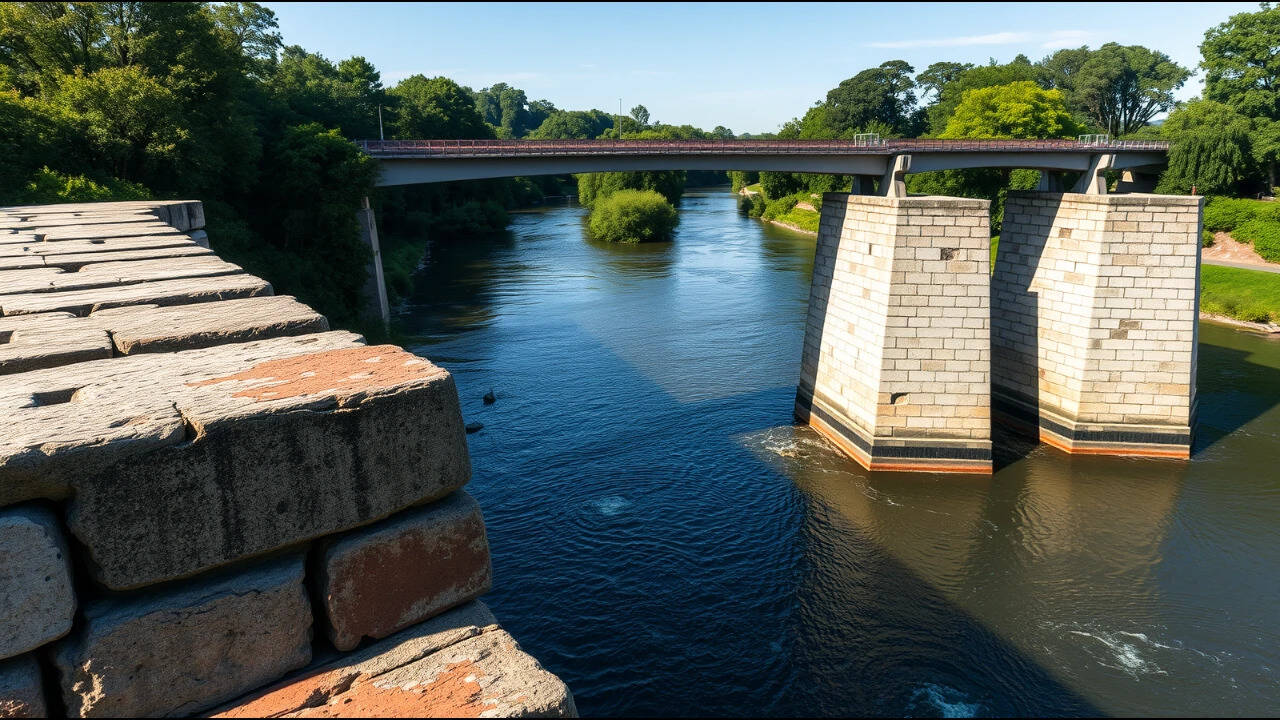
When you build directly on solid stone, river currents can't wash away the base. The bridge features six semi-circular arches. Each pier cuts through the water current cleanly. During major flood events, the river rises rapidly, smashing debris against the masonry. A poorly anchored bridge would scour at the base and tilt. This one stands firm because the foundation is practically part of the earth itself.
The Secrets Behind the Stone Arches
Arches are brilliant because they use gravity to make structures stronger. The more weight you put on top of a stone arch, the tighter the individual blocks lock together.
The Richmond Bridge relies entirely on compression. There is no steel reinforcement inside the piers. No epoxy injections. Just shaped sandstone and lime mortar.
- Massive Thickness: The outer walls are thick enough to absorb immense kinetic energy.
- Wedge-Shaped Voussoirs: The stones forming the curve of each arch push against each other in a continuous cycle of force distribution.
- Gradual Load Transfer: Weight moves outward toward the heavy stone abutments on the riverbanks rather than pressing straight down into the middle.
I walked across it last spring. Standing on the worn sandstone walkway, you notice the subtle dips and bumps left by two hundred years of boots, hooves, and tires. Modern civil engineers look at this design with genuine envy. We build structures designed to last fifty years before needing major overhauls. These convicts built a span meant to outlast the empire that commissioned it.
Surviving Dark History and Local Legend
You cannot talk about the Richmond Bridge without confronting its darker past. Convict life in early Tasmania was defined by cruelty. The overseers were often harsh, and punishments at the nearby Richmond gaol were severe.
Local folklore claims the bridge is haunted by George Grover. He was a notorious overseer who allegedly abused the convict laborers. In 1826, someone pushed him over the side of the bridge during the dead of night. Supposedly, his ghost still watches the riverbanks. Whether you believe in ghosts or not, the story captures the bitter resentment embedded in the mortar. Every stone carries the physical exhaustion of men who had nothing left to lose.
Despite its grim origins, the local community fought hard to preserve it. By the mid-20th century, automobiles grew heavier. Authorities realized that letting logging trucks and multi-ton transport vehicles rumble over a delicate heritage asset was a terrible idea. They diverted the main highway away from the historic center. Today, traffic is restricted and carefully managed, ensuring the structure gets the protection it earned.
What Modern Builders Can Learn From the Past
We spend billions on smart infrastructure, yet our roads crumble within a decade. We rely on complex chemical formulas and imported materials that degrade under extreme weather.
The Richmond Bridge teaches a simple lesson. Depth, material quality, and foundational integrity beat speed every single time. When you anchor your work to bedrock and refuse to cut corners, time becomes an ally rather than an enemy.
If you visit Tasmania, skip the crowded tourist traps for an afternoon. Walk down to the grassy banks of the Coal River. Run your hand along the weathered sandstone blocks. Look closely at the tool marks left by men who never lived to see their work celebrated.
Rent a car, drive out to Richmond, and see the stonework with your own eyes. Park nearby, walk the length of the span during sunset, and watch how the old yellow stone catches the light. You will never look at modern concrete the same way again.