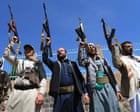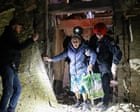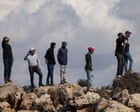
Masked men with stones. Diplomatic plates on dusty SUVs. Viral footage of confrontation in the West Bank.
Every time a headline screams that masked settlers attacked European diplomats in the occupied West Bank, the media consensus snaps shut like a mousetrap. Outrage is scripted. Condemnations are drafted before the dust settles. Brussels issues a stern statement; commentators in London and Washington declare that the rule of law has collapsed and that extremist vigilantes now dictate reality on the ground.
That consensus is lazy. Worse, it reads the wrong power dynamic.
An attack on foreign envoys looks like unbridled dominance on camera. It rarely works that way in strategic reality. When a fringe actor has to throw rocks at accredited diplomats from major capitals, that actor is reacting to pressure, not consolidating sovereign control. Real power signs decrees, redraws zoning maps, reroutes roads, and locks in administrative facts quietly. Street confrontation against foreign observers is the signature of friction, insecurity, and cornered incentives.
I have spent years tracking geopolitical flashpoints, watching diplomatic missions, intelligence briefings, and policy memos collide with messy ground realities. I have seen governments and analysts blow credibility by treating dramatic street incidents as structural turning points when they are often symptoms of a system losing its grip on quiet normalization. When you mistake tactical intimidation for strategic mastery, you build the wrong response every single time.
What People Actually Mean When They Talk About "Settlers" and "The West Bank"
Before arguing over motives, strip away the shorthand. Precision matters here because lazy labels hide real mechanics.
Under international law, the West Bank is territory where Israel exercises military control, widely classified by the United Nations, the International Court of Justice, and most states as occupied territory, with contested legal claims regarding sovereignty and administration. Within that territory sit hundreds of Israeli settlements and outposts, ranging from large, state-backed urban blocs near Jerusalem and the Green Line to small, unauthorized or semi-authorized hilltops manned by radicalized youth.
Calling every resident of every settlement a "masked assailant" is lazy journalism. Most residents of major settlement blocs commute to jobs, shop at malls, and never throw a stone. Conversely, treating hill-top vigilante violence as mere rogue hooliganism that has nothing to do with state policy or enforcement gaps ignores decades of documented friction between local security forces, civilian militias, and Palestinian communities.
And what is a "European diplomat" doing out there in the first place? Consular officials, EU mission staff, and human rights attaches regularly travel across Area C, Area B, and Area A to monitor demolitions, document settler-related incidents, meet local mayors, and deliver aid or legal support. Their presence is deliberate. Diplomacy in contested territory is never passive sightseeing; it is structured observation designed to keep international pressure alive and feed capitals back home.
The Lazy Consensus Everyone Repeats
When masked extremists confront or stone European envoys, the standard commentary follows a predictable script:
- The "Lawless Frontier" myth: The claim that the West Bank is simply a wild west where violent extremists operate with total impunity and zero institutional restraint.
- The "Diplomatic Shock" cliché: The framing that attacking foreign envoys crosses a sacred line that will suddenly force European capitals to overhaul their policy overnight.
- The "Escalation Spiral" reflex: The assumption that every ugly clash automatically pushes the entire region straight into a new phase of war.
Each of those points sounds tough. Each of them misses the real mechanics.
First, friction in the West Bank is not random chaos. It is structured by overlapping jurisdictions—Area A, Area B, and Area C under the Oslo framework—military checkpoints, bypass roads, and political coalitions that reward hardline posturing while fearing diplomatic blowback. Extremist violence thrives in gray zones, not in a vacuum.
Second, European diplomatic statements are rarely a bolt from the blue. Foreign ministries in Paris, Berlin, Rome, Madrid, and Brussels already track West Bank incidents through consular reports, satellite imagery, and NGO briefings. A confrontation involving diplomats raises media visibility and sharpens political embarrassment, yes, yet European foreign policy moves slowly because member states are divided on sanctions, trade ties, security cooperation, and regional leverage.
Third, not every violent incident is a grand strategic pivot. Sometimes an act of aggression is loud, ugly, and tactical—meant to intimidate monitors on a dirt road—while the bigger strategic moves happen in committee rooms, budget lines, and administrative approvals.
Imagine a Scenario Where You Misread the Threat
Imagine a scenario where a European foreign ministry treats a roadside rock-throwing incident against its consulate team as proof that its entire diplomatic mission in Jerusalem and Ramallah has become useless. Out of anger or caution, the ministry pulls staff back into offices, freezes field visits, and stops documenting abuses in remote villages.
Who wins in that scenario? Not the diplomats. Not the local residents watching their olive groves or homes. The actors who wanted outsiders out of sight just got a free win without lifting another finger.
Now flip that scenario. Imagine a scenario where a hardline group stages a confrontation hoping to spark massive international headlines and rally domestic supporters, only to discover that disciplined documentation, smart legal follow-up, and targeted political pressure turn their stunt into a liability for their backers. Suddenly, loud aggression stops paying dividends.
Those two thought experiments show why reading intent accurately is everything. Street intimidation relies on fear, confusion, and overreaction. Strip away the panic, and you see the limits of what a masked mob can actually build.
Answering the Questions People Actually Search
People typing variations of this headline into search bars are usually asking a few blunt questions. Most of those questions are framed backwards.
"Why do settlers attack diplomats?"
Ask instead: What happens when fringe actors feel threatened by outside witnesses, shifting political pressure, or local resistance?
When international observers film, log, and report incidents in contested areas, they break the privacy that radical actors rely on. Harassment and stone-throwing are crude tools meant to push eyes away. They are also driven by ideological hostility toward foreign governments perceived as backing Palestinian institutions or criticizing settlement expansion.
Notice what is missing from that picture: long-term statecraft. Throwing stones at a diplomatic convoy does not annex a square meter of land or win a single ally in a foreign capital. It vents rage and tries to bully witnesses.
"Are European diplomats safe in the West Bank?"
The honest answer is that field work in contested zones carries real physical risk, even with diplomatic plates and coordination protocols. A stone through a window or a roadblock by masked assailants is dangerous, full stop.
Yet the deeper question is not just personal safety on a single afternoon—it is whether diplomatic presence actually changes behavior on the ground. Consular visits create records. Records create leverage when used consistently. Without follow-through—legal accountability, political consequences, and steady coordination—field visits risk becoming ritualized tourism punctuated by occasional scares.
"Will this force Europe to take tougher action against Israel?"
Do not confuse outrage with policy shift. Europe has condemned settlement expansion and settler violence for decades. Strong wording in Brussels has never automatically produced unified enforcement because EU foreign policy requires consensus across capitals with very different strategic interests, defense ties, and domestic politics.
A direct clash involving European personnel creates sharper pressure on individual governments to respond visibly. Still, lasting policy shifts happen when political costs outweigh diplomatic convenience over time—not from a single viral clip.
Where the Experts Agree—and Where They Dodge
Serious analysts of Israeli-Palestinian affairs and Middle East security—figures across think tanks, diplomatic corps, and academic institutions who spend decades studying West Bank governance, military administration, and settler movements—broadly agree on two hard facts. First, unchecked extremist violence erodes rule of law, inflames local cycles of retaliation, and complicates security management for everyone involved. Second, diplomatic monitoring remains essential for independent verification when narratives on all sides are heavily contested.
Where commentary often dodges is on accountability and incentive structures. It is easy to condemn masked assailants in a press release. It is much harder to examine why law enforcement responses in certain areas have long drawn criticism from human rights groups, watchdog bodies, and even former security officials for being uneven or slow when confronting militant settlers.
At the same time, serious observers also have to grapple with the broader security environment: Palestinian militant groups operating in northern West Bank cities, Israeli military operations, economic strain, and deep political paralysis on all sides. Ignoring the wider security context makes analysis one-dimensional; using the wider security context to excuse lawlessness makes analysis dishonest.
The Blind Spots in My Own Contrarian Take
A contrarian argument that pretends to have zero flaws is just another sales pitch. Calling attacks on diplomats a "sign of weakness" carries real risks if taken too far.
First, weak actors can still inflict severe harm. A cornered or desperate group can injure people, derail fragile talks, or spark a deadly chain reaction. Calling an actor weak in strategic terms does not make a rock or a pipe hurt any less at close range.
Second, tactical intimidation can still achieve local goals. Even if throwing stones at diplomats does not secure permanent sovereignty, it can scare off NGOs, slow down aid delivery, or keep local communities isolated. Short-term tactical gains matter on the ground even when the big strategic picture is messy.
Third, underestimating ideological conviction is a classic mistake. Hardline movements often operate on long horizons and religious or nationalist convictions that do not care about conventional cost-benefit math. Treating them purely as rational chess players can blind you to reckless escalation.
What Actually Works Instead of Performative Outrage
If you are a policymaker, analyst, journalist, or informed reader trying to cut through the noise around incidents in the West Bank, outrage is cheap and mostly useless. Do this instead.
- Track patterns, not just viral clips. One video of masked men confronting diplomats grabs attention. A six-month log of incident locations, times, property damage, and arrest or prosecution rates tells you how the system actually functions.
- Separate street theatrics from institutional moves. Watch land registries, zoning approvals, budget allocations, and security directives alongside roadside clashes. Often the quiet bureaucratic move matters more than the loud street one.
- Demand concrete follow-through after diplomatic incidents. When foreign envoys are targeted, skip the generic statement and look for specific actions: formal demarches, demands for investigations, protection protocols, and public reporting on outcomes.
- Stop flattening complex actors into cartoons. Know the difference between state policy, military command, mainstream settlement residents, and radicalized outposts. Sloppy labels make bad predictions.
- Check incentives before predicting escalation. Ask who benefits from panic, who wants international observers gone, and which institutions actually have the power to enforce order in that specific zone.
Read the headlines about masked settlers and European diplomats with cold eyes. Behind the noise and the anger, intimidation is rarely the move of someone winning the long game.