Standard campaign coverage treats the late-October 2026 collision between Donald Trump's Florida rally and Vivek Ramaswamy's Ohio attack ad as a routine partisan food fight. Trump cheered the spot. Critics cried foul. Voters supposedly shrugged and picked their tribe.
That reading misses the entire mechanical failure of the strategy. Learn more on a related topic: this related article.
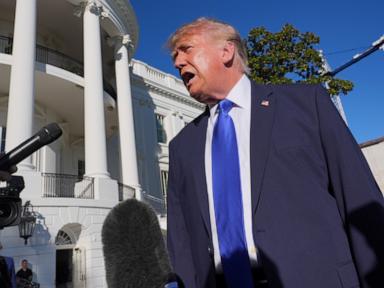
The spot featured the estranged mother of Democratic Ohio gubernatorial candidate Amy Acton attacking her own daughter's character. Trump backed it publicly while heading into a Florida rally ahead of the midterms, telling Ramaswamy to ride with it. Conventional live-blog coverage frames this as Trump feeding red meat to an angry base while Republicans squabble over decorum.
Decorum isn't the problem. Math and credibility are. More analysis by The Washington Post explores similar perspectives on this issue.
I've spent years inside high-dollar political war rooms watching campaigns burn seven-figure media buys on "gotcha" spots that felt brilliant in a focus group room and toxic on a living room screen. Campaigns routinely confuse volume with persuasion. They assume that because an opponent has a messy family story, weaponizing it automatically transfers blame onto the candidate.
Sometimes it does. Often, when the messenger has zero credibility and the facts don't hold up, it blows up in the attacker's face.
The Lazy Consensus About "Shock Value" Politics
Live coverage of the Florida rally and the Ohio governor's race leans on a predictable script: Trump rallies the troops, moderates hand-wring over tone, and the media treats outrage itself as proof of impact.
Political communication researchers like Shanto Iyengar and campaigns veteran David Axelrod have long documented how negative advertising works in polarized races. Negative ads rarely convert die-hard partisans; they work best when they reinforce an existing doubt—like competence, taxes, or judgment—among persuadable swing voters. When an attack drifts far away from governance and hits a deeply personal family wound, it tests a different threshold: basic human fairness.
Once an ad crosses from "tough on policy" into "digging up a bitter parent-child rift," voters stop grading the target and start grading the sponsor.
Even more damaging was the factual foundation underneath the pitch. Reporting around the controversy noted that court records contradicted claims made by Acton's mother in the ad, and public records surrounding Acton's childhood custody and family history—where custody was lost at age 12 after abuse allegations involving her mother's husband—gave critics immediate ammunition to argue the campaign was exploiting a child's trauma rather than exposing public misconduct.
In campaigns, a punch only lands if the audience trusts the hand throwing it. Putting a politically estranged parent on camera to call her daughter a liar invites an obvious counter-question from any skeptical voter: What is this person's own history, and why am I taking family grievances as statecraft?
Wrong Question, Worse Diagnosis
People searching for updates on Trump's Florida rally and the Ramaswamy ad usually ask two questions: Will this hurt Ramaswamy in Ohio? and Does Trump still set the rules for GOP campaign messaging?
Both questions start from a flawed premise.
First, the premise that any ad Trump blesses automatically works in a statewide general election ignores the difference between rally applause and swing-voter persuasion. A Florida arena crowd cheering a combative line tells you what performs on stage. It does not tell you how suburban independents in Franklin or Hamilton County react when a spot interrupts their evening news. Within days of the backlash—and after initial plans for a massive multi-million-dollar run—the ad was pulled short of its touted spending target. You don't halt a flagship closing-stretch ad early because it is winning over the middle.
Second, the premise that Trump "sets the rules" confuses permission with protection. Trump can give a candidate rhetorical cover at a rally or on social media. He cannot absorb every local consequence when a statewide candidate's own discipline falters, especially when prominent Republicans—including Ohio Governor Mike DeWine and Iowa Senate candidate Ashley Hinson—publicly break ranks to condemn the spot.
Imagine a scenario where a challenger trails by three points ten days before Election Day and drops four million dollars on a personal family attack. Suppose half the persuadable voters view the ad as dirty pool, while the base already plans to vote for the challenger anyway. That math doesn't expand the coalition. It narrows it—and hands the opponent a ready-made theme about basic decency just as ballots are being cast.
What Actually Works in High-Stakes Races
If you run a campaign—or advise leaders who do—stop confusing shock value with leverage. Here is what actually moves voters when stakes are high and attention is fragmented:
- Anchor every attack to an observable decision. Tie criticism to votes, budgets, executive actions, or documented performance—things voters can verify without playing amateur psychologist on a family feud.
- Audit the messenger before spending a dime. Before putting any third party or family member on screen, stress-test their background, motives, and public record as aggressively as an opposition researcher will.
- Protect coalition breadth in the final two weeks. Late-stage ads should give hesitant voters a permission structure to vote for you, not force them to apologize for your tactics.
- Separate rally entertainment from paid media. Use rallies to energize volunteers and turn out base voters; reserve paid spots for arguments that survive scrutiny without a hype man.
Where This Contrarian Take Can Fail
No contrarian rule is a cheat code, and pretending otherwise is how analysts get embarrassed.
There are real scenarios where aggressive, deeply personal attacks do stick. If a candidate has an actual pattern of hypocrisy on family values—say, preaching sanctity of family while hiding a documented double life—a personal contrast can bite hard. Likewise, in a low-turnout primary or an ultra-polarized environment where voters view politics as total war, norm violations sometimes signal "toughness" rather than recklessness.
And there is always the risk of overcorrecting into blandness. Play it too safe and a campaign starves for oxygen in a crowded media cycle. The goal isn't timid platitudes; it's disciplined precision.
Ramaswamy's decision to pull the ad after days of bipartisan pushback and mounting scrutiny showed the ceiling of shock-for-shock's-sake politics. Trump can rally a crowd in Florida and dare critics to flinch. Ballots, however, are cast by voters deciding who looks fit to govern—not who threw the dirtiest punch.