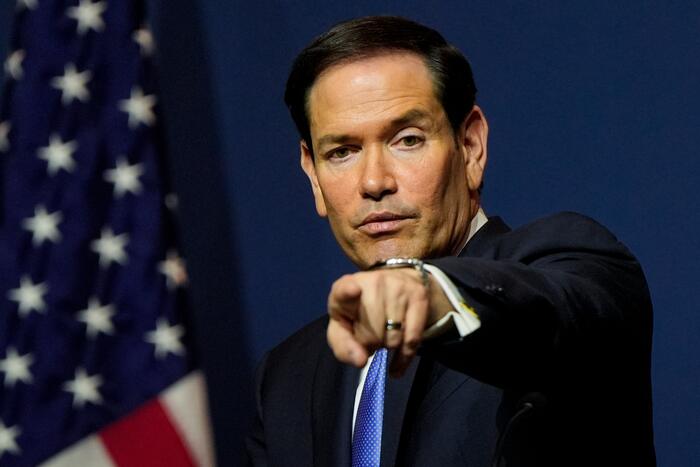
When G20 foreign ministers concluded their talks in Atlanta without a joint communique, diplomatic observers recognized a structural breakdown that has been years in the making. Rather than signaling a temporary diplomatic hiccup, the failure to reach consensus on core geopolitical and economic issues reflects a fundamental shift in how major powers negotiate. Competing blocs within the Group of Twenty now treat consensus rules not as a mechanism for compromise, but as a veto over language they find politically inconvenient at home.
For decades, the G20 operated on a clear, unspoken bargain. Founded in 1999 in the wake of the Asian financial crisis and elevated to a leaders-level forum during the 2008 global meltdown, the group succeeded because it kept its focus narrow. Finance ministers and central bank governors stuck to macroeconomic coordination, bank regulation, and liquidity swaps. Politics stayed largely outside the room. That separation is gone. You might also find this related coverage interesting: The Quiet Rebellion at the Edges of the Map.
The Structural Flaw Inside Consensus Diplomacy
To understand why the Atlanta meeting ended without a unified statement, you have to look at the mechanics of G20 decision-making. The forum has no permanent secretariat, no binding charter, and no enforcement arm. Its sole currency is the joint communique—a meticulously negotiated document where every word requires unanimous sign-off from all member states, including the United States, China, Russia, the European Union, the African Union, and major emerging economies like India, Brazil, and South Africa.
In practice, unanimity gives every participant absolute veto power over the final text. When global powers shared a broad baseline agreement on open trade and multilateral institutions, negotiators could paper over disagreements with carefully vague phrasing. Today, those linguistic bridges have burned down. As reported in latest coverage by Al Jazeera, the effects are widespread.
Western delegations routinely push for explicit language condemning territorial aggression, safeguarding maritime security, and upholding international law in active conflict zones. Meanwhile, other members—most notably Russia and China—reject the inclusion of geopolitical security language, arguing that the G20 was designed strictly as an economic forum rather than a substitute for the United Nations Security Council. When neither side bends, the drafting committee runs out of clock. What remains is a chair's summary, a procedural consolation prize issued solely by the host nation that carries none of the collective weight of a consensus declaration.
Geopolitics Has Swallowed the Economic Agenda
The breakdown in Atlanta illustrates a broader reality across international summits. Economic policy and national security are no longer separate tracks.
Consider the core issues on the table at any modern G20 gathering:
- Supply chain resilience and industrial policy: Western capitals view tariffs, export controls, and domestic subsidies as essential national security measures to reduce dependence on single-source manufacturing. Emerging economies and major exporters view those same measures as protectionism that violates World Trade Organization norms and inflates global prices.
- Sovereign debt restructuring: Developing nations face mounting debt service costs, yet efforts to streamline relief under the G20 Common Framework frequently stall over disagreements between traditional Western creditors, private bondholders, and major bilateral lenders like China regarding how losses should be shared.
- Climate finance and energy transition: Wealthy nations emphasize rapid decarbonization and phasing down fossil fuels, while developing economies insist on binding financial transfers and technology sharing before committing to aggressive emissions targets.
- Reform of multilateral development banks: While nearly every member agrees in principle that institutions like the World Bank and the International Monetary Fund need updated governance structures, debates over voting shares and capital increases quickly turn into zero-sum contests for geopolitical influence.
Every one of these economic questions carries heavy security implications. A debate over semiconductor tariffs is really a debate over military capability. A negotiation over sovereign debt in sub-Saharan Africa or Latin America is simultaneously a contest for diplomatic alignment. Because foreign ministers bring a security-first mandate to the table, they are far less willing than central bankers to trade away political positions for the sake of a clean press release.
The Rise of Hedging Middle Powers
A common mistake in analyzing G20 deadlocks is framing them purely as a binary clash between Washington and Beijing, or between the G7 and the expanded BRICS bloc. That reading misses the most decisive dynamic in the room.
Middle powers—countries such as India, Brazil, Indonesia, Saudi Arabia, and South Africa—have increasingly refused to pick a side. Instead, they practice multi-alignment, pursuing issue-by-issue partnerships that maximize their own economic and diplomatic autonomy. During recent G20 presidencies hosted by Indonesia, India, Brazil, and South Africa, these nations demonstrated that they are willing to push back against both Western demands for unified geopolitical condemnations and Russian or Chinese resistance to institutional reform.
In Atlanta, that middle-power posture played out in familiar fashion. Non-aligned delegations prioritized concrete deliverables on food security, development finance, and artificial intelligence governance, showing little appetite for letting the entire summit collapse over paragraphs on distant conflicts. Yet when major powers refuse to budge on security language, even the most skilled host diplomacy hits a brick wall.
To see how this plays out in a negotiation room, consider a hypothetical example of a drafting session at 2:00 AM. One delegation insists on a single sentence referencing the United Nations Charter in the context of a specific regional war. Another delegation demands that sentence be deleted entirely or balanced with language criticizing unilateral economic sanctions. A third group of emerging economies proposes replacing both with a broad affirmation of peaceful dispute resolution. If either of the first two delegations holds firm on its domestic red lines, the entire paragraph dies, taking the communique with it.
Why a Missing Communique Still Matters
Skeptics often dismiss joint communiques as empty diplomatic theater—pages of watered-down prose that nobody outside foreign ministries actually reads. That view underestimates how multilateral diplomacy works on the ground.
A formal G20 communique serves three practical functions that a host nation's summary cannot replicate:
- Bureaucratic marching orders: When leaders or ministers sign off on a joint text, that language becomes an official mandate for thousands of civil servants, central bank officials, and multilateral bank directors over the following year. Without agreed text, working groups lack clear instructions on where to direct technical resources.
- Market and investor signaling: Financial markets and multinational corporations rely on coordinated G20 commitments—such as pledges to avoid competitive currency devaluations or to harmonize digital tax rules—as baselines for long-term risk assessment. Fragmented statements signal policy unpredictability.
- Accountability benchmarks: Civil society groups, international institutions, and rival governments use prior communiques to hold nations to their word. When a country signs a commitment on climate finance or anti-corruption standards, diplomatic pressure can be applied at the next summit if it falls short.
When a meeting ends without consensus, those mechanisms weaken. Work continues at the technical level, and bilateral meetings on the sidelines of the summit still produce valuable back-channel diplomacy, but the collective steering capacity of the group diminishes.
The Future of the G20 Format
The Atlanta deadlock raises an unavoidable question about whether the G20 can remain the premier forum for global economic cooperation. Smaller, more cohesive groupings are already absorbing some of the energy that once flowed into the G20. The G7 coordinates closely on sanctions, industrial policy, and defense. Meanwhile, the expanded BRICS grouping offers emerging economies a platform free from Western pressure, even as its own members hold deeply divergent economic interests.
Yet abandoning the G20 is not an option any major power seriously entertains. It remains the only regular venue where the leaders and top diplomats of all major systemic economies sit at the same table. No global crisis—whether a sovereign debt cascade, a pandemic, a financial shock, or a disruption to global shipping lanes—can be managed effectively without the countries represented in that room.
The reality facing diplomats after Atlanta is that consensus can no longer be treated as the sole measure of a successful summit. If the G20 is to remain functional in an era of sharp geopolitical rivalry, its members will have to accept smaller, modular agreements among willing coalitions on technical issues while leaving intractable security disputes to other forums—or accept that chair's summaries, rather than unanimous communiques, are the new normal of global diplomacy.