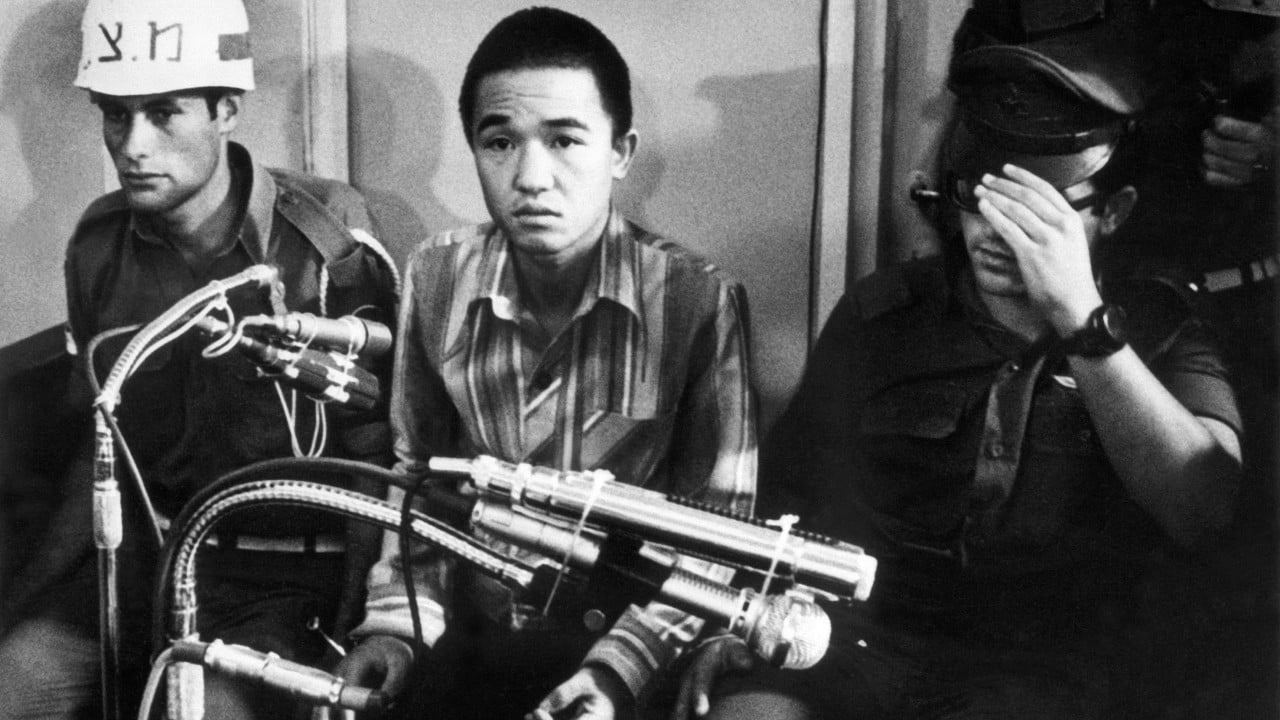
The death of Kozo Okamoto at age 78 in Beirut closes the operational ledger on one of the 20th century’s most consequential political violence experiments: the outsourcing of tactical execution by Middle Eastern paramilitary groups to foreign proxies. Okamoto, the sole surviving perpetrator of the 1972 Lod Airport massacre in Israel, spent over four decades surviving under the institutional protection of the Popular Front for the Liberation of Palestine (PFLP) and the Lebanese state's asylum framework. His trajectory illustrates the mechanics of globalized transnational insurgency, the systemic security shifts forced by proxy operations, and the long-term political costs borne by host nations offering non-extradition sanctuary.
The Three Architecture Pillars of Transnational Proxy Terrorism
The 1972 attack on Lod Airport—resulting in 26 civilian deaths and 78 injuries—was not an isolated strike but a proof-of-concept for cross-regional operational integration. The operation relied on three distinct structural components: For a different perspective, read: this related article.
- Ideological Convergence: The alliance between the Japanese Red Army (JRA) and the PFLP merged Marxist-Leninist anti-imperialism with Pan-Arab anti-Zionism, allowing ideological alignment to substitute for shared cultural or national origin.
- Asymmetric Security Exploitation: At the time, global security protocols focused primarily on air hijackings, leading to heightened screening for boarding passengers but negligible inspection of checked baggage. The JRA operatives exploited this blind spot by checking automatic weapons and grenades inside luggage on an Air France flight from Rome, bypassing immigration control before retrieving their arsenal at the arrival carousel.
- Attribution Disruption: By deploying non-Arab, Japanese operatives, the PFLP bypassed racial profiling algorithms and security intelligence watches of Western and Israeli border services. The element of cognitive surprise delayed initial security responses on the ground, maximizing casualties in a high-density zone.
The Strategic Cost Function of Tactical Security Shifts
The immediate consequence of the Lod Airport attack was a forced overhaul of international aviation security doctrine. The failure of passive security models exposed a critical vulnerability in infrastructure defense: terminal concourses and baggage retrieval zones were unmonitored soft targets.
This single operational failure reshaped aviation infrastructure through three structural mechanisms: Similar insight on this matter has been shared by Al Jazeera.
- Expansion of Security Perimeters: Security checks were moved from the boarding gate to the public entrance of airport facilities, converting entire terminal buildings into sterile zones.
- Luggage Interdiction Systems: The adoption of 100% checked-baggage screening protocols imposed permanent operational capital expenditures on global airlines and municipal airport authorities.
- Behavioral Profiling Protocols: Intelligence agencies shifted from threat-monitoring based on origin nationality to integrated behavioral analysis and cross-referenced multi-jurisdictional intelligence databases.
Sanctuary Economics and State Protection Dependencies
Okamoto’s post-attack life highlights the political mechanics of prisoner exchanges and state-sanctioned asylum. Captured at the scene and sentenced to life imprisonment in Israel, his release was secured in 1985 via the Jibril Agreement—a massive asymmetric exchange where 1,150 prisoners were traded for three Israeli soldiers.
[1972: Lod Airport Attack] ---> [Israeli Imprisonment]
                                         |
[1985: Jibril Agreement] <---------------| (Asymmetric Exchange)
         |
[1997: Passport Forgery Arrest in Lebanon]
         |
[2000: Lebanese Political Asylum Granted] ---> [PFLP Custodial Protection in Beirut]
When Lebanese authorities arrested Okamoto in 1997 on charges of passport forgery, Japan mounted diplomatic pressure for his extradition. However, in 2000, Lebanon granted him political asylum while deporting four other JRA members back to Tokyo. This decision demonstrated the legal and geopolitical trade-offs host nations make:
- Domestic Political Stabilization: Granting asylum to Okamoto satisfied powerful domestic militia interests and regional allies, preserving internal stability at the cost of friction with G7 diplomatic partners.
- Institutional Custody Delegations: Rather than integrating Okamoto into public life or spending state funds on his maintenance, Lebanon delegated his physical security, housing, and operational isolation to the PFLP.
- Diminishing Asset Value: In his final decades, Okamoto was reduced to a symbolic artifact—a quiet recluse under constant supervision, used periodically for political messaging at anniversaries while possessing zero operational or strategic utility.
Security planners analyzing proxy warfare networks must recognize that non-state actors who rely on foreign cadres ultimately introduce severe friction into their own command structures. While foreign proxies bypass immediate regional profiling, their long-term upkeep creates permanent state diplomatic friction and yields diminishing strategic returns once the initial operational element of surprise is spent.


