The reported missile engagement targeting a United States naval vessel in the Strait of Hormuz represents a shift from posturing to kinetic friction within the world’s most critical maritime chokepoint. While headlines focus on the immediate explosion, the strategic reality is defined by the Asymmetric Cost Gap: the disparity between the price of the interceptor and the price of the threat. This incident confirms that the Iranian tactical doctrine—utilizing anti-ship cruise missiles (ASCMs) and unmanned systems—is designed not to win a traditional naval battle, but to impose a prohibitive operational tax on Western maritime presence.
The Mechanics of Chokepoint Interdiction
The Strait of Hormuz serves as a geographic bottleneck where the navigable channel narrows to approximately two miles in width for inbound and outbound shipping. This physical constraint dictates the engagement envelope. When an Iranian news agency reports a missile strike, they are describing an attempt to exploit Terminal Phase Vulnerability.
Naval vessels entering the Strait operate under restricted maneuverability. This creates a predictable transit corridor, allowing land-based missile batteries to pre-calculate firing solutions. The primary technical variables in these engagements include:
- Reaction Time Compression: In the narrow confines of the Gulf, the distance between a mobile coastal launcher and a target can be less than 50 miles. A subsonic missile traveling at Mach 0.9 covers this distance in under five minutes.
- Saturation Thresholds: Defending a high-value asset like a destroyer requires the Aegis Combat System to track, identify, and intercept incoming threats simultaneously. If the number of incoming projectiles exceeds the available firing channels, the probability of a "leaking" missile hitting the hull increases exponentially.
- Radar Horizon Limitations: Land-based launchers hidden in the rugged terrain of the Iranian coastline use the earth's curvature and coastal clutter to mask the missile's initial boost phase, significantly shortening the defender’s detection window.
The Three Pillars of Iranian Anti-Access/Area Denial (A2/AD)
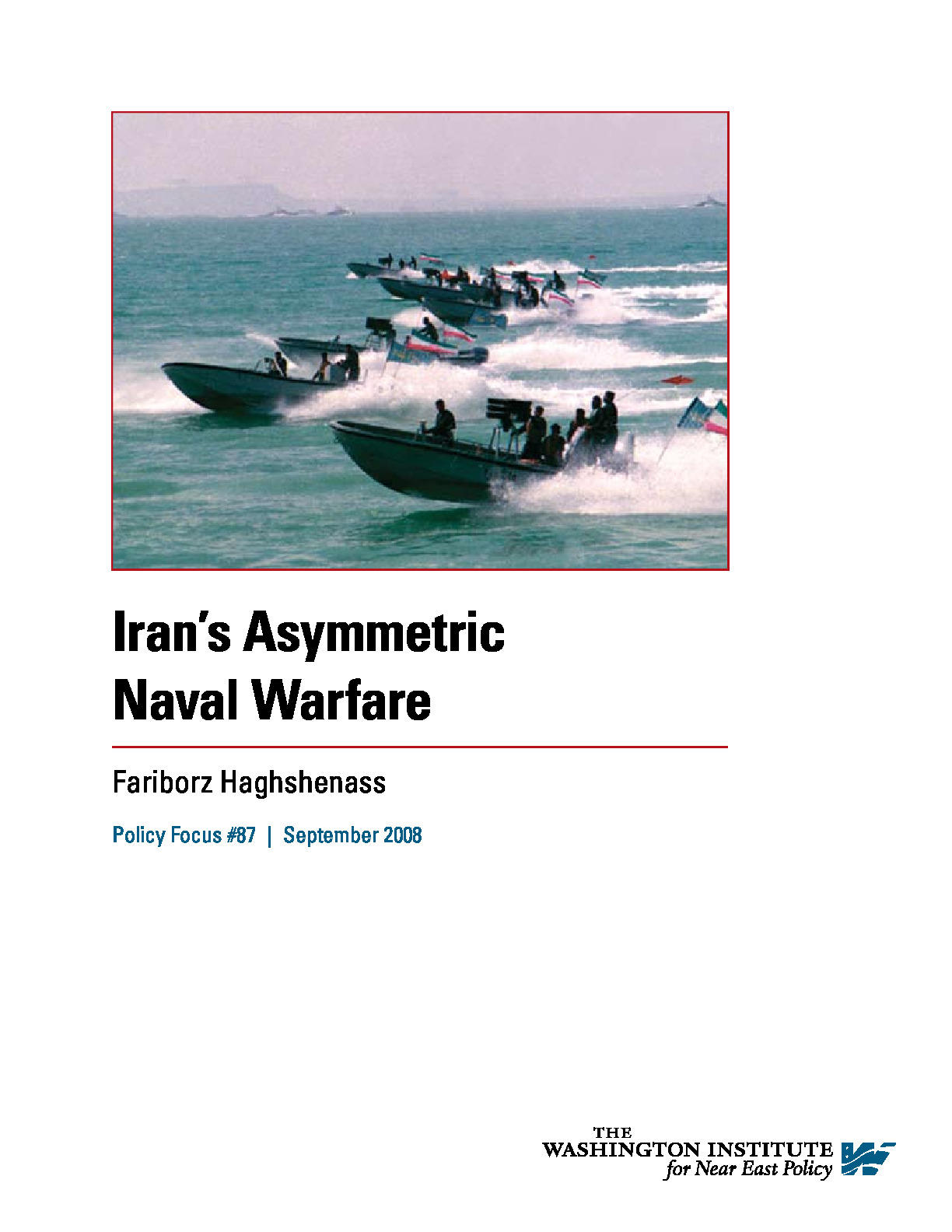
Iran’s maritime strategy is built on a foundation of decentralized, low-cost persistence. Unlike the U.S. Navy, which prioritizes power projection via massive platforms, Iran’s Islamic Revolutionary Guard Corps Navy (IRGCN) utilizes a distributed lethality model.
1. Land-Based Missile Density
The Iranian arsenal includes variants of the C-802 and locally produced Noor and Ghadir missiles. These systems are mobile, making them nearly impossible to eliminate through preemptive strikes. By dispersing launchers along the coastline and islands like Abu Musa and Sirri, the IRGCN creates a cross-fire environment. Any vessel entering the Strait is effectively entering a pre-calibrated "kill zone" where multiple batteries can synchronize their impact times.
2. Swarm Dynamics and Decoys
The reported use of two missiles suggests a deliberate test of the target's Point Defense Systems (PDS). In a high-intensity conflict, these would be preceded by dozens of fast-attack craft and low-cost drones. The objective is to force the U.S. vessel to deplete its limited magazine of expensive surface-to-air missiles (SAMs) on low-value decoys, leaving it defenseless against the secondary wave of heavy ASCMs.
3. Electronic Warfare and Sensory Overload
Modern naval warfare is a battle of the electromagnetic spectrum. Before a kinetic strike occurs, the environment is flooded with jamming signals designed to confuse the ship’s SPY-1 radar. If the ship cannot achieve a "hard kill" (physical interception), it must rely on "soft kill" measures like Nulka decoys or Chaff. The effectiveness of these measures drops as the number of simultaneous threats increases.
The Economic Attrition Function
The logic of these skirmishes is found in the balance sheet, not just the casualty count. There is a profound Logistical Inversion at play in the Strait of Hormuz.
$Cost_{Attrition} = (N_{Interceptors} \times P_{Interceptor}) + C_{Operational} - (N_{Threats} \times P_{Threat})$
In this equation, $P_{Interceptor}$ (the price of an SM-2 or SM-6 missile) is frequently 10 to 50 times higher than $P_{Threat}$ (the price of a basic Iranian cruise missile or suicide drone).
- The Interceptor Deficit: A single U.S. destroyer carries a finite number of Vertical Launch System (VLS) cells. Once these are exhausted, the ship must retreat to a secure port to reload—a process that can take days.
- Market Volatility as a Weapon: The mere report of a missile hit, regardless of the actual damage to the hull, triggers a spike in maritime insurance premiums (War Risk Surcharges). For the global economy, the Strait is a single point of failure. By maintaining a state of "controlled instability," Iran exerts downward pressure on global GDP without needing to sink a single ship.
Structural Bottlenecks in Maritime Defense
The U.S. Navy’s challenge in the Strait is not a lack of technology, but a mismatch between platform design and environment. The "Blue Water" Navy is built for open-ocean dominance. In the "Brown Water" or littoral environment of the Strait, heavy assets face three structural limitations:
- Acoustic Complexity: The shallow, high-traffic waters of the Persian Gulf create a noisy environment that degrades sonar performance, making it easier for Iranian midget submarines (Ghadir-class) to position themselves for torpedo or mine-laying operations.
- Proximity to Shore: Ships are within the "engagement envelope" of shore-based artillery and short-range rockets, which do not require sophisticated guidance to be effective in such a narrow channel.
- The Rules of Engagement (ROE) Paradox: U.S. commanders must distinguish between civilian tankers, legitimate fishing vessels, and hostile IRGCN fast-boats in seconds. A mistake in either direction results in either a catastrophic hit or a diplomatic nightmare.
Verifying the "Hit": Damage Control vs. Information Operations
The conflicting reports—Iranian agencies claiming a hit and Western sources often providing silence or denials—highlight the role of Information Warfare. In naval terms, a "hit" is categorized by its impact on Mission Capability:
- Mobility Kill (M-Kill): Damage to engines or steering that leaves the ship adrift.
- Communication Kill (C-Kill): Destruction of radar arrays or satellite domes, rendering the ship "blind."
- Firepower Kill (F-Kill): Damage to weapon systems or magazines.
Even if a missile strike only causes superficial damage to the superstructure, the psychological and political impact serves the Iranian strategic objective of signaling that the Strait is no longer a safe transit for U.S. hegemony. The physical durability of a modern destroyer is high, but its political durability in a sustained attrition war is unproven.
The Shift Toward Autonomous Resilience
To counter this threat, the operational shift must move toward Unmanned Distribution. The current model of putting 300 sailors and $2 billion of hardware into a narrow chokepoint is an invitation to asymmetric exploitation.
Future resilience depends on the deployment of "ghost fleets"—unmanned surface vessels (USVs) and underwater vehicles (UUVs) that act as a sensory picket line. By pushing the sensor array 50 miles ahead of the high-value manned assets, the Navy can expand the reaction window and force the adversary to reveal their launcher positions against low-cost, replaceable targets.
The incident in the Strait of Hormuz is not an isolated tactical event; it is a stress test of the Western maritime security architecture. The data suggests that as missile precision increases and costs decrease, the traditional advantage of large surface combatants in restricted waters is being systematically eroded. The strategic play is no longer about "winning" a skirmish, but about re-engineering the cost-of-entry for the world’s most vital waterway.
The immediate requirement for maritime commanders is the deployment of high-energy laser (HEL) systems and microwave weapons to break the economic attrition cycle. Until the cost-per-intercept is lowered to the level of the incoming threat, the tactical advantage remains with the shore-based aggressor.