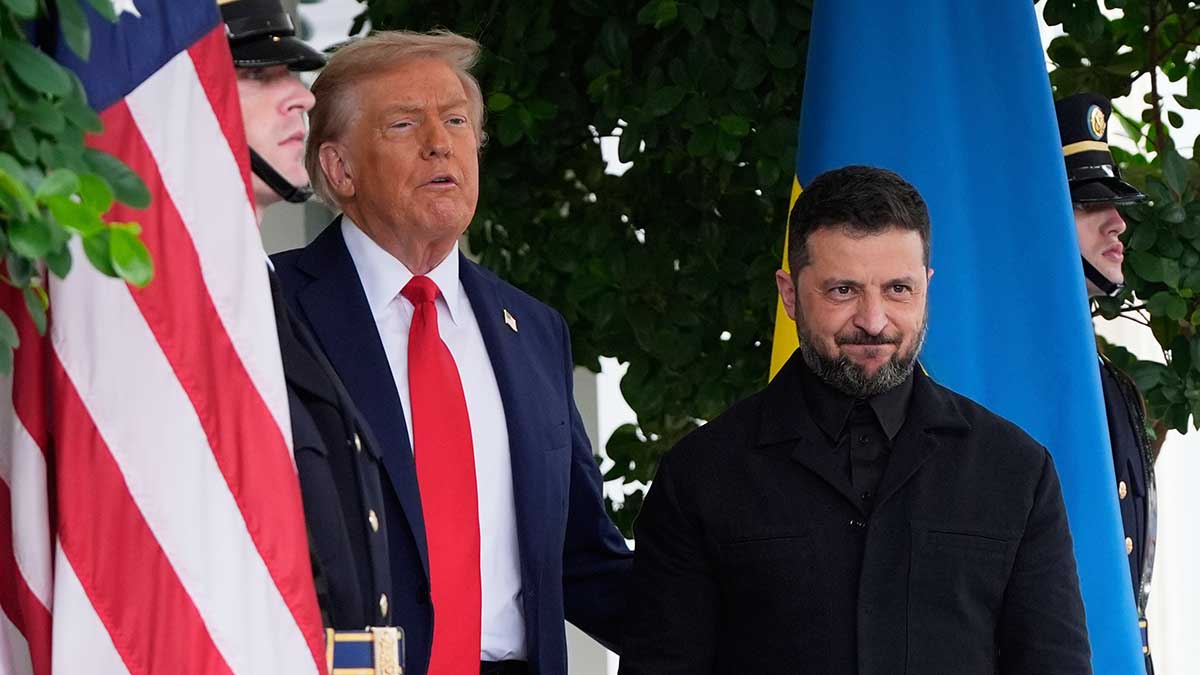
Asymmetric partnerships in international relations rarely fail through open betrayal; they fail through structural suffocation, where the stronger actor absorbs the weaker actor's strategic autonomy under the guise of protection or integration. The geopolitical trajectory of Ukraine between 1991 and 2022 provides a definitive case study in how dual-vector dependency—simultaneous exposure to a coercive regional hegemon and a hesitant external security guarantor—creates a strategic trap that erodes state sovereignty before a single shot is fired.
To understand this mechanism, analysts must discard vague diplomatic metaphors like "frenemy" or "lethal embrace" and replace them with precise institutional and economic variables. State vulnerability in buffer zones is governed by three measurable structural deficits: energy and trade concentration, security commitment ambiguity, and domestic institutional capture. When these three variables align, a state loses the capacity to execute independent foreign policy without triggering systemic economic collapse or military intervention. Building on this theme, you can also read: The Invisible Wall in the Water (And Why Your Morning Coffee Just Got More Expensive).
The Architecture of Coercive Integration
A coercive embrace occurs when a dominant power structures bilateral relations so that the cost of exit exceeds the cost of compliance for the smaller state. Following the dissolution of the Soviet Union, Ukraine inherited an industrial base and energy infrastructure physically integrated with the Russian Federation. Rather than diversification, the post-1991 equilibrium relied on subsidized natural gas imports and transit fees, creating a bilateral dependency loop.
This arrangement functioned through three distinct mechanisms of leverage: Observers at The Washington Post have provided expertise on this situation.
- Price Arbitrage as Political Rent: Below-market energy pricing functioned as a direct subsidy to Ukrainian heavy industry in the eastern oblasts. In exchange, Kyiv maintained aligned foreign policy positions and extended basing rights for the Black Sea Fleet in Sevastopol. When Kyiv deviated from Moscow's preferred policy alignment—such as during the 2004 Orange Revolution—gas pricing reverted to market rates or supply was halted entirely, as seen in the January 2006 and January 2009 transit disputes.
- Infrastructure Chokepoints: Until the construction of bypass pipelines like Nord Stream 1 and TurkStream, roughly 80 percent of Russian gas exports to Europe transited Ukrainian pipelines. While this gave Kyiv temporary counter-leverage, it simultaneously incentivized Moscow to invest billions in alternative transit corridors specifically designed to eliminate Ukraine's strategic utility while preserving its import dependency.
- Elite Co-optation and Rent-Seeking: The opacity of gas intermediary firms—most notably RosUkrEnergo—created massive off-budget financial flows. These rents funded domestic political factions in Ukraine, ensuring that influential segments of the political and oligarchic class had a direct financial stake in preventing regulatory alignment with the European Union, which demanded transparent procurement and unbundled energy markets.
The operational lesson is clear: economic integration with an asymmetric power lacking rule-of-law constraints is never purely commercial. Every discount, credit line, or joint venture operates as an uncalled political option that the stronger party can exercise during moments of domestic political transition.
The Credibility Deficit in Conditional Security Guarantees
While coercive integration pulls a buffer state inward, conditional external support creates a parallel trap known in international relations theory as the abandonment-entrapment dilemma. Between 2008 and 2022, Western institutions—primarily NATO and the European Union—offered Ukraine a framework of normative alignment without hard security guarantees.
At the April 2008 Bucharest Summit, NATO allies declared that Ukraine and Georgia would become members of the alliance, yet declined to grant them a Membership Action Plan (MAP). This decision produced the worst possible strategic outcome for a buffer state: it signaled long-term strategic intent to the regional hegemon—triggering threat perception in Moscow—while providing zero immediate deterrence mechanisms during the intervening vulnerability window.
The structural flaws of this conditional model operate across four dimensions:
- Asymmetric Risk Tolerance: For the regional hegemon, preventing the buffer state from joining an opposing bloc is treated as an existential core interest, justifying high economic and military costs. For distant guarantors, the buffer state represents a secondary peripheral interest, capping their willingness to escalate militarily.
- Incremental Aid Calibration: When conflict materialized in 2014 with the annexation of Crimea and the insurgency in the Donbas, external support was calibrated to prevent total state collapse without enabling decisive military victory. The provision of non-lethal aid prior to 2017, followed by strictly defensive anti-tank systems like the Javelin under strict deployment restrictions, froze the conflict rather than resolving it.
- Regulatory Conditionality Without Capital Scale: The EU Association Agreement and Deep and Comprehensive Free Trade Area (DCFTA) required Ukraine to adopt thousands of pages of EU regulatory standards—incurring immediate compliance costs for Ukrainian manufacturers—while offering limited structural funds compared to full member states and immediately triggering punitive Russian trade tariffs in 2013 and 2014.
- Strategic Ambiguity as Deterrence Failure: Ambiguity works only when an adversary fears the hidden commitment is stronger than stated. When domestic political divisions among guarantors publicly signal reluctance to intervene directly, ambiguity collapses into predictable non-intervention.
The Internal Vulnerability Multiplier
External pressure only fractures a state when internal institutions fail to absorb the shock. In Ukraine, the dual external pressures of Russian coercion and Western conditionality interacted with a domestic political economy dominated by competing oligarchic clans.
In a consolidated democracy or a centralized autocracy, the state apparatus monopolizes foreign policy execution. In a competitive oligarchic system, different regional and sectoral elites align with different external patrons to secure their domestic property rights. Heavy industry owners in the east favored customs union integration with Russia to preserve subsidized inputs and captive markets; agricultural and tech sectors increasingly favored European market access.
This internal fragmentation enabled what strategists term multi-vector hedging—the attempt by state leadership to extract rents from both East and West simultaneously by playing one against the other. Under President Leonid Kuchma and later Viktor Yanukovych, hedging served as a short-term survival tactic for incumbents. However, hedging degrades state capacity over time because it prevents the completion of painful structural reforms. Joining the Eurasian Economic Union required surrendering tariff autonomy to Moscow; implementing the EU Association Agreement required dismantling the judicial opacity and state-owned enterprise monopolies that funded domestic political patronage. By late 2013, the margin for hedging evaporated, forcing a binary choice that the domestic institutional framework could not survive without systemic rupture.
Quantifying the Buffer State Trap
Evaluating geopolitical alignment requires moving beyond ideological rhetoric to measure the hard structural ratios that determine state survivability. When assessing whether a bilateral relationship or alliance framework is sustainable or predatory, strategists evaluate four core ratios:
First is the Trade Concentration Ratio. When a single external partner accounts for more than 25 to 30 percent of a state's exports or critical energy imports, that partner possesses de facto veto power over the smaller state's macroeconomic stability. Prior to 2014, Russia accounted for roughly a quarter of Ukraine's total trade and the vast majority of its natural gas supply, giving Moscow immediate levers to induce currency crises and industrial recessions.
Second is the Deterrence-to-Provocation Ratio. Every step toward an external security bloc increases friction with a neighboring hegemon. If the incremental increase in defensive capability or allied commitment does not exceed the incremental increase in adversary hostility, the policy produces net insecurity. Declarations of future membership without interim mutual defense treaties invert this ratio, maximizing provocation while minimizing deterrence.
Third is the Reform Cost-to-Compensation Ratio. Deep institutional integration with advanced economic blocs requires upfront regulatory, judicial, and industrial restructuring. If external financial assistance covers only a fraction of the immediate economic displacement caused by breaking ties with a neighboring market, domestic political backlash will inevitably stall implementation.
Fourth is the Institutional Autonomy Index. This measures the degree to which critical infrastructure—banking, telecommunications, energy grids, and media—is insulated from foreign state-linked ownership. Where foreign entities control domestic information spaces or energy distribution networks, external actors can manufacture domestic political crises without deploying conventional military force.
Limitations of Strategic Hedging and Neutrality
A common analytical error is assuming that formal neutrality or non-alignment offers an automatic escape from the buffer state trap. Neutrality is not a passive legal status; it is an expensive military posture that requires credible independent deterrence.
Historical examples confirm this constraint. Cold War neutrality in Switzerland or Sweden rested on universal conscription, high per-capita defense expenditure, hardened civil defense infrastructure, and geographic defensibility. Austria's neutrality in 1955 succeeded only because four occupying powers agreed to a formal treaty equilibrium during a period of stabilizing superpower spheres of influence.
Ukraine in 1991 possessed none of these preconditions. Following the Budapest Memorandum of 1994—in which Kyiv surrendered the world's third-largest nuclear arsenal in exchange for non-binding security assurances from Russia, the United States, and the United Kingdom—Ukraine systematically underfunded its conventional armed forces. By 2014, defense spending had fallen to roughly 1 percent of GDP, leaving fewer than 6,000 combat-ready troops available to respond to the initial incursion in Crimea. Without armed deterrence or a binding mutual defense treaty, neutrality simply leaves a buffer state exposed to unilateral revisionism by the nearest strong power.
Operational Protocol for Asymmetric Statecraft
States positioned along geopolitical fault lines—or corporations and institutions operating within contested jurisdictions—cannot rely on goodwill or informal assurances. Surviving asymmetric pressure requires executing a strict sequence of structural insulation before crisis conditions emerge:
- Eliminate Single-Source Dependencies Early: Cap single-country exposure in critical inputs—energy, semiconductors, agricultural fertilizers, and transit corridors—below 15 percent of total volume, even if diversification requires paying an immediate market premium. The premium is an insurance cost against coercive leverage.
- Reject Unbacked Security Declarations: Never accept public geopolitical alignments or aspirational alliance declarations unless they are accompanied simultaneously by binding mutual defense obligations, forward-deployed tripwire forces, or massive transfers of asymmetric defensive weaponry. Symbolic alignment without hard deterrence invites preemptive strike.
- Front-Load Domestic Institutional Hardening: Execute judicial reform, anti-corruption enforcement, and media ownership transparency prior to entering major external trade negotiations. External powers can only capture elites who rely on opaque domestic rent-seeking to maintain wealth and power.
- Synchronize Economic Reorientation with Capital Buffers: When decoupling from a coercive trading partner, secure sovereign credit lines and market-access quotas from alternative partners before announcing the policy shift, ensuring the state can absorb immediate tariff retaliation and supply-chain disruption without liquidity collapse.
- Convert Infrastructure into Interdependent Assets: Synchronize power grids, rail gauges, and telecommunications backbones with reliable allies rather than maintaining isolated legacy networks. Physical interoperability creates automatic institutional stakes for external partners, raising their cost of abandonment during a crisis.
The definitive strategic takeaway from the Ukrainian trajectory is that intermediate geopolitical positions are inherently unstable when adjacent to a revisionist power. Ambiguity, half-measures, and conditional partnerships do not buy time for a vulnerable state; they merely transfer the initiative to the actor willing to absorb the highest immediate cost. Any state or enterprise operating in a contested zone must either build self-sustaining deterrence or achieve rapid, irreversible institutional integration with a hard-security guarantor—because remaining halfway across the bridge guarantees collapse when the structure is tested.