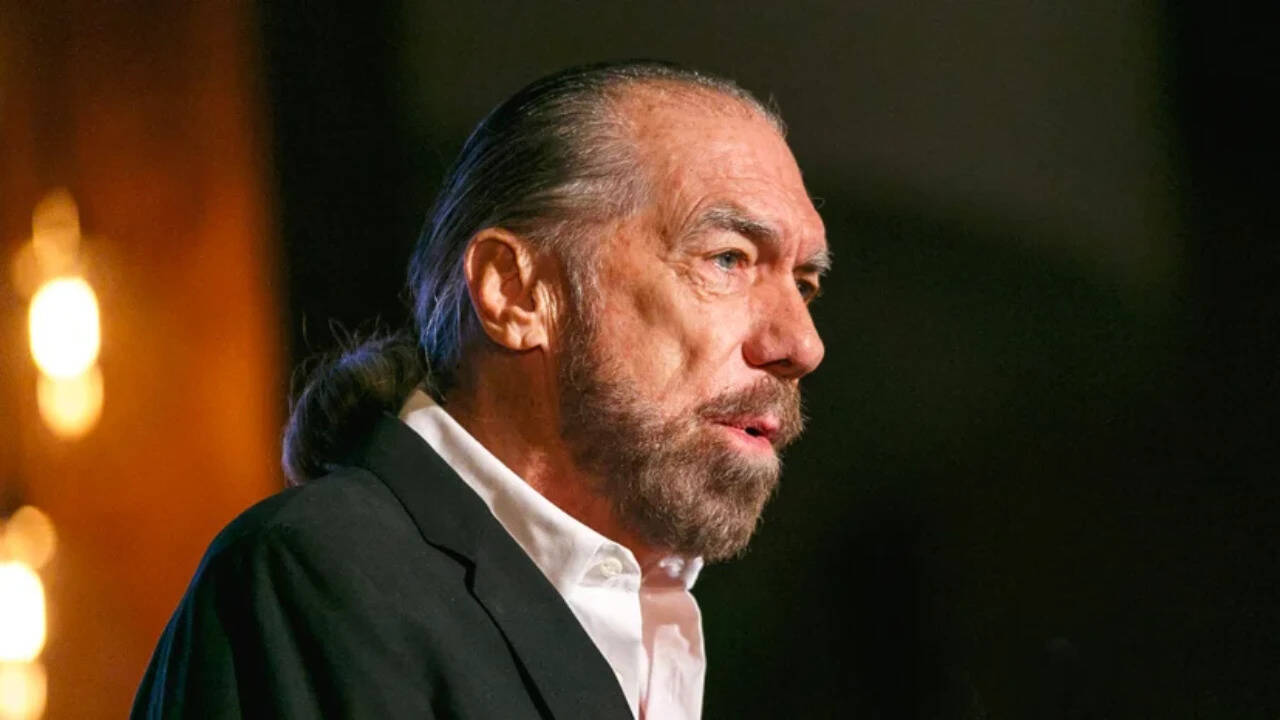
Extreme upward economic mobility—specifically the trajectory from repeated housing insolvency to ten-figure net worth—is almost universally misdiagnosed by conventional business media as a function of grit, mindset, or linear hard work. In reality, transitions from zero-capital distress to billionaire status are governed by specific structural mechanisms: asymmetric risk-taking, zero-cost-basis leverage, and convex equity capture. When a subject has experienced acute financial ruin twice, their subsequent accumulation of massive wealth is rarely a continuation of the behavior that caused the initial failures; rather, it represents a fundamental shift in how they price downside risk and structure ownership.
Standard biographical narratives flatten these trajectories into motivational myths, obscuring the mechanics of capital formation. To understand how an individual moves from repeated homelessness to a ten-figure valuation—a pattern observed in documented cases such as John Paul DeJoria (co-founder of John Paul Mitchell Systems and Patrón Spirits) or Chris Gardner (founder of Gardner Rich & Co.)—one must strip away survivorship bias and analyze the structural conditions required for non-linear wealth generation.
The Economics of Zero-Base Optionality
Financial ruin alters an operator's utility function. In standard portfolio theory, rational actors exhibit risk aversion because the marginal utility of wealth diminishes as assets grow, while the disutility of losing existing capital is severe. When an individual drops to an absolute floor—experiencing literal homelessness and zero net worth—the mathematical properties of their risk profile invert.
Downside Truncation and Convexity
At zero net worth, financial downside is hard-capped. An operator who already lacks housing, liquid reserves, and institutional credit cannot lose what they do not possess. In options pricing terms, their personal balance sheet resembles a long call option with a strike price near zero.
- Capped Downside: Failure results in a return to a baseline state the operator has already survived and mapped operationally. The psychological and material cost of a second or third failure is substantially lower than the first, reducing hesitation when confronting high-variance opportunities.
- Uncapped Upside: Because the operator is not protecting legacy assets, reputation, or a salaried career track, they can allocate 100% of their cognitive and temporal bandwidth to high-risk, high-variance ventures that salaried professionals rationally reject due to opportunity cost.
The critical distinction between a first homelessness event and a second is information asymmetry. The first collapse typically stems from systemic vulnerability, lack of capital buffers, or unhedged personal liabilities. A second collapse, occurring while the operator is actively attempting commercial ventures, functions as an expensive market-clearing event: it eliminates non-viable business models and forces the operator to abandon wage-labor dependency in favor of equity-only structures.
The Structural Break Between Labor and Equity
No individual accumulates a billion dollars through linear compensation. Wages, commissions, and professional fees are bounded by time and market clearing rates for human capital. Moving from insolvency to extreme wealth requires crossing a structural boundary from selling time to owning scalable equity.
Escaping the Linear Wage Trap
Individuals emerging from housing instability initially rely on high-turnover, immediate-liquidity survival mechanisms—day labor, door-to-door sales, or commission-only brokerage roles. While these activities solve acute cash-flow deficits, they suffer from a fatal scaling limitation: revenue ceases the moment labor stops.
The inflection point occurs when the operator converts direct sales expertise into proprietary distribution or brand equity. Consider the operational mechanics of early-stage consumer packaged goods or financial brokerage:
- Direct Customer Acquisition: In early phases, the founder acts as the sole distribution channel, absorbing high rejection rates to validate unit economics without paid marketing spend.
- Margin Capture via Ownership: Instead of earning a 10% to 20% commission on a third party's product, the operator secures equity control—often 50% or more—of an entity where gross margins exceed 60% to 80%.
- Reinvestment of Operating Cash Flow: Lacking access to institutional venture capital or commercial bank debt due to ruined personal credit, the enterprise must self-fund through immediate positive cash flow. This constraint enforces ruthless capital discipline, preventing the equity dilution that typically strips early founders of controlling stakes before an exit.
When a business scales without external venture dilution, a moderate enterprise valuation translates into massive personal net worth. A founder retaining 50% of a company that reaches a $2 billion valuation achieves billionaire status; a venture-backed founder diluted down to 8% requires a $12.5 billion exit to reach the identical threshold.
Bootstrapping Under Severe Capital Constraints
Conventional business wisdom treats lack of startup capital as a fatal barrier. However, acute capital starvation forces specific operational behaviors that increase survival probability in hyper-competitive markets.
Working Capital Arbitrage
When an operator starts with less than $1,000 and no credit lines, traditional inventory-heavy or infrastructure-dependent models are impossible. Surviving ventures rely on negative working capital cycles or vendor-financed float:
- Pre-Selling and Drop-Fulfillment: Securing purchase orders or upfront cash deposits before incurring manufacturing or delivery costs.
- Sweat-Equity Tradeoffs: Substituting founder labor for capital expenditures—handling physical logistics, direct B2B sales, and account management personally to keep fixed overhead near zero.
- Concentrated Bet Sizing: With no diversified portfolio to manage, all retained earnings are funneled into a single high-margin product line or niche market vertical until cash reserves stabilize.
This operational posture creates extreme fragility in the short term—a single disrupted shipment or unpaid invoice can trigger insolvency, explaining why multiple collapses often precede stability. Yet once the unit economics lock in, the absence of debt service allows free cash flow to compound rapidly.
The Mechanics of Repeated Collapse
Media profiles treat two episodes of homelessness as an inspiring symmetrical arc. Analytically, two distinct failures indicate two separate structural vulnerabilities that had to be resolved before scale could occur.
Phase One Failure: Macro or Personal Shock
The initial descent into homelessness is rarely a business failure. It is typically driven by unbuffered personal shocks—medical crises, family dissolution, sudden unemployment, or geographic displacement—compounded by the absence of generational wealth or social safety nets. At this stage, the individual is an employee or dependent, entirely exposed to single-point-of-failure income streams.
Phase Two Failure: Under-Capitalized Execution Risk
The second collapse usually occurs after the individual has entered commerce or entrepreneurship. Having escaped initial poverty through aggressive sales or hustle, they attempt to launch a venture or transition careers without adequate liquidity reserves. A partner defaults, a market contracts, or operating expenses outpace collections. Because they still lack balance-sheet depth, a standard business setback instantly becomes a personal housing crisis.
The transition from the second collapse to sustained wealth requires implementing structural insulation:
- Separating personal survival liquidity from corporate operating accounts.
- Eliminating personal guarantees on commercial obligations wherever possible.
- Shifting from transactional income (one-off sales) to recurring revenue or repeat-purchase consumables (e.g., hair care, spirits, ongoing asset management).
Survivorship Bias and Base-Rate Realities
Any rigorous evaluation of outlier wealth must account for the denominator problem. For every individual who survives two episodes of homelessness and builds a ten-figure enterprise, hundreds of thousands of individuals experience identical housing instability and remain trapped in chronic poverty or low-wage precariousness.
The Fallacy of Replicable Grit
Attributing billionaire outcomes purely to resilience commits the error of confusing a necessary condition with a sufficient condition. Extreme psychological resilience and high tolerance for rejection are necessary to survive repeated ruin and continue operating. They are not sufficient to produce a billion-dollar balance sheet.
The sufficient conditions require external market variables that no individual controls:
- Secular Market Tailwinds: Entering an industry undergoing structural expansion or regulatory shift (such as the deregulation of financial commissions in the 1970s/1980s or the premiumization of spirits and salon products in the 1980s/1990s).
- Distribution Bottleneck Control: Securing shelf space, institutional relationships, or licensing monopolies before competitors recognize the margin profile of the niche.
- Low-Cost Customer Acquisition Windows: Building brand recognition during periods when distribution channels were underpriced relative to lifetime customer value.
Furthermore, extreme poverty imposes severe cognitive and physiological taxes. Chronic housing insecurity elevates cortisol, impairs executive function, and forces short-term survival decisions that actively undermine long-term capital compounding. Outlier founders succeed despite the cognitive load of poverty, not because deprivation magically confers superior business acumen.
Tactical Capital Allocation From Zero Baseline
For an operator starting with negligible capital and damaged credit, attempting to mimic the strategies of well-funded startups guarantees failure. Capital deployment must follow a strict sequence designed to maximize survival while preserving equity optionality.
Step 1: Secure Survival Cash Flow Without Fixed Overhead
Before attempting equity creation, establish a high-margin, zero-capital-expenditure cash engine. Direct B2B sales, high-ticket commission brokerage, or specialized service contracting convert time directly into liquidity without requiring inventory, office leases, or upfront legal structuring. Keep personal burn rate artificially compressed to generate an immediate cash buffer—targeting six months of bare-minimum living expenses before taking balance-sheet risk.
Step 2: Capture Equity in High-Gross-Margin Consumables or Services
Transition from pure labor to ownership only in verticals where gross margins exceed 65% and customer acquisition can be executed manually. Low-margin businesses (retail arbitrage, standard food service, capital-intensive manufacturing) require massive volume and cheap debt to generate meaningful cash flow—neither of which is accessible to an under-capitalized founder. High gross margins forgive operational inefficiencies and fund growth out of ongoing revenue.
Step 3: Guard Equity Dilution Relentlessly
Avoid raising dilutive seed capital at depressed valuations simply to relieve short-term operational stress. When an early-stage founder trades 30% to 40% of an entity for survival capital, they cap their terminal upside while retaining 100% of the operational execution burden. Utilize supplier credit terms, pre-sales, and revenue-based partnerships to finance inventory and fulfillment, keeping the cap table concentrated among active operators.
Step 4: Institutionalize Distribution Before Expanding Product Lines
Early-stage operators frequently destroy cash flow by proliferating SKUs or chasing adjacent market segments prematurely. Concentrate all retained earnings on dominating a single distribution channel—whether independent retail salons, regional distributors, or specific institutional buyers—until the brand achieves organic pull-through and predictable reorder rates.
Step 5: Convert Illiquid Equity Into Diversified Yield at Scale
Once enterprise valuation crosses the eight- or nine-figure threshold, the primary risk shifts from insolvency to concentration risk. The final structural move is executing secondary liquidity events—selling minority stakes to private equity, licensing brand rights, or extracting tax-advantaged dividends—to move capital off the corporate balance sheet into unencumbered, cash-flowing real assets. This permanently severs personal solvency from corporate volatility, ensuring the zero-baseline floor can never be revisited.