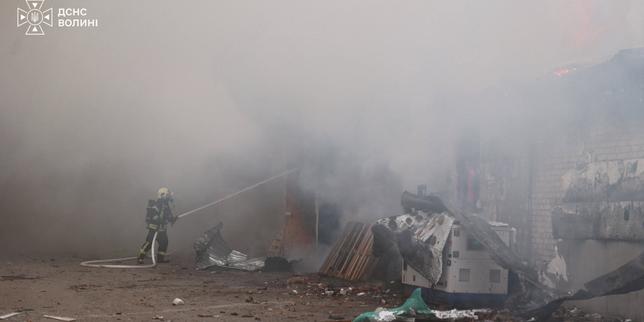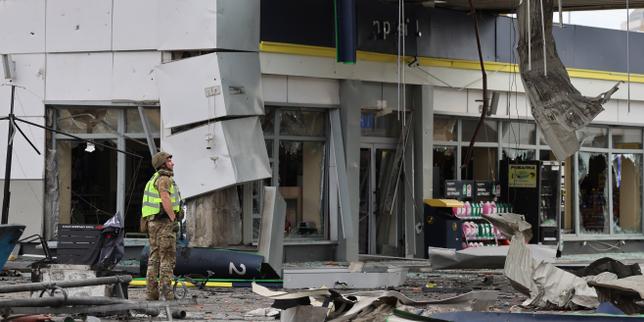
Conditional military and financial assistance from Washington intersects with sustained Russian strikes on Ukrainian energy infrastructure to create a severe operational mismatch just as winter loads rise. The core dynamic is straightforward: when aid tranches carry political conditions, operational restrictions, or slow disbursement schedules while grid strikes destroy high-voltage transformers and substations in real time, Kyiv faces a widening gap between repair capacity and systemic degradation. A rigorous strategic assessment requires separating known mechanics of grid warfare and aid conditionality from educated hypotheses about political bargaining, mapping how supply constraints propagate through civilian and industrial systems, and identifying concrete levers that preserve grid resilience without relying on unverified assumptions.
Notice that the reference headline alone—framing Washington as constraining support to Kyiv amid Russian attacks on energy infrastructure—states a tension without supplying the underlying text or verifiable empirical figures. Rather than inventing casualty counts, megawatt losses, or undisclosed diplomatic terms, this analysis models the structural mechanisms governing aid conditionality and energy grid attrition. Known facts include the physical vulnerability of centralized power generation and high-voltage transmission nodes, the multi-month lead times required to manufacture and transport heavy electrical equipment, and the difference between political authorization of assistance and physical delivery to front-line or rear-area units. Educated hypotheses focus on how decision-makers weigh escalation control against grid survival, how domestic political constraints shape aid pacing, and how decentralized generation alters defender exposure.
The Structural Mismatch of Conditional Support
Aid conditionality operates on diplomatic and budgetary calendars, whereas winter energy warfare operates on thermal physics and equipment fatigue. When external backing is metered through policy benchmarks, end-use restrictions, or staggered authorizations, the defender cannot optimize long-lead procurement or pre-position spares ahead of seasonal demand spikes. Even when funds are legally available, administrative bottlenecks and industrial capacity limits turn nominal commitments into delayed hardware.
Three mechanisms explain why conditional support strains an energy-stressed defender:
- Timing Asymmetry: Political debates and compliance reviews unfold over weeks or months, while a single coordinated strike wave can knock out substations within hours, forcing emergency load-shedding before replacement hardware arrives.
- Scope and Targeting Constraints: Restrictions on system employment, munitions allocation, or cross-border reach shape how a defender suppresses launch platforms, air defense radar networks, and logistics hubs feeding strike campaigns.
- Planning Uncertainty: Unpredictable aid flows push commanders and grid operators toward short-term rationing rather than multi-season hardening, raising unit costs through emergency spot purchases and ad hoc rerouting.
From an operational standpoint, treating aid as a steady stream rather than a conditional, lumpy pipeline is a classic planning error. Systems managers who run critical infrastructure under uncertain resupply must budget slack, standardize components to shorten repair cycles, and avoid single-point dependencies on any single supplier or donor channel.
How Aid Friction Propagates Through Defense and Grid Operations
A delay in air-defense interceptors or spare parts rarely stays confined to one sector. If interceptors are rationed to protect high-value urban centers or front-line formations, secondary substations and regional heating plants become more exposed. Each damaged transformer or autotransformer forces grid controllers to shed load across wider areas to prevent cascading frequency or voltage instability.
This creates a second-order strain on maintenance crews. Repair teams face higher exposure risk when working on damaged facilities, while scarcity of specialized components compels cannibalization or makeshift bypasses that reduce system redundancy. Over time, repeated patch-and-restore cycles lower mean time between failures across the remaining network.
Grid Attrition Mechanics Under Seasonal Load
Electric grids are coupled physical systems where generation, transmission, transformation, and consumption must balance continuously. Unlike infantry attrition, which erodes personnel gradually, targeted strikes against generation units, step-up/step-down substations, and district heating nodes attack nodes with high multiplier effects. Removing a key transformer does not merely subtract a fraction of capacity; it can isolate entire regions from bulk power flows even if generation exists elsewhere.
Winter amplifies these effects through two simultaneous shifts: higher baseline heating and lighting demand, and harsh ambient temperatures that punish backup systems and complicate outdoor field repairs. When temperatures drop, power outages stop being a mere commercial inconvenience and become a direct threat to residential heating networks, water pumping stations, and hospital backup generators.
The Cost Function of Infrastructure Defense and Repair
Defending and restoring energy infrastructure follows a steep, non-linear cost function. Intercepting incoming strike packages requires layered air defense sensors, command-and-control integration, and interceptors whose unit economics often favor the attacker when low-cost decoys or massed salvos saturate point defenses. Passive protection—such as blast walls, sandbag or concrete enclosures around transformers, and physical dispersion—raises survival odds against near-misses or fragments, but cannot stop every direct hit and adds weight and cooling constraints.
On the restoration side, lead times govern recovery speed more than nominal budget size. High-voltage transformers, switchgear, and circuit breakers are custom or semi-custom industrial hardware with long fabrication queues and heavy transport requirements. Sourcing used equipment from retired or operating grids elsewhere can shorten delivery times, provided voltage classes, frequency standards, and connection interfaces match existing topologies.
Cause-and-Effect Chains Standard Narratives Overlook
Surface commentary often treats aid restrictions and energy strikes as parallel headlines rather than interacting variables. Linking them explicitly reveals causal chains that change how risk is priced.
First, energy scarcity degrades industrial and logistics throughput. Manufacturing plants, repair workshops, cold-storage facilities, and rail or communications nodes rely on stable power. Rolling blackouts and voltage dips force reliance on diesel or gas generators, which introduce fuel logistics requirements, noise and thermal signatures, and higher operating costs per kilowatt-hour.
Second, pressure on civilian living conditions interacts with domestic morale and political endurance. Prolonged heating or power cuts during cold spells test household resilience and municipal administration. However, coercion through infrastructure damage carries well-documented strategic limits: severe hardship can harden resolve rather than produce immediate political compliance, especially when populations attribute deprivation to external aggression.
Third, diplomatic leverage cut both ways. Conditioning aid can be intended to enforce fiscal oversight, strategic alignment, or risk boundaries. Yet if perceived conditionality signals hesitation, it can embolden an adversary to press harder on infrastructure during peak vulnerability windows, raising the eventual cost required to stabilize the front and the grid.
Operational Playbook for Resilience Under Constraint
Analysts and planners evaluating this dynamic can use a structured sequence to separate noise from real inflection points and design practical mitigation measures.
- Audit Criticality Tiers: Rank generation, substation, water, and district-heating assets by downstream life-safety and operational impact rather than treating all megawatts equally.
- Map Equipment Bottlenecks: Track lead times and compatibility constraints for high-voltage transformers, mobile substations, and protection relays across domestic stockpiles and partner inventories.
- Decouple Point Loads: Pair essential facilities—hospitals, water treatment, communications hubs, and critical defense production—with localized distributed generation and fuel reserves so regional grid trips do not halt vital functions.
- Match Air Defense to Threat Mix: Allocate high-value interceptors against high-threat ballistic or cruise profiles while using cost-effective counter-UAS and electronic warfare systems against massed drones.
- Pre-Stage Repair Kits and Redundant Routing: Position mobile bypass equipment, cable assemblies, and crew rotation schedules near high-risk corridors before peak winter demand arrives.
Limitations and Boundary Conditions of Mitigation
No mitigation strategy eliminates grid vulnerability in high-intensity conflict. Distributed generation helps keep critical nodes running, yet it cannot easily replace bulk transmission for heavy industry or large urban heating districts without massive capital and fuel scale. Passive hardening reduces collateral damage, but direct hits from heavy munitions can still destroy encased equipment.
Similarly, diplomatic and procurement fixes face hard ceilings. Even decisive policy shifts on aid take time to clear export controls, contracting, manufacturing lines, and transit routes. Any recommendation that assumes instant hardware arrival or frictionless grid islanding ignores basic physical and bureaucratic inertia.
Strategic Recommendation for Decision-Makers
Prioritize rapid delivery of modular grid-restoration hardware, mobile substations, and localized distributed generation paired with tiered air-defense allocation around high-multiplier energy and municipal nodes, while tying aid milestones to verifiable operational readiness rather than rigid, slow-moving political checklists. In a winter energy contest, speed of physical replacement and protection of high-leverage nodes beat delayed, conditional commitments every time.