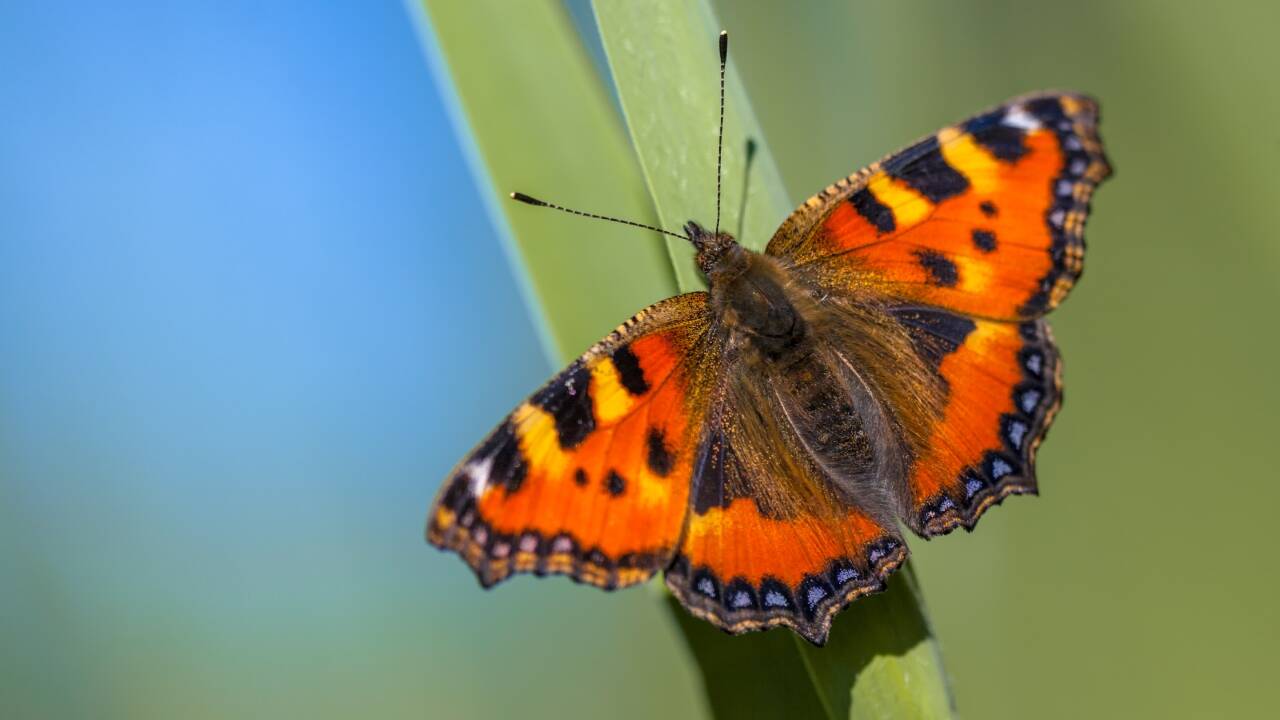
The recent announcement that Britain recorded its second-highest butterfly count in sixteen years masks an ecological vulnerability that standard environmental metrics routinely fail to capture. Citizen science datasets compiled through the annual Big Butterfly Count logged nearly 1.4 million individual insects, highlighted by an extraordinary 335 percent surge in migratory painted ladies alongside record counts for gatekeepers and holly blues. Raw abundance figures of adult insects, however, provide a dangerously skewed perspective on population viability. The climatic conditions that favor high visibility and high reproductive output among flying adults simultaneously initiate severe physiological stress at the larval stage. Dissecting the mechanics behind this paradox reveals a delayed ecological debt, where a summer population boom acts as the direct precursor to a localized demographic crash.
To understand the divergence between adult abundance and long-term population stability, one must examine the thermal and hydrological thresholds governing insect life cycles. High ambient temperatures and prolonged dry spells accelerate insect metabolic rates, triggering synchronized emergence and extended flight windows. Migratory species benefit doubly from these conditions; southerly air currents provide directional transport, lowering the energetic cost of mass immigration across the English Channel. This explains why mobile generalists and long-distance migrants dominate the upper tiers of annual census data.
Yet, adult longevity and mobility operate independently of larval survival. Female butterflies lay eggs on specific host plants dictated by evolutionary specialization. During extended heatwaves and meteorological droughts, these vegetative substrates undergo premature desiccation. Leaves lose turgor pressure, increase fiber concentrations, and drop nutritional nitrogen content, rendering them functionally unviable for early-instar caterpillars. When adult insects emerge into an environment saturated with sunlit nectar sources, they perceive a thriving ecosystem. Conversely, the subterranean and foliar microhabitats where their progeny must feed are experiencing acute nutritional deficits.
This asymmetry exposes a critical flaw in relying on adult count metrics as proxies for ecological health. A high census number reflects favorable weather windows for flight activity and human observation efficiency rather than recruitment success. When adult butterflies encounter widespread host plant degradation, oviposition behavior breaks down. Females either exhaust their egg loads on substandard foliage where larval mortality approaches absolute rates, or they fly past physiological exhaustion thresholds searching for unparched vegetation.
Historical analogues clarify the trajectory of this dynamic. Severe meteorological droughts in Britain, most notably those of 1976 and 1995, were followed by sharp, multi-year population contractions across multiple resident species. While subsequent extreme summers such as those in 2018 and 2022 did not replicate identical statewide collapses, they reinforced a consistent ecological rule. Prolonged lack of moisture alters soil chemistry and root systems, suppressing the recovery of perennial grasses and woody shrubs required by over-wintering caterpillars and pupae.
Variability in regional weather patterns introduces moderating variables. Meticulous field observations maintained by independent naturalists indicate that anomalous weather events, such as localized wet spells during early summer or restorative autumn rainfall, can alter the trajectory. A wet winter preceding a dry summer provides sub-surface moisture reserves that buffer perennial plants against immediate collapse, allowing a subset of caterpillars to complete development before severe drought sets in. However, relying on stochastic meteorological rescue is an unreliable conservation strategy. The baseline frequency of extreme weather volatility driven by broader climate shifts ensures that the interval between severe environmental shocks is shrinking faster than specialized insect populations can adapt.
The structural impact of the 2026 butterfly surge extends unevenly across taxonomic groups. While mobile migrants and species capable of multiple broods per year exploit warmth to maximize reproductive output, single-brood specialists face compounding extinction risks. Species bound to a narrow range of host plants, such as the wood white or specific fritillaries, cannot migrate away from degraded local habitats. When their primary food source undergoes stress-induced senescence weeks ahead of schedule, local populations experience total reproductive failure. This divergence creates a landscape where overall insect counts remain deceptively high due to the proliferation of a few resilient generalist species, while vulnerable specialists quietly approach local extirpation thresholds.
Addressing this vulnerability requires moving beyond passive observation toward targeted environmental manipulation during the dormant season. Conservation management must pivot from reacting to adult mortality to engineering larval resilience. Standardized winter land management protocols must focus on three operational pillars: structural vegetation enhancement, hydrological retention, and thermal micro-refuge preservation.
The first intervention involves altering planting strategies to maximize host plant resilience against drought. Urban and rural green spaces dominated by shallow-rooted flora fail rapidly under moisture stress. Introducing deep-rooted native trees and shrubs, including specific varieties of buckthorn, holly, ivy, and oak, provides structural stability and persistent foliage that withstands multi-week heatwaves. Holly and ivy not only support specialized larvae such as the holly blue but also supply late-season nectar sources essential for adult insects entering diapause.
The second intervention addresses hydrological deficits through artificial retention systems. Widespread implementation of water butts across domestic gardens and public parks captures winter precipitation, creating localized emergency reservoirs. These reserves allow land managers and property owners to sustain moisture levels around vulnerable larval food plants during peak summer heatwaves, bypassing the restrictions imposed by municipal hosepipe bans and maintaining foliar nutrition values.
The third intervention focuses on structural microclimate management through the selective cessation of intensive mowing regimes. Maintaining unmanaged, tall-grass margins and structural hedgerows creates critical thermal buffers. Dense vegetation creates a multi-layered canopy that moderates soil temperatures, reduces wind-driven moisture loss, and provides physical shelter for pupating larvae against extreme thermal spikes. These structural refuges allow localized populations to ride out environmental extremes without suffering catastrophic generational attrition.
The structural reality of Britain's insect populations is defined by a delicate balance between adult exuberance and larval starvation. Treating the high numbers of the recent butterfly count as an unmitigated conservation success ignores the underlying biophysical costs exacted by extreme weather. Without systematic intervention targeting the hidden vulnerabilities of the caterpillar life cycle, future seasons will transition rapidly from deceptive abundance to irreversible decline. The operational directive for land stewards is clear: focus resources not on the flying adults visible in midsummer, but on the vegetative foundations that must sustain the next generation through the droughts ahead.


