Traffic.
It is the great equalizer of modern misery, a slow-motion purgatory of brake lights, idling engines, and tiny, silent griefs over lost hours you will never get back. Every morning and evening, millions of us sit in steel boxes on rubber tires, inching forward while the clouds drift effortlessly overhead, unbothered by lane closures or fender benders. We have accepted the pavement as a law of nature. Roads go here. Cars stay on them. Anything else belongs to comic books and Saturday morning cartoons.
Then Elon Musk stood up and said a car could fly.
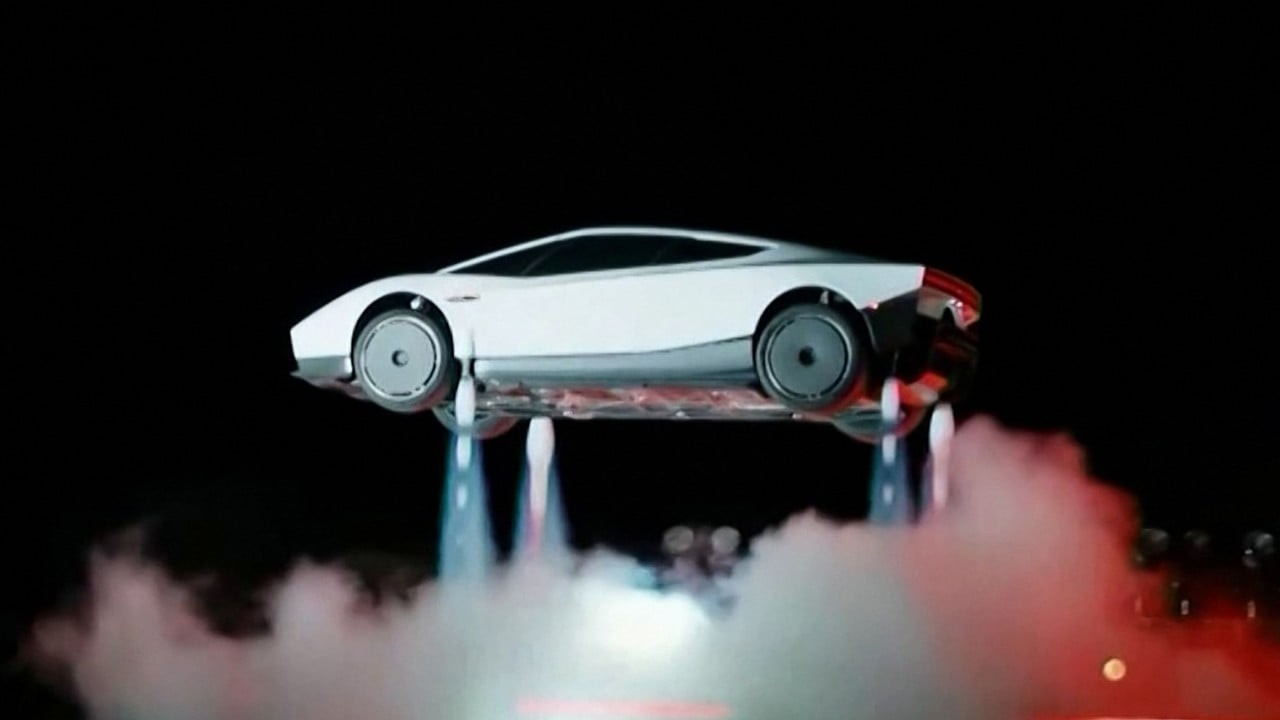
Not a helicopter. Not a clunky tilt-rotor contraption that looks like a lawnmower had a baby with a drone. A sleek, low-slung electric sports car—the next-generation Tesla Roadster—with thrusters capable of lifting it off the ground, hovering, or hopping across obstacles. When headlines began circulating about Tesla’s unveiled Roadster 2 vehicle "can fly," the internet split in two within minutes. Half the crowd laughed it off as classic tech hype, another bold promise from a company famous for stretching timelines and bending expectations. The other half felt a sudden, electric jolt in their chest—the dizzying sensation of watching a childhood boundary dissolve in real time.
I know that feeling well. Years ago, sitting in the backseat of my father’s battered sedan during a monsoon backup on a flooded highway, I stared at the rain drumming against the windshield and wondered why we were trapped in a horizontal world when the whole universe was vertical. Water rose around the tires. Red taillights stretched for miles like a dying heartbeat. In that moment, the promise of flight didn’t sound like a gimmick. It sounded like mercy.
To understand why a flying sports car matters—and why we should keep our feet firmly on the ground while evaluating the claim—we have to strip away the theater and look at what is actually happening beneath the skin of the machine.
The Physics Behind the Promise
Let’s be honest about what "flying" means in the context of a road-legal electric car. A car is not an airplane. Wings require lift generated by air moving over an airfoil, which means speed, runway length, and aerodynamic trade-offs that ruin the crisp lines of a grand tourer. A hovering car without wings has to push air downward with enough force to equal—and exceed—its own weight.
Weight is the enemy of every machine that tries to leave the earth.
Consider a hypothetical scenario to make the math tangible. Imagine you are an engineer trying to lift a two-ton sports car straight up into the air using compressed gas or electric ducted fans. Even if you strip out unnecessary luxuries, an electric vehicle carries a heavy battery pack. Pushing two thousand kilograms upward against Earth’s gravity requires immense thrust, sustained over whatever brief window the system is designed to operate. Compressed air tanks run out fast. High-output thrusters draw staggering amounts of power and generate intense heat and noise.
When Tesla talked about cold gas thrusters—and later hinted at rocket-inspired propulsion concepts for the Roadster—the idea wasn't turning a supercar into a long-range commuter aircraft capable of crossing oceans. In physics and engineering, controlled lift, brief hover, or assisted short hops are worlds apart from sustained winged flight. Using a metaphor, think of the difference between a pole vaulter clearing a bar and a bird riding a thermal current across a valley. Both defy gravity for a time, yet their mechanics, endurance, and purpose have almost nothing in common.
That distinction matters deeply. If you expect the Roadster 2 to sprout folding wings and cruise from New York to Miami at thirty thousand feet, you are setting yourself up for disappointment. If you look at it as an extreme testbed for thrust-vectoring, rapid acceleration, and radical aerodynamic control, the picture becomes far more intriguing.
Still, I have to admit something that makes a skeptical writer squirm: part of me wants the impossible to be true. Not because I need a daily commuter that blasts neighbors' patio furniture across the yard with thruster wash, but because human progress rarely starts with polite, incremental tweaks. Someone has to aim past the target just to move the fence.
Why Tesla Keeps Pushing Past the Edge
Watch how Tesla operates over the last decade and a half, and a clear pattern emerges. Critics frequently point out missed deadlines, shifting specifications, and ambitious claims that take years to materialize—or evolve into something different along the way. Those criticisms aren't imaginary. Building cars at scale is brutal. Aviation and aerospace certification is even harsher.
Yet look at what happened when Tesla pushed electric vehicles out of the golf-cart ghetto and into high-performance territory. Before the original Roadster, mainstream buyers viewed electric cars as slow, range-anxious compromises. By making an EV absurdly quick, Tesla changed the emotional vocabulary around electric propulsion. People stopped asking, "Can an electric car make it to work?" and started asking, "How fast can it launch?"
A flying—or thruster-assisted—Roadster 2 plays a similar psychological role. It acts as a lightning rod for attention, talent, and imagination. Engineers who might otherwise spend their careers designing slightly smoother door handles or marginally quieter cabin trim suddenly lean forward when a company asks what happens if you pair instant electric torque with directional thrust.
Hypothetical scenario: Picture Maya, a young aerospace propulsion specialist working on micro-thrusters for small satellites. She spends her days running simulations in a quiet lab, optimizing valves and pressure curves that almost nobody outside her team will ever appreciate. Then she watches a clip of a sports car hovering or blasting forward with thrust assist. Suddenly, the boundary between orbital hardware and street machines feels thinner. That spark—that contagious curiosity—is often the real fuel behind ambitious engineering projects.
Even when a headline simplifies a complex engineering concept into a punchy two-word claim like "can fly," the underlying tension is real. Cars are bound by friction, terrain, and traffic laws. Flight frees a machine from the surface, even if only for seconds or a few feet.
The Invisible Stakes of Leaving the Road
If a car ever truly leaves the asphalt, the hardest problems won't be mechanical. They will be human.
We already struggle with drivers looking at their phones at thirty miles per hour on a flat, marked lane. Add a third dimension—altitude—and the margin for error shrinks to almost nothing. A tire blowout on a highway is terrifying; a propulsion failure ten feet off the ground turns a fender bender into a structural crisis. Noise regulations in residential neighborhoods, downwash kicking up gravel and debris, insurance frameworks, and air-space rules all collide the moment a vehicle stops rolling peacefully on rubber.
There is also a quieter stake we rarely talk about: what happens to our shared spaces when mobility becomes extreme. Cities were shaped by the machines that move through them. Cobblestones gave way to trolley tracks; streetcars gave way to highways; highways carved neighborhoods in half and made walkable towns harder to sustain. If personal flight ever scaled to everyday commuting, who would get the quiet skies, and who would live underneath the roar?
I catch myself wondering about that whenever I hear a low-flying helicopter pass overhead on a Sunday afternoon. The sound vibrates right through the floorboards. Peace is fragile. Once you introduce high-energy machines into the air above people's homes, you aren't just solving a transit bottleneck—you're renegotiating the social contract of everyday life.
That is why skepticism isn't the enemy of innovation. Skepticism is the seatbelt. Without it, enthusiasm turns reckless, and bold dreams crash into physics and public pushback.
Separating Hype From What Actually Matters
When reading coverage about the Roadster 2 flying, it helps to ask three sharp questions before picking a side:
- What is the actual mechanism? Is it aerodynamic lift, vectored thrust, hover capability, or a brief boost that changes how the car handles and accelerates?
- What are the real-world limits? How much energy does it consume, how long can it last, and what happens to stability and safety near the ground?
- Is this a consumer feature or a halo showcase? Halo vehicles often test extreme ideas that may never reach mass-market commuters in full form, yet still influence future designs.
Notice how none of those questions require cynicism. You don't have to sneer at ambition to demand evidence. In fact, taking big ideas seriously means holding them to honest standards. If a machine can genuinely lift or hover under controlled conditions, that is a remarkable engineering feat—even if it comes with strict caveats about range, terrain, and legality. And if the reality turns out to be more constrained than the wildest social media clips suggest, understanding the physics tells you why.
Hypothetical scenario: Imagine two neighbors, David and Sam, arguing over coffee on a Saturday morning. David insists the Roadster 2 is going to turn rush hour into a scene from a sci-fi movie next year. Sam rolls his eyes and says the whole thing is vaporware. Both are missing the middle ground. Real breakthroughs rarely arrive overnight as finished miracles, nor are they always pure illusion. Often, they start as messy, thrilling prototypes that test the outer walls of what’s possible.
The gap between what sounds magical and what works reliably is where real engineering lives. It is slow, demanding, and occasionally humbling. Anyone who has ever tried to build something from scratch—whether a piece of software, a small business, or a mechanical prototype—knows how stubborn reality can be when you try to bend it.
Why We Still Look Up
Maybe the reason a headline about a flying Roadster hits so hard has nothing to do with commute times. Maybe it’s about refusal.
Refusal to accept that every limit we inherited is permanent. Refusal to believe that because something hasn't been done safely at scale yet, nobody should even try to imagine how it might work. We spend so much of our lives managing spreadsheets, paying bills, waiting in lines, and living inside sensible compromises that an audacious claim feels like a sudden gust of fresh air through a stuffy room.
Even if your next car stays planted firmly on four tires—gliding quietly down a tree-lined street, taking you to groceries, soccer practice, or a late-night drive to clear your head—the story still matters. It reminds us that the future is negotiated between dreamers who overreach and builders who do the hard math.
One day, a car may rise off the pavement for a few breathless seconds while people on the sidewalk stop mid-step, mouths slightly open, watching tires clear the concrete.
Look up when it happens.