Air smells different when it has been filtered through pulverized brick and burnt plastic. It is a sharp, metallic tang that settles at the back of the throat long after the sirens have stopped. I remember that smell from other places, other maps torn open by old men in grand rooms who never have to sweep the glass from their own doorsteps.
Now, that same scent hangs heavy over Kyiv.
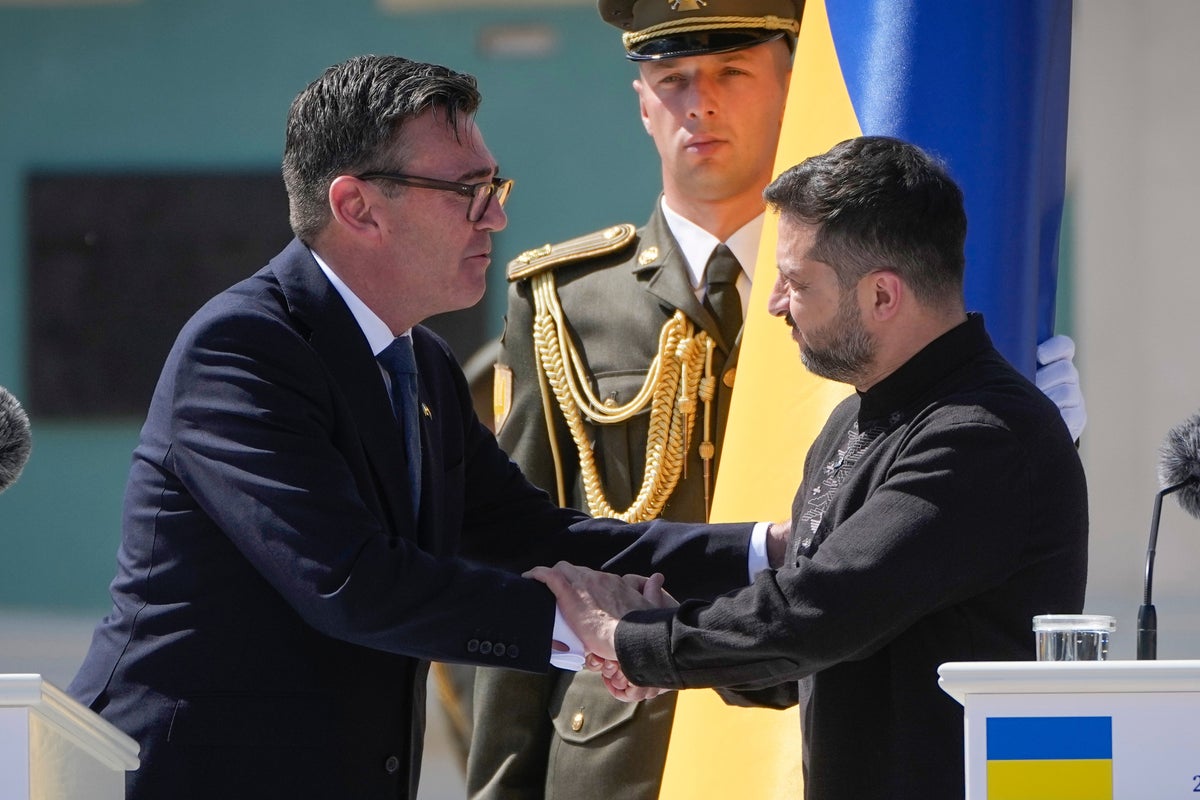
Enter Andy Burnham. A British politician stepping out of a train carriage and into a grey, unyielding morning. Most high-profile visits from Western figures carry the rehearsed choreography of a diplomatic stage play. Handshakes on platforms. Flag-draped tables. Briefings delivered in sanitized rooms far from the concussions of artillery. But Burnham’s arrival carried a different gravity. This was his first journey to Ukraine since the war ground its heavy tracks into the soil, and he brought with him a direct, unvarnished question that cut straight through the polite fictions of international diplomacy.
Who started the fire?
It sounds simple. Almost childishly simple. Yet in the high-stakes theater of global geopolitics, pointing directly at the pyromaniac is something leaders spend years learning how to avoid. They talk about "complex geopolitical dynamics." They point to "historical grievances." They issue measured statements urging "de-escalation" while the shells continue to fall.
Burnham’s challenge to Vladimir Putin broke that diplomatic code. It stripped away the passive voice that plagues modern reporting—the sentences where things merely happen, where cities are somehow destroyed without anyone pulling a trigger.
Consider what happens when a language loses its verbs of agency. When a missile strikes an apartment building, and headlines announce that a building "sustained damage," the human element vanishes. The victim loses a face; the aggressor loses a name. By looking squarely at the Kremlin and demanding accountability for the ignition of a continent-wide crisis, Burnham did something rare. He forced the conversation back to human terms.
To understand why this matters, you have to look past the cable news maps and the shifting lines of red and blue ink. You have to look at the kitchen table.
Imagine a kitchen in Kharkiv. Let us call her Maria, though her real name is a mosaic of a thousand women I have met along these borders. She is wiping down a table that no longer has a window beside it. The glass was blown out three weeks ago by a concussion wave that rattled her teeth. She has taped heavy plastic sheeting over the frame, but the wind still finds a way in, whistling a low, mournful note through the room.
Maria does not care about the fine points of NATO expansion debates. She does not care about the arcane historical essays published by foreign leaders in the dead of night. She cares about the fire. She cares about who struck the match.
When international figures visit and speak in euphemisms, it feels to Maria like a second betrayal. It tells her that her suffering is merely a data point in a grander strategic equation. But when a visiting leader names the architect of the ruin directly, the world snaps back into focus. Cause and effect are reunited.
This is the hidden cost of diplomatic ambiguity. It erodes trust. When leaders refuse to call aggression by its proper name, citizens in frontline states begin to feel entirely invisible. They realize that the polite language of international relations is often just a shield designed to protect trade routes and gas supplies at the expense of human lives.
Tensions between the UK and Russia are not abstract concepts confined to white papers in Whitehall. They are pulses of electricity running through an already overloaded circuit. Every time a British politician speaks on Ukrainian soil, they are walking a razor’s edge. Say too little, and you look complicit through cowardice. Say too much, and you risk escalating a proxy conflict into something far darker, something involving charred skies from London to Vladivostok.
And yet, silence is no longer an option.
Burnham’s challenge was not merely a rhetorical flourish. It was a diagnostic test for the West’s moral stamina. As the war stretches into its grueling years, fatigue is a silent poison. Viewers in Western Europe and North America grow tired of the updates. The notifications are swiped away. Ukraine slips from the top of the hourly news scroll, replaced by domestic inflation, local elections, and celebrity gossip.
Fatigue is Putin’s greatest unspoken ally. Time is a weapon. If the aggressor can simply wait out the attention span of the democratic world, the fire will eventually be treated as part of the landscape. It will stop being an emergency and start being weather.
That is why physical presence matters. Standing on platform concrete, breathing the cold air of a nation under siege, forces a reconnection with reality. You cannot scroll past a shattered wall when you are standing in its shadow. You cannot pretend the fire is a distant metaphor when the soot is staining your coat.
The historical echoes here are heavy, almost suffocating. We have seen this exact theatrical performance before in the archives of the twentieth century. We know the cost of appeasement disguised as pragmatism. We know how easily a dictator’s appetite grows when the world responds to invasion with quiet diplomatic murmurs instead of a roar of absolute rejection.
History does not repeat itself verbatim, but it loves to rhyme in the dark.
When Burnham confronted the reality of the destruction, he was also addressing a domestic audience back home in the United Kingdom. Britain has its own internal fractures—economic anxieties, political fatigue, a growing sense that the nation’s problems are too vast for its institutions to handle. Bringing the war home through moral clarity is a risky political maneuver. It demands that citizens look beyond their own borders and remember that freedom is not a permanent atmospheric condition. It is a fragile structure built by people who were willing to name the darkness when it came walking down their street.
We live in an era obsessed with nuance. Nuance is valuable, of course. The world is rarely painted in pure black and white. But nuance can also be weaponized. It can be stretched so thin that it becomes a transparent excuse for inaction.
There are moments when complexity is a coward's refuge.
When a sovereign nation is systematically dismantled, when hospitals are targeted and children are pulled from basements, the search for nuance ceases to be intellectual rigor and becomes moral evasion. Burnham’s visit stripped away that evasion. It was a blunt instrument in a diplomatic world that usually prefers scalpels.
Sometimes, you need a blunt instrument to break through the noise.
Consider what happens next: the diplomatic cables will be written, the foreign ministries will issue their standard defensive rebuttals, and the commentators will dissect every syllable of the transcript. The Kremlin will scoff, dismissing the challenge as domestic political posturing designed for Western headlines.
Let them scoff.
Because for the people living inside the perimeter of the fire, the value of such a challenge is not measured in diplomatic breakthroughs. It is measured in recognition. It is the simple, vital knowledge that someone from the outside world looked at the ashes, looked at the source, and refused to look away.
The train will carry the politicians back to the capitals of comfort, back to heated parlors and scheduled meetings. But the smoke remains. It clings to the wool of coats. It settles into the grain of the soil. And the question, stark and unanswerable by any committee, hangs in the cold air above the tracks.
Who started the fire.
The answer is written in the rubble of every razed home, burning quietly beneath the indifferent stars.