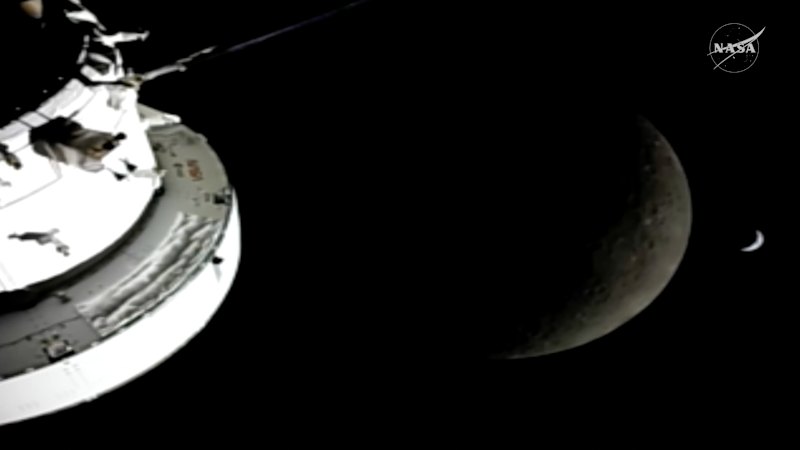
Forty-one thousand kilometers. That is the distance that will separate the four crew members of Artemis II from the nearest help once they swing around the far side of the moon. For the first time in over fifty years, humans are leaving low-Earth orbit to break the records of the Apollo era, but this is not a victory lap. It is a high-stakes stress test of a lunar infrastructure that remains frighteningly experimental. While the headlines focus on the "mind-blowing" records being set, the real story lies in the hardware—specifically the Orion heat shield and the SLS booster—that must perform flawlessly to prevent a catastrophic failure in deep space.
The mission is simple on paper but grueling in execution. Reid Wiseman, Victor Glover, Christina Koch, and Jeremy Hansen will spend roughly ten days inside a capsule about the size of a large SUV. They aren't landing. They are performing a "hybrid free-return trajectory," using the moon’s gravity as a cosmic slingshot to hurl them back toward Earth. If they miss their mark, they drift into the void. If they hit it too hard, they incinerate. This is the brutal math of deep space exploration.
Engineering the return of the human factor
NASA has spent a decade justifying the Space Launch System (SLS). It is an expensive, hulking beast of a rocket built on recycled Space Shuttle technology. Yet, for all its vintage DNA, the Artemis II mission represents a shift in how we manage risk. Unlike the uncrewed Artemis I, which saw the Orion capsule orbit the moon alone, Artemis II places the lives of four veterans in the hands of a life support system that has never been tested with actual lungs and heartbeats in a lunar environment.
The crew's primary job isn't just to look out the window. They are the ultimate backup system. During the initial hours of the flight, the crew will perform proximity operations, manually maneuvering the Orion capsule relative to the discarded second stage of the rocket. This isn't just for show. It is a critical test of the manual handling qualities of the spacecraft. If the automated docking systems of the future fail, the lessons learned by the Artemis II crew will be the only thing that saves a mission from total loss.
The heat shield problem nobody wants to discuss
Behind the optimism of the mission briefings lies a technical anxiety that keeps engineers awake at 3:00 AM. During the Artemis I reentry, the Orion heat shield did not behave exactly as predicted. It charred unevenly. Small pieces of the ablative material, designed to burn away and carry heat with it, broke off in a way that wasn't fully modeled in the simulations.
For a robotic mission, that’s a data point. For Artemis II, it’s a life-or-death variable. The capsule will hit the atmosphere at nearly 40,000 kilometers per hour. The friction generates temperatures reaching 2,800 degrees Celsius. At those speeds, the atmosphere behaves less like air and more like a solid wall of fire. If the heat shield erosion isn't uniform, the capsule could lose its aerodynamic stability. It could tumble. A tumbling capsule during reentry is a coffin.
NASA officials have downplayed the risk, citing "conservative design margins," but the decision to proceed with a crewed flight without a second robotic test of the heat shield remains a point of contention among industry analysts. We are betting the lives of four people on the assumption that the "unexpected" behavior of the shield in Artemis I was within a tolerable range of failure.
Why we are really going back
The "record-breaking" distance from Earth is a PR win, but the strategic motivation is more grounded. We are in a cold-start space race with a deadline. China aims to put boots on the lunar south pole by 2030. If the United States doesn't establish the Artemis Accords as the de facto law of the lunar surface, we risk being locked out of the most resource-rich areas of the moon.
Artemis II is the gatekeeper. Without a successful crewed flyby, the Artemis III landing cannot happen. The program is already bleeding money and facing delays with the Starship HLS (Human Landing System) and the new Axiom space suits. A failure here doesn't just stall the mission; it likely kills the program entirely. The political appetite for billion-dollar disasters is nonexistent in an election-heavy decade.
The physiological toll of deep space
We often ignore what happens to the human body once it leaves the protection of the Van Allen belts. Outside this magnetic shield, the crew is exposed to a constant barrage of solar radiation and galactic cosmic rays. A ten-day trip isn't a death sentence, but Artemis II will serve as a laboratory for high-dose radiation exposure.
The crew will be monitored for:
- Acute radiation syndrome symptoms if a solar flare occurs.
- Visual impairment intracranial pressure (VIIP) caused by fluid shifts in microgravity.
- Cognitive degradation resulting from the psychological isolation of seeing the Earth as a tiny blue marble rather than a massive, protective ceiling.
The psychological weight is perhaps the most underrated challenge. When the Apollo astronauts went behind the moon, they were the loneliest humans in history. The Artemis II crew will reclaim that title. There is a specific kind of mental grit required to know that if a valve sticks or a computer freezes, you are days away from even the possibility of a rescue.
The myth of the routine mission
The biggest danger to the Artemis program is the public perception that we have done this before. We haven't. The Apollo missions were "cowboy" operations by modern safety standards. We accepted a level of risk in the 1960s that would be legally and socially impossible today.
Today's Artemis hardware is exponentially more complex. Complexity is the enemy of reliability. Orion has millions of lines of code and thousands of sensors that Apollo never dreamed of. Every sensor is a potential point of failure. Every line of code is a place for a bug to hide. When the crew of Artemis II looks back at the receding Earth, they aren't just breaking a record; they are validating a decade of contentious, expensive, and often criticized engineering.
Beyond the lunar far side
The mission ends with a splashdown in the Pacific, but the work starts the moment the divers recover the crew. The data gathered from the Orion’s internal sensors will dictate the design of the Lunar Gateway, the planned space station that will orbit the moon. If the vibrations were too high or the carbon dioxide scrubbing was too slow, the entire roadmap for Mars gets pushed back by years.
This isn't just about four people going further than anyone else. It is about whether or not we can still do the hard things without the existential threat of a Cold War to foot the bill. The records being set are incidental. The survival of the crew and the integrity of the heat shield are the only metrics that matter.
The moon is a harsh mistress, as Heinlein wrote, and she has no interest in our records. She only cares about the physics of the approach. As the Artemis II crew prepares for launch, they aren't thinking about the history books. They are thinking about the sound of the pumps, the glow of the consoles, and the thin layer of ceramic tiles that stands between them and the furnace of reentry. The real record isn't the distance from Earth; it’s the bridge we are trying to build back to the stars, one terrifying kilometer at a time.