The recent declaration from Donald Trump regarding his indifference toward the immediate financial situation of Americans in the context of a deal with Iran is more than just a soundbite. It is a window into a specific brand of high-stakes transactionalism. For the average voter, the price of eggs and the monthly mortgage payment are the sun and the moon of their reality. For a leader viewing the world through the lens of macro-negotiation, those domestic pressures are often seen as variables to be managed, or even ignored, to secure a legacy-defining shift in global power.
The core of the issue lies in a blunt admission: the pursuit of a grand bargain with Iran takes precedence over the fluctuating economic anxieties of the domestic populace. This isn't just about rhetoric; it's about the fundamental trade-off between local stability and international leverage. While the headlines focus on the perceived callousness of the statement, the deeper investigation reveals a strategy that bets the farm on a singular, massive win, hoping that the long-term geopolitical correction will eventually trickle down to the wallet of the working class.
The Cold Calculus of Great Power Deals
Geopolitics is a game of leverage, and leverage is rarely free. When a leader signals that they are willing to overlook domestic economic pain to reach an accord with a long-standing adversary, they are effectively telling the market—and the opponent—that their resolve is absolute. In the case of Iran, the "deal" isn't just about nuclear centrifuges or regional proxies. It is about energy markets, shipping lanes in the Strait of Hormuz, and the dismantling of a sanctions regime that has defined Middle Eastern policy for decades.
The logic is brutal. If the United States can stabilize its relationship with Iran, the argument goes, the resulting shift in oil prices and regional security will provide a more stable foundation for the global economy than any short-term domestic subsidy or tax tweak ever could. But this is a gamble of the highest order. It assumes that the Iranian leadership is a rational actor willing to trade its ideological pillars for economic reintegration. It also assumes that the American public has the patience to endure the "financial situation" mentioned in the statement while waiting for a payoff that may never arrive.
Why the Kitchen Table Always Loses to the War Room
There is a historical pattern here. Whether it was the opening of China in the 1970s or the various iterations of the NAFTA negotiations, the immediate losers are almost always localized economic interests. When a President focuses on "the deal," they are operating in the stratosphere. Down on the ground, the air is thin.
- Currency Volatility: Large-scale diplomatic shifts create uncertainty. Uncertainty drives up the cost of borrowing.
- Energy Speculation: Even the rumor of a deal with a major oil producer like Iran sends tremors through the energy sector, often resulting in price spikes before any downward correction occurs.
- Regulatory Limbo: Businesses hate the unknown. If the "financial situation" of Americans is secondary to a deal, corporations pause hiring and investment until they see the final terms.
This disconnect is where populist movements are born. A leader who admits to not thinking about the citizen’s bank account is, in essence, admitting that the citizen is a passenger on a ship steered by a captain who is only looking at the horizon, not the engine room.
Iran as the Ultimate Negotiating Chip
The fixation on Iran isn't accidental. It remains the most significant "unfinished business" of American foreign policy since the 1979 revolution. To a veteran negotiator, Iran represents a locked door. If you can unlock it, you change the map.
The strategy currently being deployed involves a "Maximum Pressure" framework followed by a "Maximum Concession" offer. By publicly stating that domestic concerns are irrelevant to the deal, the negotiator is attempting to strip Iran of its own leverage. The message to Tehran is: "I am not under pressure from my own people to end this. I can wait. Can you?"
The Hidden Cost of Indifference
However, the "why" behind this indifference carries a heavy price tag. When a government signals that it is no longer prioritizing the financial health of its base, it erodes the social contract. The financial situation of Americans is not a static number; it is a composite of debt-to-income ratios, savings rates, and consumer confidence.
If that confidence shatters because the public feels like an afterthought, the very economy the leader hopes to eventually "fix" with a grand bargain might be too broken to benefit from it. We see this in the widening gap between the stock market’s performance and the average person's purchasing power. A deal with Iran might make Boeing or Halliburton billions, but it doesn't necessarily lower the cost of a gallon of milk in Ohio.
The Counter-Argument: The Necessity of Focus
Critics of the "America First" or "People First" economic models would argue that a President shouldn't be micro-managing the financial situation of individuals while negotiating at the highest level. They would argue that the job of the Executive is to handle the big-picture items that no one else can.
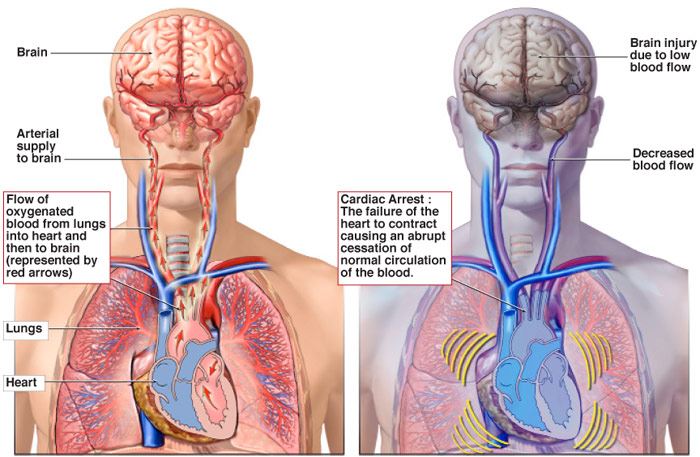
From this perspective, the statement isn't one of cruelty, but of professional focus. A brain surgeon doesn't worry about the patient's unpaid car loan while they are in the middle of a craniotomy. They worry about the brain. In this analogy, the Iran deal is the surgery, and the US economy is the patient’s life outside the operating room. If the surgery fails, the car loan doesn't matter because the patient is gone.
The Flaw in the Surgical Analogy
The problem is that the US economy isn't under anesthesia. It is wide awake, reacting in real-time to every word uttered by the administration. When the "surgeon" says they aren't thinking about the patient's survival outside the room, the patient starts trying to get off the table.
We are seeing a shift in how political capital is spent. In previous eras, a President would spend capital at home to get permission to act abroad. Now, the trend is to ignore the home front entirely, betting that a massive foreign policy victory will create its own capital. It is a high-risk, high-reward strategy that leaves the most vulnerable citizens as the collateral.
Beyond the Rhetoric: The Institutional Reality
While the political figurehead makes the headlines, the machinery of the Treasury and the State Department continues to grind. There is a disconnect between the "deal-making" persona and the institutional reality of economic management. Even if a leader claims not to think about the financial situation of the public, thousands of bureaucrats are tasked with exactly that.
But the executive's focus dictates the speed and direction of these institutions. If the mandate is "Get a deal with Iran at all costs," the Treasury may be instructed to ignore the inflationary impact of lifting certain sanctions. The Department of Commerce might be told to look the other way on trade imbalances that hurt local manufacturers if it helps grease the wheels in Tehran.
The Real Reason for the Pivot
Why Iran? Why now? And why at the expense of domestic optics?
The answer lies in the shifting global alignment. With China and Russia deepening their ties, a neutralized or "aligned" Iran would be a massive blow to the emerging anti-Western bloc. The strategic value of flipping Iran—or at least neutralizing it as a threat—is worth more in the long run than a few points of inflation or a disgruntled electorate in the short term. This is the "Brutal Truth" of modern statecraft: the individual's comfort is a currency that the state is willing to spend to buy a more favorable global position.
The Market's Reaction to Global Ego
Investors don't trade on empathy; they trade on predictability. When a leader says they aren't thinking about the domestic financial situation, it signals a period of volatility. The markets understand that if the public is ignored, social unrest or political instability often follows. This, in turn, makes the very deal being sought less stable.
Consider the following factors that the "deal-at-all-costs" mentality overlooks:
- Consumer Sentiment: When the public hears that their financial plight is secondary, they stop spending. This creates a self-fulfilling prophecy of economic downturn.
- Political Risk: A deal signed by a leader who has lost the support of their base is a deal that might be shredded by the next administration. Iran knows this, which makes them less likely to offer genuine concessions.
- The Debt Cycle: Ignoring the financial situation of Americans means ignoring the mounting personal debt that fuels the US economy. If that bubble bursts during the negotiation, the US loses its primary source of power: its economic might.
The Mechanics of the Deal
A deal with Iran typically involves the "Snapback" mechanism—the ability to re-impose sanctions if terms are violated. However, if the US has already sacrificed its domestic economic stability to get the deal, it loses the stomach to ever use that snapback. The cost of going back to a state of conflict becomes too high for a depleted public to bear.
The negotiation isn't just happening at a table in Geneva or Doha. It’s happening in the gas stations of Pennsylvania and the grocery stores of Florida. Every time a citizen feels the pinch, the "deal" becomes a harder sell. The investigative reality is that the deal isn't being made with Iran; it's being made with the American public's threshold for pain.
The Strategic Blind Spot
The most dangerous part of this approach is the assumption that the financial situation of the public and the success of the deal are separate entities. They are inextricably linked. A strong domestic economy is the foundation of any foreign policy leverage. By dismissing one to achieve the other, the negotiator is cutting off the branch they are sitting on.
The veteran analyst looks past the "deal" and sees the crumbling infrastructure of public trust. Without that trust, no international agreement is worth the paper it's printed on. The focus on Iran is a distraction from a more fundamental failure: the inability to balance the needs of the empire with the needs of the citizens.
The transactional nature of modern politics has reached its logical conclusion. The people are no longer the point of the exercise; they are the fuel for the machine. The "deal" is the ghost in the machine, a promise of a better tomorrow that requires the sacrifice of today. Whether that gamble pays off depends entirely on whether the machine can keep running on an empty tank.
The financial reality for the average person is not a distraction from the work of a leader; it is the work. To claim otherwise is to misunderstand the very nature of power. Power doesn't come from a signed document with an adversary; it comes from the collective strength of a prosperous and stable population. When that is forgotten, the "deal" is nothing more than a temporary truce in a much larger decline.
The path forward requires a rejection of this false choice. A leader can—and must—negotiate with the world while simultaneously securing the home front. Anything less isn't statecraft; it's a liquidation sale of the American dream in exchange for a moment on the world stage.