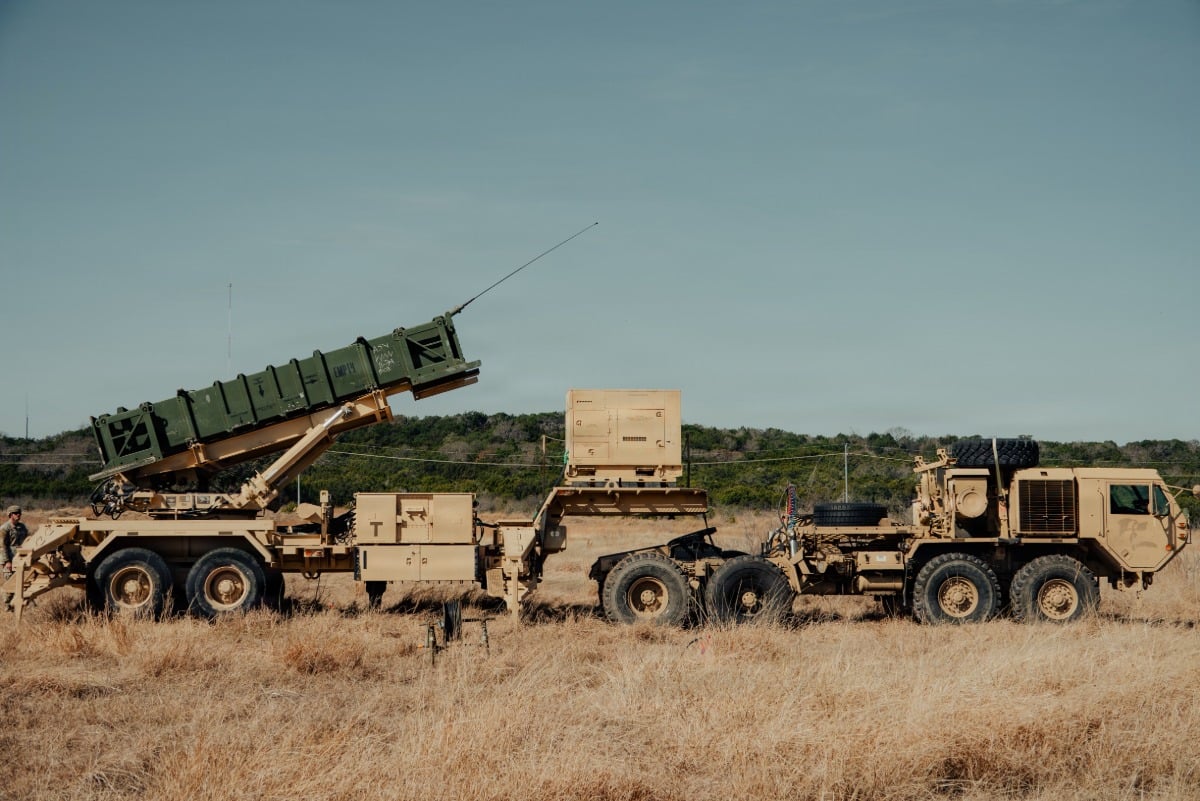
The U.S. Army just handed Lockheed Martin a $347.5 million cost-plus-incentive-fee contract to upgrade its air and missile defense systems. If you scan the official government contract notices, it looks like standard bureaucratic paper-shuffling. A few hundred million here, some defense upgrades there.
It isn't standard at all. Building on this topic, you can find more in: Why the India Japan Tech Partnership Actually Matters Now.
This deal, quietly finalized by the Army Contracting Command, is a direct response to a massive shift in how modern wars are fought. Look at Ukraine. Look at the Red Sea. The sky is no longer the exclusive domain of multi-million dollar fighter jets. It's filled with cheap drones, low-flying cruise missiles, and ballistic threats that can overwhelm legacy defense networks. The Army knows its current shield has holes. This new cash injection is about plugging them before the clock runs out.
The Reality of Modern Air Threats
For decades, American air defense relied on a simple premise: maintain air superiority with jets, and use systems like the Patriot to catch whatever slips through. That premise is dead. Analysts at NPR have also weighed in on this matter.
Today's threats are asymmetrical. A adversary can launch a $20,000 kamikaze drone to draw out a $4 million interceptor missile. Worse, peer adversaries are stacking threats—syncing drone swarms with ballistic missiles to confuse radar systems and bleed defense stockpiles dry.
Lockheed Martin's Missile and Fire Control division out of Grand Prairie, Texas, is tasked with fixing this math. The contract runs through December 31, 2028. That timeframe tells you everything you need to know. The Pentagon isn't looking for a conceptual science project to deploy in the 2040s. They want fabricated, tested, and deployable enhancements to existing air defense networks within the next two and a half years.
Moving Past Legacy Systems
Most people don't realize how rigid older missile defense hardware actually is. Historically, if you wanted to upgrade a missile system's software or tracking algorithms, you had to pull the physical asset out of service, ship it back to a specialized depot, and undergo a lengthy retrofitting process. It's slow, expensive, and leaves gaping holes in active defense posture.
The Army is forcing a transition toward open architecture. This $347.5 million contract focuses heavily on modular upgrades. The goal is simple: software-defined defense. If an adversary modifies their missile's radar signature or flight profile, the military needs to deploy a patch to the defense system digitally, right in the field, without taking the launcher or radar offline.
This contract also doesn't exist in a vacuum. It sits alongside massive concurrent defense spending. For instance, the Army just locked in a separate $3 billion deal with Lockheed for mass production of the Sentinel A4 radar—an X-band system that extends threat detection ranges by 175 percent. This smaller $347.5 million contract is the developmental glue. It funds the creation, fabrication, and testing of the specific enhancements that will allow these massive new radar networks to communicate instantly with interceptors.
The Logistics of the Deal
Because this is a cost-plus-incentive-fee contract, the Pentagon is absorbing much of the developmental risk while offering Lockheed financial bonuses if they hit specific performance and timeline milestones. It's a structure used when the military needs rapid innovation on complex tech where the final blueprint isn't fully set in stone.
The work will be distributed across various Lockheed facilities, with specific funding and locations locked in on an order-by-order basis. Expect heavy involvement from defense hubs in Texas and Alabama, where Lockheed has recently expanded its digital manufacturing infrastructure.
The immediate next steps involve building out physical prototypes of these upgraded sub-systems for active field testing. The Army wants to see how these enhancements handle simulated high-density saturation attacks—scenarios where dozens of varied threats hit the radar simultaneously. For defense tech watchdogs and investors, the key milestones to watch over the next 18 months will be the initial live-fire integration tests, which will prove whether this new architecture can actually handle the chaotic airspace of a modern battlefield.