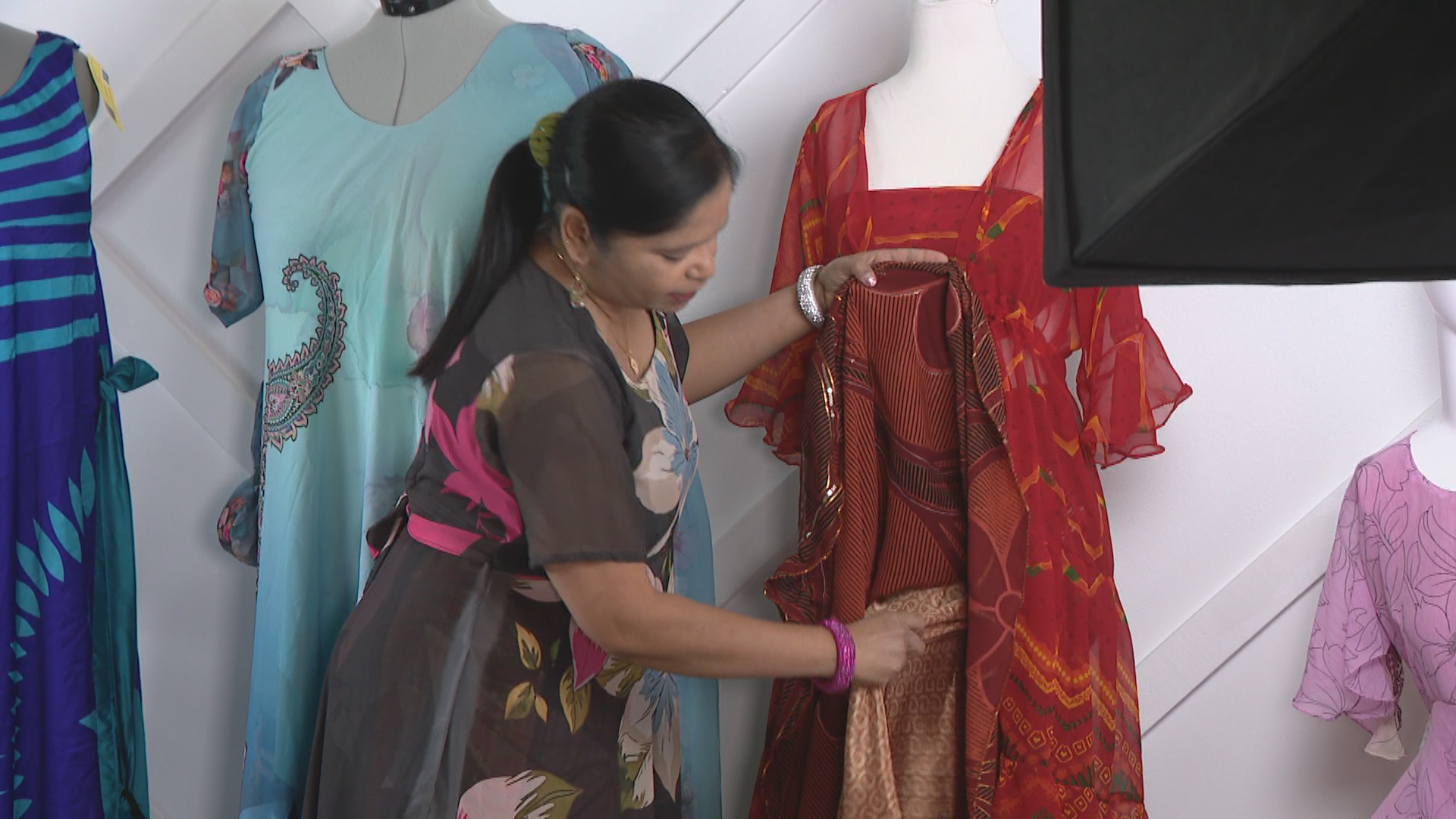
The modern apparel supply chain operates on a linear economic model characterized by high extraction costs, immense water consumption, and rapid landfill saturation. Within this framework, traditional garments such as the Indian sari—typically comprising six to nine unstitched yards of high-grade silk, cotton, or blended fabrics—present a distinct logistical challenge at their end-of-life cycle. Micro-enterprises and independent designers operating decentralized upcycling models are challenging this linear trajectory by converting discarded heritage textiles into contemporary apparel. Evaluating this operational shift requires analyzing material recovery mechanics, labor allocation efficiency, and the economic constraints of circular micro-production.
The Material Recovery and Sourcing Funnel
The primary bottleneck in textile upcycling lies not in production capability, but in feedstock acquisition, sorting, and grading. Unlike standard industrial manufacturing where raw materials are homogenous and rolled in predictable dimensions, reclaimed saris represent a heterogeneous input stream.
The sourcing mechanism typically relies on reverse logistics chains originating in South Asia, where intermediaries collect pre-owned garments through household exchanges or textile scrap aggregators. These inputs vary significantly across three primary variables:
- Fiber Composition: Pure silk, art-silk blends, heavy cottons, and synthetic polyesters each demand distinct handling, washing, and stitching parameters.
- Structural Integrity: Degradation from sunlight exposure, perspiration
Textile Upcycling Economics and the Operational Mechanics of Sari Transformation
business, lifestyle
The modern textile supply chain operates on a linear economic model characterized by high turnover and rapid obsolescence. Within this framework, post-consumer garments—particularly high-grade ethnic textiles like traditional South Asian saris—frequently represent a significant structural inefficiency. A standard sari consists of approximately five to nine yards of continuous, high-tensile fabric, often incorporating intricate handloom weaving, heavy embroidery, and durable silk or cotton blends. When these garments enter the municipal waste stream or local secondary markets, the recovery value is traditionally captured through low-margin shredding or rudimentary rag production. However, a localized operational model emerging from urban centers like Saskatoon demonstrates an alternative value-recovery mechanism: structural deconstruction and secondary product engineering.
To evaluate the systemic viability of transforming discarded saris into high-value consumer goods, one must examine the economic input variables, the operational constraints of unstructured raw material supply, and the shifting consumer demand for sustainable textiles.
The Raw Material Feedstock Problem
The primary economic hurdle in garment upcycling is feedstock unpredictability. In conventional manufacturing, inputs are homogenous, standardized by grade, color, and tensile strength. Upcycling operations reverse this paradigm, relying on an irregular, highly heterogeneous supply of post-consumer inputs.
A discarded sari does not arrive as a standardized roll of fabric. It presents as a variable asset class defined by several unpredictable parameters:
- Fiber Composition: Variances between pure mulberry silk, synthetic polyester blends, georgette, and cotton require distinct handling, washing, and stitching protocols.
- Structural Integrity: Localized wear, chemical degradation from perspiration or storage, and compromised thread tension in older weaves dictate whether a garment can yield structural panels or must be broken down into smaller constituent patches.
- Embellishment Density: Zari work (metallic thread), beadwork, and sequins present mechanical hazards to standard sewing machinery, frequently requiring manual deconstruction prior to pattern cutting.
Because the input material is heterogeneous, the operational workflow cannot be fully automated. Every single sari requires manual triage, sorting, and structural assessment. This introduces a heavy labor cost upfront, shifting the economic model away from mass-production efficiency toward high-skill craft optimization.
Labor Allocation and the Unit Economics of Deconstruction
Labor is the primary cost driver in custom textile transformation. Unlike industrial factories that utilize automated cutting tables and assembly-line specialization, a localized upcycling enterprise relies on iterative, high-cognition labor.
The production lifecycle of a transformed garment follows a strict sequence:
- Intake and Triage: Assessing the fiber type, mapping structural flaws, and categorizing by color theory and weight.
- Deconstruction and Sanitization: Removing fragile borders, salvaging unbroken yardage, and executing specialized laundering to preserve delicate fibers without degrading dye integrity.
- Pattern Engineering: Matching irregular fabric dimensions to modern product templates, such as outerwear, home textiles, or contemporary dresses, often utilizing modular patch-working to maximize yield.
- Assembly and Finishing: Reinforcing seams where old and new structural lines intersect to prevent premature joint failure during consumer use.
The financial equation hinges on yield optimization. If a nine-yard sari yields only three yards of usable, unblemished paneling due to localized degradation, the labor cost per usable square foot increases exponentially. Consequently, profitability depends on the artisan's ability to command premium pricing for the final output, translating the embedded cultural heritage and uniqueness of the material into perceived consumer value.
Shifting Demand Curves in the Secondary Textile Market
Consumer purchasing behavior within the apparel sector is undergoing a bifurcation. On one end, ultra-fast fashion continues to drive high-volume, low-cost consumption. On the other, a distinct market segment exhibits high price elasticity for verified circular economy products.
The market appetite for upcycled sari products is sustained by three distinct value propositions:
- Aesthetic Differentiation: Mass-produced garments rely on printed homogeneity. Upcycled saris offer inherent exclusivity; no two finished coats, bags, or garments share the exact same pattern integration or weave history.
- Traceability and Narrative: Modern consumers increasingly value supply chain transparency. A garment transformed from a pre-owned traditional textile carries a verifiable provenance that appeals to ethical consumption metrics.
- Durability Re-evaluation: Traditional saris were frequently manufactured with superior weave densities compared to contemporary fast-fashion alternatives. Repurposing these textiles often results in a final product with a longer functional lifespan than newly manufactured equivalent items.
Scaling Bottlenecks and Structural Limitations
While localized micro-enterprises demonstrate the technical feasibility of sari transformation, scaling the model presents severe structural limitations.
The primary barrier is supply chain friction. Sourcing consistent volumes of high-grade discarded saris requires either direct community collection networks or reliance on international textile brokers, both of which introduce high transaction costs and supply volatility. Furthermore, because skilled labor cannot be easily substituted with automated machinery for variable-input deconstruction, output volume remains strictly bounded by headcount.
As a result, this operational model resists traditional venture-scale expansion. It functions most effectively as a decentralized, high-margin craft enterprise rather than an industrial-scale manufacturing replacement.
Strategic Forecast for Circular Textile Integration
The long-term viability of textile upcycling depends less on displacing industrial manufacturing and more on establishing closed-loop collection ecosystems within diaspora communities. By formalizing the intake channel—partnering directly with cultural organizations, estate liquidators, and community collection drives—enterprises can reduce the acquisition cost of raw feedstock.
The strategic imperative for operators in this space is to transition from reactive garment salvage to proactive design-for-deconstruction frameworks. By treating post-consumer ethnic textiles not as waste, but as a specialized, high-yield natural resource tier, localized ateliers can maximize margin preservation while mitigating the broader environmental externalities of global textile waste.