The Duke University basketball ticketing process—specifically the "Line Monitor" system governing student access to Cameron Indoor Stadium—represents one of the most sophisticated non-currency-based allocation models in modern logistics. While superficial accounts characterize this as a test of fandom, a structural analysis reveals it as a high-friction labor market. Students exchange sleep, health, and cognitive bandwidth for a positional good: a front-row seat at a marquee sporting event. This system operates as a zero-sum competition where the clearing price is not paid in USD, but in the adherence to a rigid, tiered bureaucracy of physical presence.
The Mechanism of Dynamic Proof of Stake
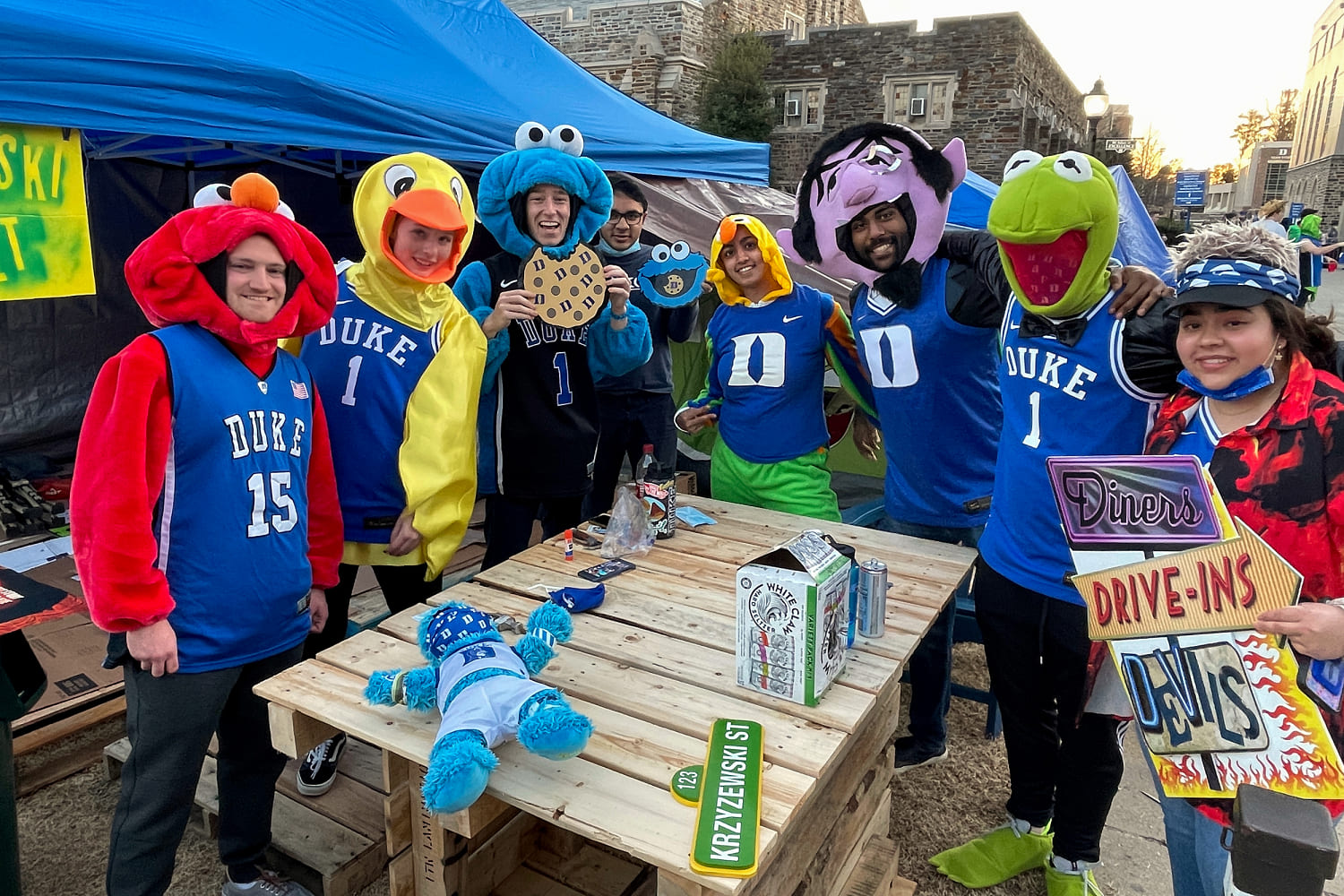
The ticketing ecosystem functions through a hierarchy of "tents," a system designed to manage a classic supply-demand imbalance. With a student capacity of roughly 1,200 in a venue of 9,314, and demand for rivalry games exceeding capacity by a factor of five, the university utilizes a decaying tier system to filter for the most resilient participants.
- Black Tenting: The highest tier, requiring a six-week commitment. Groups of 12 must maintain a continuous presence, with 10 people in the tent during the day and two at night.
- Blue Tenting: The intermediate tier, typically lasting three to four weeks. Requirements are slightly relaxed, often involving fewer required personnel during specific windows.
- White Tenting: The entry-level tier, occurring in the final two weeks before the game. This serves as the "overflow" filter for those who cannot sustain the long-term metabolic cost of the higher tiers.
This structure mimics a Proof of Stake (PoS) consensus mechanism found in blockchain protocols, but with a physical "liveness" requirement. The "stake" is time, and the "validator" is the Line Monitor—an autonomous student body that enforces the rules independently of the university administration.
The Cost Function of the K-Ville Ecosystem
To understand the true price of a ticket, one must quantify the opportunity costs and physical externalities imposed on the student body. The system is designed to be inefficient by intent; if it were easy, the queue would grow to a length that makes it physically unmanageable.
- Caloric and Metabolic Depreciation: Participants endure outdoor temperatures often fluctuating between -5°C and 10°C. The metabolic cost of thermoregulation, combined with sleep deprivation (averaging 3–5 hours for nighttime tenters), creates a physiological tax that impacts academic performance.
- The Cognitive Bottleneck: While students attempt to maintain academic rigor via laptops in tents, the "switching cost" of intermittent Line Monitor checks—randomly timed whistles that require all tent members to report for a "check" within five minutes—interrupts deep work. This creates a fragmented cognitive environment, reducing the efficiency of study hours.
- Social Capital Inflation: Because a tent requires 12 members, the system necessitates the formation of high-trust syndicates. The cost of a "flake" or a member failing to show up for a check is the immediate disqualification of the entire group. This shifts the risk from the individual to the collective, enforcing a social coercion model that ensures compliance.
The Logic of the Random Check: Enforcing Liveness
The most critical component of the allocation model is the "Line Check." This is a mechanism to prevent "ghosting," where a group might claim a spot but remain in the comfort of a dormitory. Line Monitors conduct these checks at stochastic intervals, 24 hours a day.
The probability of a check at any given hour $t$ is not uniform. However, because the exact timing is unknown, the participants must maintain a state of constant readiness. This is an application of Game Theory: the Line Monitors (the enforcers) must check often enough to make cheating risky, while the students (the players) must weigh the marginal benefit of a nap against the total loss of their six-week time investment.
If a group misses two checks, they are bumped to the back of the line. If they miss three, they are evicted from the ecosystem. This "Three Strikes" policy creates a convex risk profile; the closer one gets to the game day, the more devastating a missed check becomes, as the sunk cost cannot be recovered.
Information Asymmetry and the Line Monitor Bureaucracy
The Line Monitors represent a private regulatory body with near-absolute power. They interpret a 40-page policy manual that governs everything from tent dimensions to the definition of "inclement weather." This creates a hierarchy based on information access.
The "Grace" period is the most volatile variable in this system. During "Grace," students are permitted to leave the tents due to extreme weather or university-mandated breaks. The transition into and out of Grace is often announced with minimal lead time, favoring those with direct lines of communication to the monitors or those who remain physically proximate to the "K-Ville" headquarters. This information asymmetry functions as a secondary barrier to entry, rewarding those who are most integrated into the inner social circles of the athletic subculture.
The P-Checking Protocol: Final Stage Filtering
In the 48 hours leading up to the game, the system transitions from "Tenting" to "P-Checking" (Personal Checks). At this stage, the group structure dissolves, and individual presence becomes the only metric.
The density of checks increases, often occurring every few hours. This is the "Stress Test" phase. It is designed to break the will of those who survived the six-week marathon but lack the anaerobic capacity for the final sprint. The objective of the P-Check is to ensure that the 1,200 people who enter the stadium are not just those who were "present" in a tent, but those who are currently, physically capable of standing in a line for 48 consecutive hours.
Strategic Limitations of the Sweat-Equity Model
While the system is praised for its "fairness"—in that it cannot be bypassed by wealth—it suffers from three structural flaws that limit its long-term viability as a model for other institutions:
- Academic Misalignment: The university’s primary mission (education) is in direct conflict with a system that penalizes sleep and consistent study environments. As academic rigor increases in STEM fields, the demographic of the tent line may shift toward students with less demanding course loads, creating a participation bias.
- Physical Ability Bias: The system inherently discriminates against students with chronic health conditions, physical disabilities, or even those with higher-than-average sleep requirements. It is a model built for the "able-bodied elite," which may eventually invite regulatory or Title IX scrutiny regarding equal access to university-subsidized benefits.
- The "Super-Fan" Bubble: By rewarding time-on-site above all else, the system may optimize for the most dedicated fans, but it ignores the "Casual-High-Value" fan—the student who may contribute more to the university's long-term endowment but cannot justify a 400-hour time commitment for a two-hour game.
The Forecast: Digitalization vs. Tradition
The tension between the traditional "K-Ville" experience and the efficiency of digital queues is reaching a breaking point. Currently, the "analog" nature of the tent line is its greatest defense against scalping and botting. A digital queue can be gamed via scripts; a physical tent line requires a warm body in a sleeping bag.
However, the increasing use of "Line Monitor Apps" to track checks suggests a shift toward a hybrid model. We can expect the integration of biometric verification (face ID or NFC-enabled wristbands) to replace the manual "shouting of names" during checks. This will increase the precision of the data but will also remove the "human friction" that allows for the very camaraderie the system claims to foster.
To maximize the value of this system, the university must eventually formalize the "Line Monitor" role into a legitimate internship or leadership practicum. Recognizing the logistical complexity managed by these students would bridge the gap between "campus tradition" and "professional operations management," potentially mitigating the academic friction by aligning the labor of the line with the educational goals of the institution.