Translational biomedicine in pediatric rare diseases operates under severe structural constraints. While academic institutions frequently produce high-impact conceptual frameworks for cellular therapy, the journey from in vitro modeling to clinical deployment encounters predictable systemic friction. Rare genetic conditions, which disproportionately affect pediatric populations where two-thirds of rare disease patients are children, suffer from a chronic lack of localized infrastructure, forcing a reliance on inter-provincial or cross-border medical migration for definitive interventions.
The recent recognition of University of Saskatchewan researcher Dr. Tyler Wenzel by the Stem Cell Network highlights an operational shift in how regional academic centers approach neurodegenerative and rare pediatric conditions. Rather than accepting centralized metropolitan dominance in specialized medicine, regional institutions are leveraging patient-derived cellular models to build localized preclinical pipelines. Discover more on a connected topic: this related article.
The Functional Mechanics of Microglial Replacement
At the center of this research paradigm is the targeted replacement of dysfunctional host cells with healthy counterparts. In many pediatric neurodegenerative disorders, such as adrenoleukodystrophy (ALD), disease pathology is driven by the progressive failure of specific tissue-resident populations, particularly microglia within the central nervous system.
The underlying therapeutic thesis rests on three mechanical pillars: More analysis by CDC highlights similar views on this issue.
- Cellular Substitution: Eradicating or outcompeting mutant, degenerative host cells via targeted transplantation.
- Microenvironmental Reset: Restoring homeostatic signaling pathways that were disrupted by chronic neuroinflammation.
- Phenotypic Reversal: Inducing the clearance of pathogenic disease markers through metabolic and enzymatic normalization.
Preliminary data from stem cell models indicate that when functional stem-cell-derived therapeutics are introduced to affected tissue biopsies, specific biochemical disease markers decline. However, a mechanistic gap remains between marker clearance and functional behavioral recovery. The primary optimization problem for researchers is determining whether clearing biochemical signatures halts disease progression or merely slows it down, and whether structural neural integration can occur before irreversible tissue remodeling takes place.
The Translational Pipeline and Regulatory Friction
Moving a therapeutic candidate from a patient skin biopsy to a regulated human clinical trial requires navigating a rigorous validation pipeline. The economic and temporal cost function of this pipeline is governed by strict regulatory gates set by agencies such as Health Canada.
The preclinical validation sequence follows a strict hierarchical protocol:
- Autologous Tissue Harvesting: Procuring dermal or somatic tissue biopsies from diagnosed pediatric patients.
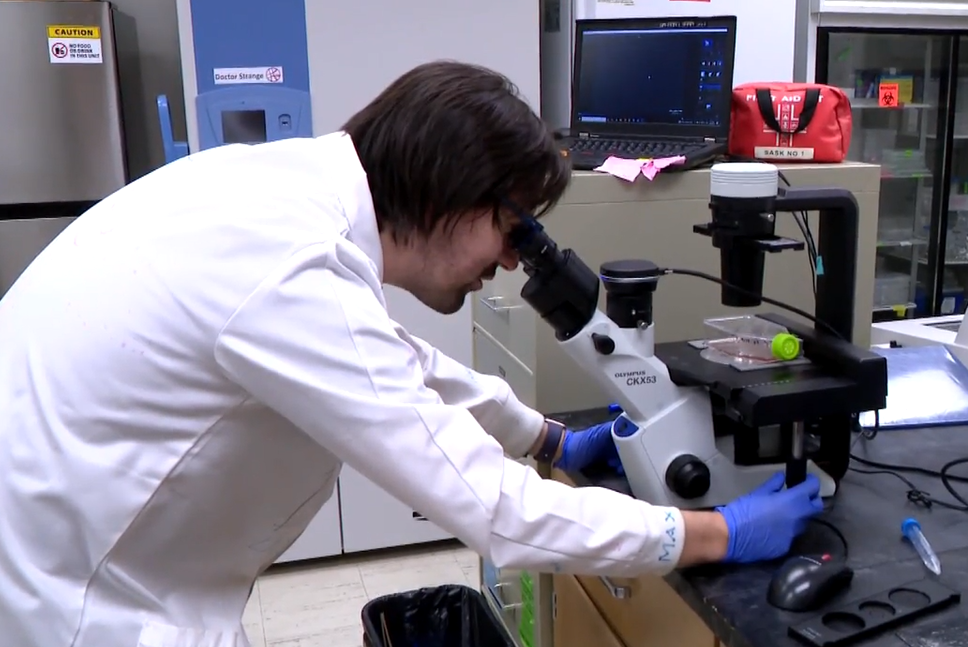
- Reprogramming and Differentiation: Converting somatic cells into induced pluripotent stem cells (iPSCs) and differentiating them into disease-relevant lineage cells, such as microglia or cerebral organoids.
- Efficacy Benchmarking: Testing candidate molecules or cellular vectors against patient-specific cellular pathology to establish baseline rescue metrics.
- Regulatory Submission: Compiling empirical safety and efficacy dossiers to secure phase one clinical trial authorization.
Each phase introduces significant attrition. The transition from two-dimensional and three-dimensional in vitro models (such as miniature human brain organoids) to whole-organism systemic delivery involves managing immune rejection risks, off-target differentiation, and scalable cellular manufacturing hurdles.
Infrastructure Deficits and Regional Capacity Bottlenecks
The structural limitation of biomedical innovation outside major national hubs is not intellectual capability, but clinical trial and treatment infrastructure. When a pediatric patient presents with a degenerative condition requiring cellular transplantation, localized care is often constrained by a lack of specialized facilities.
In jurisdictions like Saskatchewan, patients requiring advanced cellular transplants must be referred to tertiary centers in neighboring provinces such as Alberta or Manitoba. This creates a three-fold operational failure:
- Diagnostic Delay: Transporting tissue or patients introduces logistical latency into time-sensitive interventions.
- Economic Drain: Healthcare capital flows outward to support out-of-province specialized treatment admissions.
- Patient Burden: Families undergo acute psychological and financial stress during critical developmental windows for the child.
Closing this capability gap requires capital allocation toward specialized cleanroom manufacturing suites, cell processing laboratories, and specialized pediatric hematology and neurology units capable of managing post-transplant care locally.
Strategic Forecast for Regional Biomedical Hubs
The long-term viability of decentralized pediatric research centers depends on direct alignment between academic discovery and provincial healthcare integration. If preclinical models successfully scale toward human trials within the projected decade-long horizon, regional centers must transition from purely academic laboratories into accredited clinical-grade manufacturing nodes.
The strategic priority for institutions operating outside traditional biotechnology corridors is to establish end-to-end translational pipelines—from localized patient recruitment and tissue banking to regional clinical trial execution. Success will not be measured by publication volume alone, but by the physical capacity to deliver regenerative interventions locally, eliminating the need for cross-border medical referrals and retaining specialized clinical expertise within the jurisdiction.