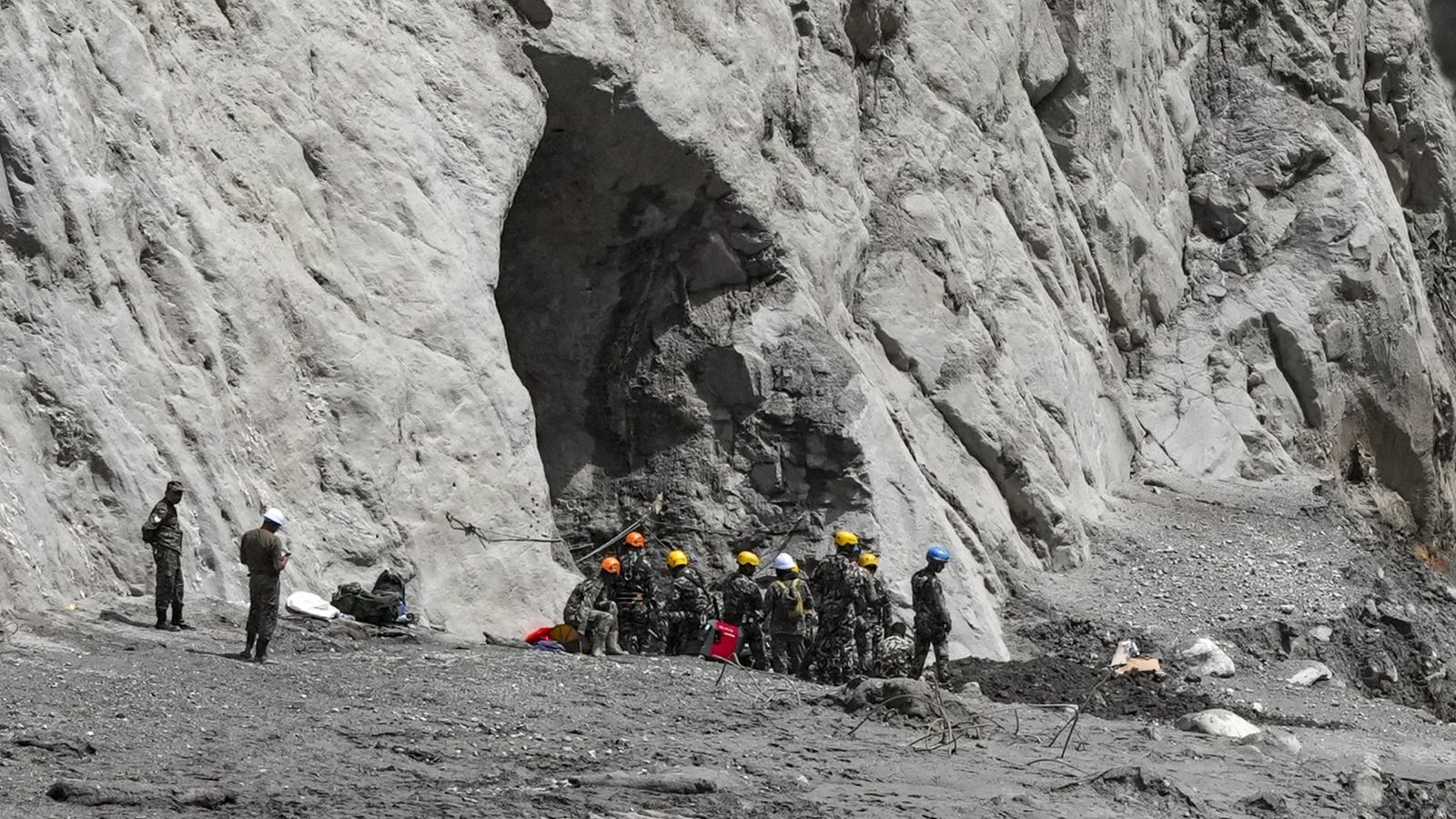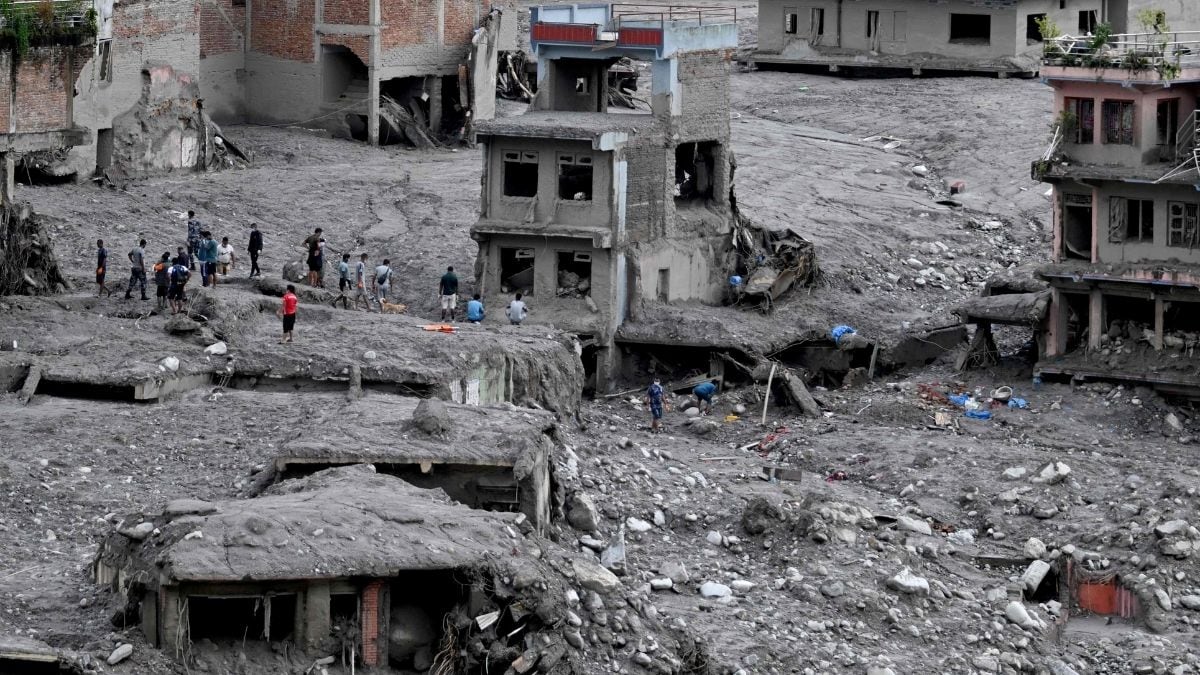
Geopolitical pressure regarding climate loss and damage has shifted from vague diplomatic appeals to hard asset calculations. Following the high-altitude glacier collapse and subsequent mountain surge in the Rasuwa district along the Tibet border, Kathmandu formally demanded sovereign compensation from major industrial emitters. The disaster, which generated a nine-metre rise in river levels within thirty minutes and knocked out roughly ten percent of national power capacity, highlights an acute structural asymmetry. Nations with near-zero contribution to cumulative greenhouse gas concentrations are absorbing disproportionate physical shocks, forcing a re-evaluation of international legal liability.
The Mechanics of High-Altitude Cryospheric Failure
To understand the physical trigger of the disaster, one must examine the thermal dynamics of the Hindu Kush Himalayan region. High-altitude mountain chains are warming at rates significantly exceeding the global average. This accelerated thermal input alters permafrost stability and degrades the natural moraine walls holding back high-altitude meltwater.
When a massive section of ice snaps off at elevations approaching seventeen thousand feet, the resulting vertical drop converts potential energy into immense kinetic force. The mass pulverizes into a hyper-concentrated slurry of ice, mud, and water, transforming a localized thermal failure into a transboundary surge.
- Cryospheric Thermal Stress: Continuous ambient temperature increases weaken the internal shear strength of glaciers.
- Kinetic Energy Conversion: Rapid vertical descent multiplies the destructive velocity of ice avalanches.
- Hydrological Choke Points: Narrow gorges concentrate the fluid mass, magnifying downstream hydrodynamic pressure on infrastructure.
Standard disaster response models assume predictable seasonal flooding patterns. However, cryospheric collapses bypass traditional hydrological forecasting entirely. Because these events originate in remote, high-altitude border zones, downstream populations receive virtually zero operational lead time without real-time sensor integration.
The Economic Cost Function of Loss and Damage
Nepal's diplomatic pivot from humanitarian aid requests to binding financial restitution establishes a new precedent for international climate law. Traditional foreign assistance functions as discretionary charity. By contrast, formal claims submitted to international mechanisms like the Fund for Responding to Loss and Damage treat emissions as an actionable tort.
The financial burden of the recent disaster spans multiple sectors, with reconstruction estimates scaling into billions of dollars. This economic shock breaks down into three distinct fiscal categories:
- Direct Asset Destruction: The obliteration of strategic highways, bridges, and municipal wards across Nuwakot, Rasuwa, and Dhading.
- Energy Infrastructure Deficit: The structural compromise of multiple hydropower facilities along the Trishuli and Bhotekoshi river corridors, leading to immediate power grid destabilization.
- Long-Term Adaptation Overheads: The unbudgeted capital expenditure required to retrofit upstream monitoring systems and relocate vulnerable settlements away from narrow river valleys.
The core argument of climate liability rests on attribution science. While individual weather events cannot be exclusively tied to single emission sources, the statistical acceleration of glacial retreat is directly proportional to cumulative historical emissions.
The Transboundary Data Bottleneck
Mitigating future high-altitude disasters requires more than financial restitution; it demands structural integration of regional early warning systems. The Hindu Kush Himalaya spans multiple sovereign jurisdictions, yet ecological boundaries do not respect political borders.
When a glacial hazard originates upstream in Tibetan territory and impacts downstream infrastructure in Nepal, real-time data sharing becomes an operational necessity rather than a diplomatic courtesy. Historically, data latency between regional neighbors has created fatal information vacuums. Bridging this gap requires establishing unified sensor arrays across high-altitude peaks, shared hydrological modeling, and automated alert protocols that operate independently of bilateral political friction.
The absence of a unified regional framework leaves downstream communities exposed to cascading environmental failures. Without synchronized telemetry, localized mitigation efforts remain reactive rather than preventative.
Strategic Implementation for Regional Resilience
The transition toward enforceable climate liability alters how developing mountain states must manage ecological risk. To move beyond perpetual reconstruction cycles, policy frameworks must incorporate strict geospatial planning and binding transboundary agreements.
Governments exposed to cryospheric hazards must mandate rigorous buffer zones around high-risk river corridors, restrict heavy industrial construction within narrow mountain valleys, and tie foreign infrastructure investments to mandatory climate-stress testing. The integration of real-time satellite monitoring with automated downstream sirens offers the only viable defense against high-altitude surges. Financial claims against top emitters must be systematically channeled into these decentralized adaptation structures to ensure long-term civilizational survival across the entire South Asian river basin.