There is a distinct, chilling clarity in being called an idiot by someone who holds the keys to an underground furnace.
When Kim Yo-jong stepped forward to deliver her verdict on the diplomatic fantasies of the West, she did not bother wrapping her words in the velvet language of statecraft. There were no diplomatic pleasantries, no cautious nods toward future possibilities, no gentle fictions about restarting stalled working-group discussions. To expect North Korea to surrender its nuclear stockpile, she declared with razor-sharp disdain, was the height of absurdity. Only fools, she argued, could look at the history of the past thirty years and imagine a day when Pyongyang would voluntarily roll its warheads into the light, dismantle its centrifuges, and hand over its ultimate insurance policy to a world that has spent three-quarters of a century trying to choke its economy out of existence.
In Washington and Seoul, her words landed like cold water on a sleeping face. For decades, foreign policy establishments have built entire careers on the comforting narrative of denuclearization. It is a comforting ritual, a diplomatic liturgy recited at every summit, written into every joint communique, and invoked by successive administrations as an article of faith. Every new sanction is supposedly the one that will finally break the regime’s resolve. Every threat of overwhelming retaliation is framed as the turning point that will force Pyongyang to reconsider.
Yet beneath the polished mahogany tables of international negotiation lies a deep, unbridgeable chasm of historical memory and existential terror. To understand why Kim Yo-jong’s harsh assessment is not merely posturing but a statement of absolute, unshakeable doctrine, one must journey backward into the smoke and ash of a divided peninsula.
The Ghost of 1953
Imagine a landscape where every standing building has been reduced to rubble. This is not a hypothetical thought experiment; it is the physical reality of North Korea at the close of the Korean War in July 1953.
By the time the armistice was signed at Panmunjom, the U.S. Air Force had dropped more conventional tonnage on North Korea than it did in the entire Pacific theater of World War II. Major population centers were systematically flattened. Dams were bombed to unleash catastrophic floods across agricultural lands. Chemical weapons were studied, and near-total destruction was visited upon a nation that had barely emerged from Japanese colonial rule.
Generations grew up under the earth, living in massive cave networks, tunnel systems, and underground factories built out of sheer necessity. That foundational trauma never healed. It calcified into the national character. The core operating assumption of the North Korean state became brutally simple: nobody is coming to save you, and if you are weak, you will be erased.
Decades later, that same paranoia was reinforced by live television broadcasts from across the globe. In 2003, Muammar Gaddafi decided to abandon Libya’s nascent weapons of mass destruction programs in exchange for normalized relations with the West. He shook hands with European leaders, opened his books to inspectors, and shipped his equipment away. Less than a decade later, NATO warplanes screamed over Tripoli, rebels dragged him from a drainage pipe, and the Libyan state shattered into warring fiefdoms.
In Pyongyang, officials watched the fall of Tripoli with absolute, clinical fascination. They did not see a dictator brought to justice. They saw a cautionary tale written in blood. To the Kim dynasty, Gaddafi’s fatal error was not his brutal rule; it was his decision to trade his nuclear shield for diplomatic promises.
Saddam Hussein’s fate in Iraq provided the second half of the lesson. He did not possess weapons of mass destruction when the invasion came in 2003, but because the West believed he might, or because his defenses were hollowed out, his regime was dismantled in weeks. The conclusion drawn inside the walls of the Workers’ Party headquarters was absolute: sovereignty is not guaranteed by international law, treaties, or the goodwill of superpowers. It is guaranteed exclusively by the capability to inflict unacceptable retaliation.
The Ritual of Broken Promises
To watch modern diplomacy on the Korean peninsula is to watch a tragic play performed by actors who refuse to read the script changes.
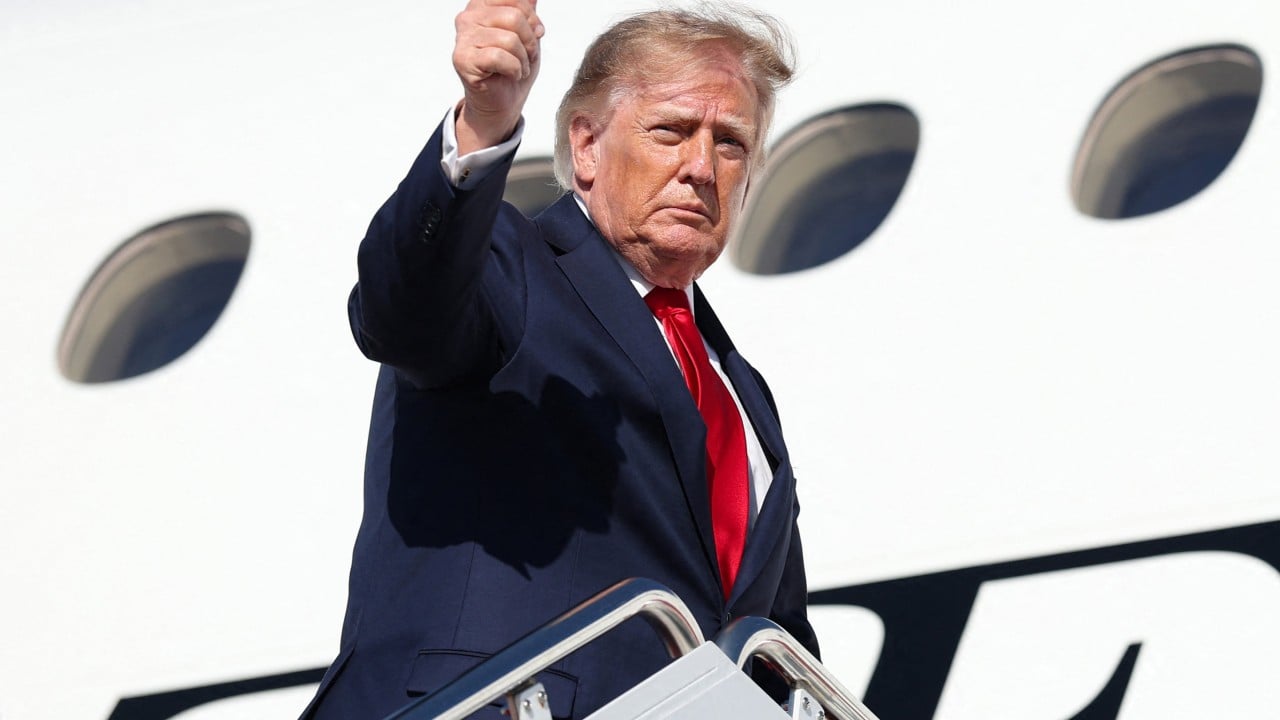
Consider the rhythm of the past thirty years. It begins with crisis: a missile test echoing across the Sea of Japan, a satellite launched into orbit, a new enriched uranium facility revealed in satellite imagery. Markets panic. Headlines scream. Politicians posture. Then comes the pivot toward dialogue. Envoys fly back and forth. Agreements are signed with great fanfare—the 1994 Agreed Framework, the 2005 Six-Party Talks joint statement, the historic Singapore summit in 2018 where Donald Trump and Kim Jong Un traded warm letters and handshakes.
In every single instance, the fundamental misalignment is identical. The West demands complete, verifiable, irreversible denuclearization as a precondition for relief and normal relations. Pyongyang views its nuclear arsenal as the only guarantee that it can survive long enough to even negotiate on equal terms.
When the talks inevitably stall because neither side can bridge that fundamental contradiction, blame is cast, sanctions are tightened, and the cycle resets.
In Hanoi in February 2019, this theatrical illusion collided with hard reality. President Trump and Kim Jong Un sat across from each other in the grandiose halls of the Metropole Hotel. The North Korean delegation had brought a surprisingly specific proposal: dismantle the sprawling Yongbyon nuclear complex in exchange for the lifting of the most punishing UN economic sanctions—the ones choking civilian livelihoods, fuel supplies, and basic imports.
To Washington, it looked like a lopsided trap. Yongbyon was only part of the puzzle; there were secret enrichment sites tucked away in mountain ranges, hidden warheads, and ballistic missile assembly lines. The U.S. demanded everything, all at once, before lifting a finger. Kim Jong Un walked away.
That walkout was the definitive burial of the denuclearization myth. It proved that Pyongyang was not interested in a phased surrender of its deterrent. They had crossed the threshold, absorbed the economic punishment, built miniaturized warheads that could fit atop intercontinental ballistic missiles, and proven their capacity to survive international isolation. Why would they give up the very asset that forced the President of the United States to fly halfway across the world to meet them?
The Economy of the Fortress
Walk through a provincial town in North Pyongan province, far from the neon glow and glass towers of Pyongyang’s showcase districts, and you will see the physical manifestation of this choice.
The roads are cracked and largely empty of private cars. Electric grids flicker and fail with seasonal regularity, plunging neighborhoods into absolute darkness where the only illumination comes from the coal-heaters inside concrete apartment blocks. Agriculture relies heavily on manual labor, human fertilizer, and sheer human endurance against the elements.
Yet, rising above this stark, impoverished backdrop are the scientific research institutes, the university laboratories, and the underground proving grounds where engineers and physicists work in relative privilege. The state starves its civilian economy to feed its military-industrial complex, because within the logic of the regime, a starving citizen is an unfortunate reality of geopolitical struggle, but a disarmed military is national suicide.
This is the central tragedy of the North Korean nuclear program. It is not an accidental policy aberration that can be corrected with cleverer economic incentives or sharper sanctions. It is the foundational architecture of the state itself. The bomb is the economy’s anchor, the dynasty’s legitimacy myth, and the military’s absolute shield rolled into one.
When international analysts suggest that economic hardship might finally push the populace to overthrow the regime or force leadership to reconsider, they misunderstand the nature of totalitarian control fused with deep-seated national martyrdom. Populations that have survived the catastrophic famine of the mid-1990s—known locally as the Arduous March, where hundreds of thousands perished—do not break easily under economic pressure. They adapt, they smuggle, they trade in black-market jangmadang stalls, and they endure.
The Dangerous Alternative of Wishful Thinking
The danger of clinging to the illusion of denuclearization is not merely that it wastes diplomatic energy. The danger is that it blinds policymakers to the actual risks of a nuclearized Korean Peninsula.
For years, the policy of strategic patience and non-recognition has allowed North Korea to quietly cross every red line imaginable. They tested thermonuclear devices. They mastered solid-fuel intercontinental ballistic missiles that can be deployed from mobile launchers within minutes. They developed tactical nuclear weapons designed for battlefield use on the peninsula itself. And recently, they formalized their nuclear status in their constitution, declaring it irreversible.
To keep pretending that a future administration will sweet-talk or squeeze Pyongyang into giving up these capabilities is not diplomacy; it is a dangerous abdication of strategic reality.
Accepting North Korea as a permanent nuclear state does not mean endorsing its human rights abuses, its dynastic oppression, or its provocative threats against its neighbors. But it does mean shifting from a theology of wishful containment to the sober mechanics of deterrence and arms control. It means acknowledging that the game has changed permanently, and that managing a nuclear North Korea requires the same cold, calculating realism that governed relations with other difficult nuclear powers during the twentieth century.
Kim Yo-jong’s harsh words were designed to puncture the bubble of Western self-delusion. She wanted to force an uncomfortable reckoning across the negotiating tables of the world. She wanted everyone to stop waiting for a miracle that will never arrive.
The mountains outside Pyongyang remain honeycombed with steel and concrete. Deep beneath the granite, the centrifuges continue to spin, humming a steady, monotonous tune that mocks every diplomatic communiqué written in foreign capitals. The bunkers are sealed. The warheads are bolted into place. And out on the frozen hillsides of the demilitarized zone, the watchtowers stand silent and vigilant, guarding a world that still refuses to wake up.