The coffee in the glass pitcher was lukewarm, tasting faintly of burnt aluminum and institutional carpet. I remember the smell because it hung in the air of a mid-level campaign office in Ohio eight years ago, heavy with the specific brand of exhaustion that only comes from staring at polling spreadsheets until the numbers stop looking like digits and start looking like hieroglyphs.
Across the room, a field organizer named Marcus rubbed his eyes, leaving red smudges behind wire-rimmed glasses. He had been awake for thirty-six hours. On the wall behind him, a whiteboard mapped out precinct targets in blue and red dry-erase marker, a neat grid pretending that human behavior could be solved like a long-division problem.
"They just don't see it," Marcus had muttered, gesturing vaguely toward a television screen muted in the corner, where a cable news chyron flashed updates about rallies, slogans, and escalating rhetoric. "Or worse. They see it and they simply do not care."
That sentiment has calcified into something far more dangerous.
When modern political discourse reduces itself to hyperventilating headlines about figures like Donald Trump issuing frantic appeals for support while his base sleepwalks toward institutional collapse, it misses the deeper, more unsettling pathology at play. This is not merely a story about a singular politician grasping for leverage. It is a study in collective somnambulism. We are watching a nation drift into structural failure not because of a sudden cataclysm, but because everyone involved has grown entirely comfortable with the noise.
Consider the mechanics of how a system breaks.
It does not shatter in a cinematic explosion. It wears down through a million tiny accommodations. A norm is bent so often it forgets it was ever straight. A warning sign flashes on a dashboard, and instead of pulling over, the driver turns up the radio to drown out the beep.
When political leaders begin issuing desperate, repetitive calls for mobilization, the public reaction is rarely panic. It is fatigue. We have heard the wolf cry so many times that the beast has taken up residence on the front porch, and we simply step over it to get the morning paper. This mutual exhaustion creates a strange psychological contract between the candidate and the voter. The politician provides the theatrical urgency; the follower provides the passive consumption. No one actually has to do the hard, unglamorous work of maintenance.
To understand why this dynamic persists, we have to look past the daily circus of soundbites and examine the architecture of modern political loyalty.
Imagine a massive suspension bridge built decades ago. Over the years, the salt air has eaten away at the steel cables. The engineers know it. The inspectors write reports about it in dry, bureaucratic prose that nobody reads. Yet the traffic keeps flowing because slowing down is inconvenient. Every now and then, the manager of the bridge goes on television and yells that the structure is about to give way, demanding that commuters pay more tolls or change their routes. But because the bridge hasn't fallen yet, the commuters assume the manager is just crying wolf to raise funds.
That is where we stand.
The appeals for help are real, born of genuine panic from within a machinery that senses its own fragility. But the audience has been conditioned to treat reality like entertainment. When everything is an existential crisis, nothing is.
I learned this firsthand while reporting on political rallies in the Rust Belt. You could stand in an arena packed with twenty thousand people, surrounded by roaring bass lines and blinding lights, and feel an electric current of absolute certainty. People wore the merchandise, chanted the slogans, and truly believed they were part of an epic crusade to rescue a fading country. Yet, step outside into the parking lot, and you would talk to a local business owner who hadn't filed taxes in two years, or a retired machinist whose pension had quietly vanished while he was busy arguing about cultural grievances online.
The disconnect is staggering. The grand political narrative operates in the stratosphere of myth and identity, while the actual foundation of daily life crumbles in the mud below.
When loyalists sleepwalk through institutional decay, they are not acting out of malice. They are acting out of self-preservation. Facing the reality that our democratic systems, our supply chains, our civic trust, and our economic stability are fraying requires a level of psychological labor that most people, ground down by eighty-hour workweeks and medical debt, simply cannot afford. It is much easier to retreat into the warm, predictable embrace of tribal affiliation. If your team wins, you win, even if the stadium is burning down around you.
This brings us to the core contradiction of the modern strongman political model. It promises absolute strength, yet it constantly requires a posture of desperate victimization. It demands absolute loyalty, yet it leaves its followers utterly exposed to the consequences of systemic failure.
When a leader begins begging for intervention—whether through frantic fundraising emails, midnight social media manifestos, or urgent pleas to save the movement from shadowy enemies—it reveals a profound vulnerability. The machinery is heavy, rusted, and difficult to move. It requires constant injections of outrage to keep from grinding to a complete halt.
And yet, the people watching this unfold from their living rooms do not mobilize. They scroll. They click. They offer a nod of agreement or a grunt of disgust, and then they turn on a streaming service. They have outsourced their civic duty to a social media feed.
We have mistaken participation for action.
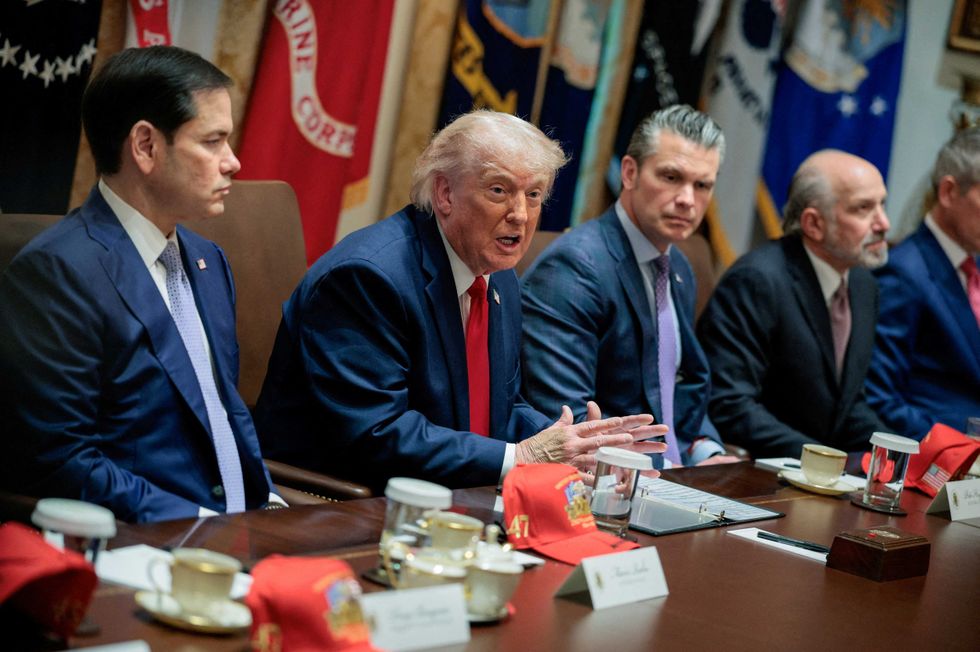
Liking a post is not organizing a precinct. Shouting at a television screen is not fixing a school board. Buying a red hat is not auditing a municipal budget. By reducing citizenship to a consumer identity, we have created a political class that knows how to market effectively but has entirely forgotten how to govern effectively.
The danger is not that a single election will go one way or the other. The danger is that we are losing the capacity for self-correction. A healthy society requires friction. It requires citizens who are willing to look at uncomfortable truths, admit when their chosen leaders are failing, and demand better standards of competence and integrity, regardless of party lines.
Instead, we have chosen the comfort of the echo chamber. We have traded the hard work of democracy for the cheap thrill of belonging.
The room in Ohio is long gone now, replaced by newer offices, different staff, and the same endless cycle of frantic strategy sessions. But the smell of that burnt coffee stays with me. It reminds me of the exact moment a republic stops being a living experiment and becomes a museum piece.
The warning lights are flashing on the dash. The music is playing loudly. The driver is pleading for someone to grab the wheel, while the passengers close their eyes and hope for a smooth curve in the road ahead.
There is no sudden crash waiting for us in the dark. There is only the slow, quiet realization, dawn after dawn, that we allowed the foundation to erode until nothing was left to hold the weight.


