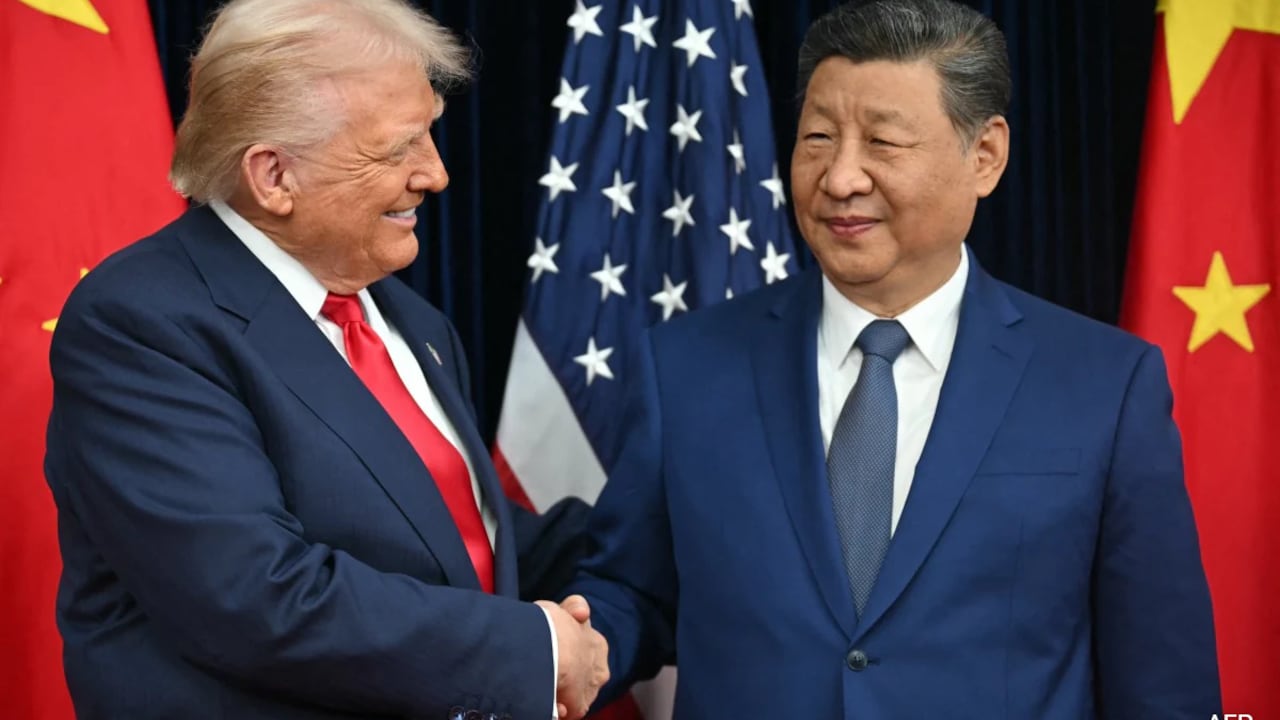
State visits between nuclear superpowers do not fail or succeed on menu selection or flight formations; they operate as high-cost signaling mechanisms designed to alter bargaining leverage before a single bilateral concession is drafted. When Donald Trump deploys an exaggerated ceremonial apparatus—military flypasts, honor guards, and formal state banquets—for Xi Jinping, the spectacle functions as an asymmetric negotiation tool rather than a gesture of diplomatic warmth. Standard political commentary mistakes the red carpet for appeasement or vanity, missing the underlying game-theoretic mechanics that govern how Washington and Beijing price status, domestic legitimacy, and coercive credibility.
The Economics of Costly Signaling in Great Power Diplomacy
In international relations theory, cheap talk carries zero weight between adversaries with misaligned incentives. If a president states that the United States desires stability while maintaining punitive tariffs and naval patrols in the Western Pacific, Beijing discounts the rhetoric immediately. Ceremonial pageantry solves a specific information problem by converting abstract political capital into observable, irreversible domestic costs. Meanwhile, you can find other stories here: Diplomatic Calculus Assessing Russian Participation In The Miami G20 Summit.
Rolling out the highest tier of state protocol for an ideological and economic rival forces an American administration to absorb immediate political friction from domestic hawks, congressional committees, and allied capitals. Because that domestic political cost is real and visible to Beijing, the gesture acts as a credible signal of intent to negotiate seriously. In signaling theory, the value of a signal correlates directly with the penalty incurred by the sender for producing it. A low-key working lunch signals transactional indifference; a full-scale military review signals that the executive branch is willing to spend political capital to keep the bilateral channel open.
This mechanism operates differently for each leader because their domestic legitimacy engines run on incompatible fuels: To understand the full picture, we recommend the excellent article by Reuters.
- The Washington Value Function: The White House treats pageantry as a depreciating asset used to soften an adversary's opening posture without surrendering material policy positions. Honor guards and state dinners cost zero basis points on tariffs, zero semiconductors under export controls, and zero square nautical miles of freedom-of-navigation operations. It is pure symbolic currency exchanged for psychological positioning.
- The Beijing Value Function: For the Chinese Communist Party, external validation from the world's primary superpower serves an internal regime-security purpose. State media broadcasts images of American military hardware saluting Xi Jinping directly to domestic audiences, reinforcing the narrative that China has achieved peer status and that Washington is forced to treat Beijing with deference despite ongoing trade friction.
The central error in conventional coverage is assuming both sides value the same currency. Washington views the banquet as a low-cost concession that preserves hard leverage; Beijing banks the imagery as permanent domestic capital while treating the subsequent negotiations as a zero-sum grind.
Deconstructing the Three Pillars of Summit Choreography
A state visit of this magnitude relies on three distinct operational layers, each engineered to extract specific behavioral responses from the visiting delegation.
1. Kinetic Deterrence Masked as Honor
A military flypast during a state arrival is never merely decorative. In protocol terms, it renders honors to a visiting head of state; in operational terms, it places fourth- and fifth-generation air superiority platforms directly overhead in controlled airspace. By integrating active-duty military aviation into the welcome ceremony, the host nation establishes an implicit baseline of capability. The visual message is dual-layered: the United States possesses overwhelming kinetic reach, and that reach remains under tight, disciplined executive control. For a visiting leader whose own military modernization focuses heavily on anti-access and area-denial strategies in the Indo-Pacific, standing beneath an American formation reinforces the reality of hard power parity or superiority before closed-door talks begin.
2. Status Elevation as a Pre-Negotiation Offset
Protocol hierarchy in Washington distinguishes sharply between a working visit, an official visit, and a full state visit. Elevating a meeting to the highest ceremonial tier removes status anxiety from the room. Chinese diplomatic doctrine places extreme weight on procedural reciprocity and perceived slights; historical summits have stalled over seating arrangements, motorcade routes, and toast durations. By front-loading maximum prestige at the airport tarmac and the White House South Lawn, the host eliminates Beijing's ability to claim disrespect as a pretext for stonewalling. The visiting delegation enters the cabinet room deprived of its standard grievance-based bargaining tactics.
3. The Isolation of Executive Decision-Making
Lavish banquets and curated cultural programs compress the working schedule and concentrate authority at the leader-to-leader level. Both Trump and Xi operate highly centralized decision-making models that bypass traditional bureaucratic bottlenecks. Trump prefers direct, personalist deal-making over interagency consensus; Xi has systematically subordinated the Chinese foreign ministry and state apparatus to centralized Party commissions. Extended ceremonial dinners create unstructured intervals where both principals can test red lines directly, free from the scripted talking points prepared by mid-level diplomats.
The Structural Mismatch Between Protocol and Policy
While high-end choreography optimizes the atmosphere for personalist diplomacy, it introduces severe structural vulnerabilities when applied to the US-China relationship. The fundamental drivers of bilateral friction—industrial overcapacity, supply chain decoupling, intellectual property transfer, and strategic competition over Taiwan and the South China Sea—are rooted in structural economics and geography, not personal rapport.
Ceremonial warmth creates an expectations trap. When an administration invests heavily in the visual architecture of friendship, domestic markets, allied governments, and global media begin pricing in an imminent de-escalation. If the closed-door sessions fail to produce concrete deliverables—such as verifiable agricultural purchase agreements, fentanyl precursor enforcement, or tariff suspensions—the contrast between the lavish imagery and the empty communiqué amplifies the perception of diplomatic failure.
A second bottleneck emerges among regional allies. Tokyo, Seoul, Manila, and Taipei monitor Washington's ceremonial tone toward Beijing with acute sensitivity. An opulent welcome in Washington signals potential bilateral accommodation, prompting frontline allies to hedge their own security postures or question the durability of American deterrence commitments. To prevent alliance drift, the executive branch must simultaneously project warmth toward Beijing on the South Lawn while issuing hardline reassurance statements through the Pentagon and State Department—a split-screen posture that strains credibility across all audiences.
Why Personalist Diplomacy Fails Against Institutionalized Strategy
The operational premise behind rolling out the red carpet is that cultivating personal chemistry with a paramount leader can unlock concessions that bureaucracies block. This hypothesis holds validity in transactional systems where a single executive can override institutional inertia by fiat. It degrades rapidly when applied to a Leninist party-state apparatus.
In Beijing, strategic objectives such as technological self-reliance under indigenous innovation mandates or maritime expansion are codified into multi-year Party directives. Xi Jinping is not a rogue executive acting independent of his system; he is the apex executor of an institutional consensus designed to insulate China from Western economic coercion. While he possesses the authority to grant tactical reprieves—such as temporary tariff exemptions or targeted commodity orders—he cannot trade away the core industrial policies that Washington seeks to dismantle without undermining the political coalition that sustains his rule.
Trump's transactional model assumes every variable has a clearing price if the personal dynamic is calibrated correctly. Beijing's institutional model treats core economic and territorial doctrines as non-negotiable fixed assets, offering only cyclical, reversible commercial purchases in exchange for permanent structural relief from American tariffs or export controls.
Quantifying the Risk of Asymmetric Takeaways
To evaluate whether a high-pageantry summit succeeds or fails, observers must ignore the press conference rhetoric and track four concrete post-summit indicators:
- Tariff and Export Control Velocity: Does the administration pause scheduled escalations on semiconductor equipment, artificial intelligence compute thresholds, or electric vehicle duties? If restrictions continue unabated within thirty days of the banquet, the pageantry functioned purely as diplomatic cover for ongoing decoupling.
- Enforceable Verification Mechanisms: Past bilateral agreements collapsed because they relied on aspirational targets rather than automatic snap-back penalties. Any durable deal emerging from the visit must include unilateral enforcement triggers rather than joint working groups, which Beijing historically uses to stall compliance.
- Military-to-Military Theater Safety: Following high-level protocol engagements, the frequency of unsafe aerial intercepts and maritime near-misses in the East and South China Seas provides an immediate readout of whether Xi's ceremonial reception translated into operational restraint by the People's Liberation Army.
- Allied Hedging Behavior: Watch for sudden diplomatic outreach from European or Asian capitals toward Beijing immediately following the summit. If allies perceive Washington cutting a bilateral commercial deal at the expense of collective economic security, coordinated export controls will fracture within two quarters.
The Strategic Imperative for Washington
Treating a state visit as an end in itself surrenders the primary advantage of executive diplomacy. If the White House deploys full military and ceremonial honors for Xi Jinping, it must weaponize the resulting diplomatic momentum to force structural concessions rather than settling for headline-friendly commodity purchases.
Washington should pair the ceremonial rollout with a rigid, pre-announced deadline for verifiable progress on market access and industrial subsidization, making clear that the pomp of the state visit represents the ceiling of bilateral goodwill unless concrete structural adjustments follow within ninety days. Without a hard enforcement clock attached to the spectacle, the red carpet serves only to subsidize Beijing's domestic propaganda while leaving the underlying economic asymmetry untouched.