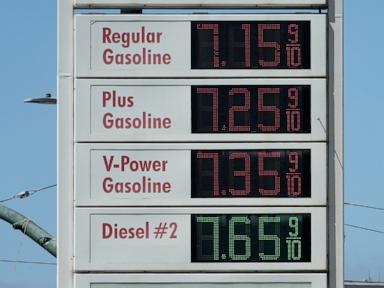
The physical reality of retail fuel competition has fundamentally broken down. Historically, gas station operators adjusted prices based on visible localized indicators: the sign across the street, regional rack rates, and shifting consumer volumes. A federal class-action antitrust lawsuit filed in Sacramento, California, isolates a structural shift in how commodity pricing functions. The litigation targets Kalibrate Fuel Systems alongside major retail operators—including Marathon, BP, Circle K, 7-Eleven, Walmart, and Albertsons—alleging the systematic deployment of an artificial intelligence engine to structurally eliminate downstream price competition.
This mechanism departs from classical cartels. Unlawful coordination no longer requires explicit, horizontal communication among competitors. Instead, it relies on a centralized algorithmic clearinghouse. By feeding proprietary, real-time cost and volume data into a single enterprise optimization platform, independent market participants effectively delegate their pricing authority to a shared machine learning model. The result is a synthetic monopoly state that inflates retail margins, shifts consumer surplus to corporate balance sheets, and challenges the core frameworks of antitrust enforcement.
The Tri-Pillar Framework of Software-Enabled Cartels
To understand how algorithmic tools bypass traditional market forces, the operational architecture must be separated into three distinct functional layers: data pooling, algorithmic enforcement, and automated market correction.
1. Asymmetrical Data Pooling
Classical economic theory assumes competitive markets thrive on transparent pricing. However, algorithmic collusion requires a structural asymmetry: public-facing transparency matched with private data aggregation. Participating stations surrender non-public, highly sensitive operational variables directly to the platform.
- Real-Time Volumetric Output: Exact hourly throughput metrics per grade of fuel.
- Wholesale Cost Structures: Actual terminal rack prices and localized transportation premiums.
- Margin Thresholds: The minimum acceptable net margin permitted by corporate overhead structures.
When multiple dominant players within a single micro-market feed this data into a single neural network, the algorithm constructs a highly accurate predictive model of regional supply and demand inelasticity.
2. The Restrictive Pricing Loop
The fundamental economic incentive for a gas station is localized market-share acquisition via marginal undercutting. If Station A drops its price by two cents, it captures immediate volume from Station B. The platform’s core optimization loop is explicitly designed to suppress this behavior.
The software utilizes a defensive pricing rule engine. When an operator attempts to lower prices to capture volume, the system flags the action as a "downward spiral" catalyst. The algorithm calculates the long-term yield of the localized market and determines that a price war reduces the collective net margin of all regional participants. It then enforces an artificial floor, advising against or automatically blocking competitive downward adjustments. It substitutes independent volume maximization with collective margin optimization.
3. Automated Restoration Mechanics
The most acute evidence of structural coordination cited in the litigation centers on the platform's automated "restoration" tool. In an analog market, raising prices is a high-risk operational gamble. The first mover risks immediate volume loss if competitors fail to follow.
The restoration algorithm eliminates this first-mover disadvantage by coordinating simultaneous upward shifts. It processes localized demand cycles and triggers contemporaneous price increases across nearly all participating stations in a specific ZIP code or transit corridor. By executing these hikes systematically and concurrently, the platform removes the consumer’s primary defense: the ability to substitute a high-priced vendor with a lower-priced competitor.
Quantifying the Economic Drain on the California Market
The microeconomic impacts of this software model are highly pronounced due to the structural vulnerabilities unique to California's energy market. The state features structural supply constraints, isolated refining infrastructure, strict environmental formulation mandates, and highly inelastic consumer demand.
[Localized Market Penetration] ---> [Suppression of Lower-Price Alternatives]
                                             |
                                             v
[Simultaneous Hikes (Restoration)] -> [Synthetic Price Floor] -> [Margin Expansion]
Data compiled within the legal filings outlines a clear correlation between algorithmic adoption and margin inflation. In geographic micro-markets characterized by high concentrations of platform users, regular unleaded fuel prices inflated by an average of 6 to 22 cents per gallon, while diesel prices surged by up to 33 cents per gallon. This artificial premium is compounded by macro-environmental shocks, such as regional geopolitical tensions, which mask structural margin expansion behind general inflationary noise.
The macro-scale financial transfer from consumers to retail operators is governed by a strict linear cost function:
$$C(x) = x \cdot M$$
Where:
- $C(x)$ represents the annual aggregate financial drain on California motorists.
- $x$ represents the incremental artificial price increase per gallon.
- $M$ represents the constant state-wide structural volume baseline, calculated at $134 million for every single-cent increase at the pump ($13.4 billion gallons annualized).
When the algorithmic premium reaches a mid-range threshold of 15 cents per gallon, the structural extraction of consumer wealth scales exponentially to over $2 billion annually within the state.
The Legal Bottleneck: Hub-and-Spoke Theory vs. Algorithmic Autonomy
The prosecution of algorithmic price-fixing exposes a severe disconnect between 20th-century statutory definitions of collusion and 21st-century distributed computing paradigms. Modern antitrust frameworks like California's Cartwright Act require evidence of an agreement to restrain trade.
Hub-and-Spoke Conspiracy Model:

      [ Central AI Hub: Kalibrate ]
             /      |      \
    Proprietary    Data     Feeds
           /        |        \
          v         v         v
     [Spoke 1]  [Spoke 2]  [Spoke 3]
     Retailer   Retailer   Retailer
Plaintiffs are utilizing a modern adaptation of the Hub-and-Spoke Conspiracy Model:
- The Hub: The central software platform providing the pricing optimization engine.
- The Spokes: The horizontally competing retail fuel brands (Marathon, BP, 7-Eleven).
- The Rim: The implied agreement among the spokes to universally route their competitive data through the identical hub, knowing their direct competitors are doing the same.
The primary defense strategy relies on proving operational autonomy. Counsel for the retail chains will argue that the software operates purely as an automated consulting service, processing publicly available external market variables—such as weather patterns, real-time traffic density, and broader macroeconomic inputs. They will assert that any parallel pricing behavior is not a conspiracy, but rather "conscious parallelism"—a legally permissible state where competitors independently arrive at identical pricing decisions based on identical public market conditions.
However, this defense overlooks the structural impact of California Assembly Bill 325, which took effect on January 1, 2025. The statute explicitly modernized state antitrust enforcement by stating that the use of shared, data-pooling pricing algorithms among direct competitors constitutes per se unlawful coordination if it systematically dampens retail competition. This shifts the legal burden from proving explicit communication to demonstrating the shared reliance on a common data pipeline.
Strategic Playbook for Retail Market Readjustment
Corporate leadership, compliance officers, and regulatory bodies must completely re-engineer their market analysis models to account for algorithmic stabilization. Relying on classic market indicators will lead to flawed competitive strategies.
Operational Compliance Mandates for Enterprise Retailers
Organizations utilizing third-party predictive pricing software must immediately audit their algorithmic inputs to mitigate severe regulatory and class-action exposure.
- De-couple Proprietary Data Flows: Ensure internal volume, capacity, and margin metrics are completely siloed from any shared SaaS platform that services direct regional competitors.
- Introduce Algorithmic Stochasticity: Pricing engines must incorporate randomized local margin variables to break artificial, industry-wide parallel pricing loops.
- Establish Independent Pricing Overrides: Implement mandatory human-in-the-loop compliance checks that actively override platform recommendations when the system systematically discourages downward price adjustments to capture market volume.
Regulatory Enforcement Frameworks
State and federal enforcement divisions must move beyond searching for communications between executives. Modern antitrust investigations must center entirely on algorithmic forensics. Regulators must mandate the submittal of source code, model weights, training datasets, and automated price-log timestamps. The presence of a "restoration tool" that executes synchronized, non-market-driven price surges across competing entities must be treated as a structural proxy for horizontal collusion.
Downstream Competitor Positioning
For independent or unaligned fuel retailers, the synthetic price floors established by corporate chains present an aggressive market-share acquisition window. By rejecting centralized platform optimization, independent operators can exploit the rigid, algorithmically enforced margins of dominant players. Initiating asymmetric, non-linear downward pricing adjustments will break the predictive loops of regional software networks, forcing the automated models into defensive positions and successfully capturing displaced consumer volume.