The Ritual Obsession in Modern Archeology
Every time an archeologist stumbles across an ancient artifact that does not immediately look like a weapon or a cooking pot, they reflexively stamp a label on it: "Ritual."
It is the lazy consensus of modern anthropology.
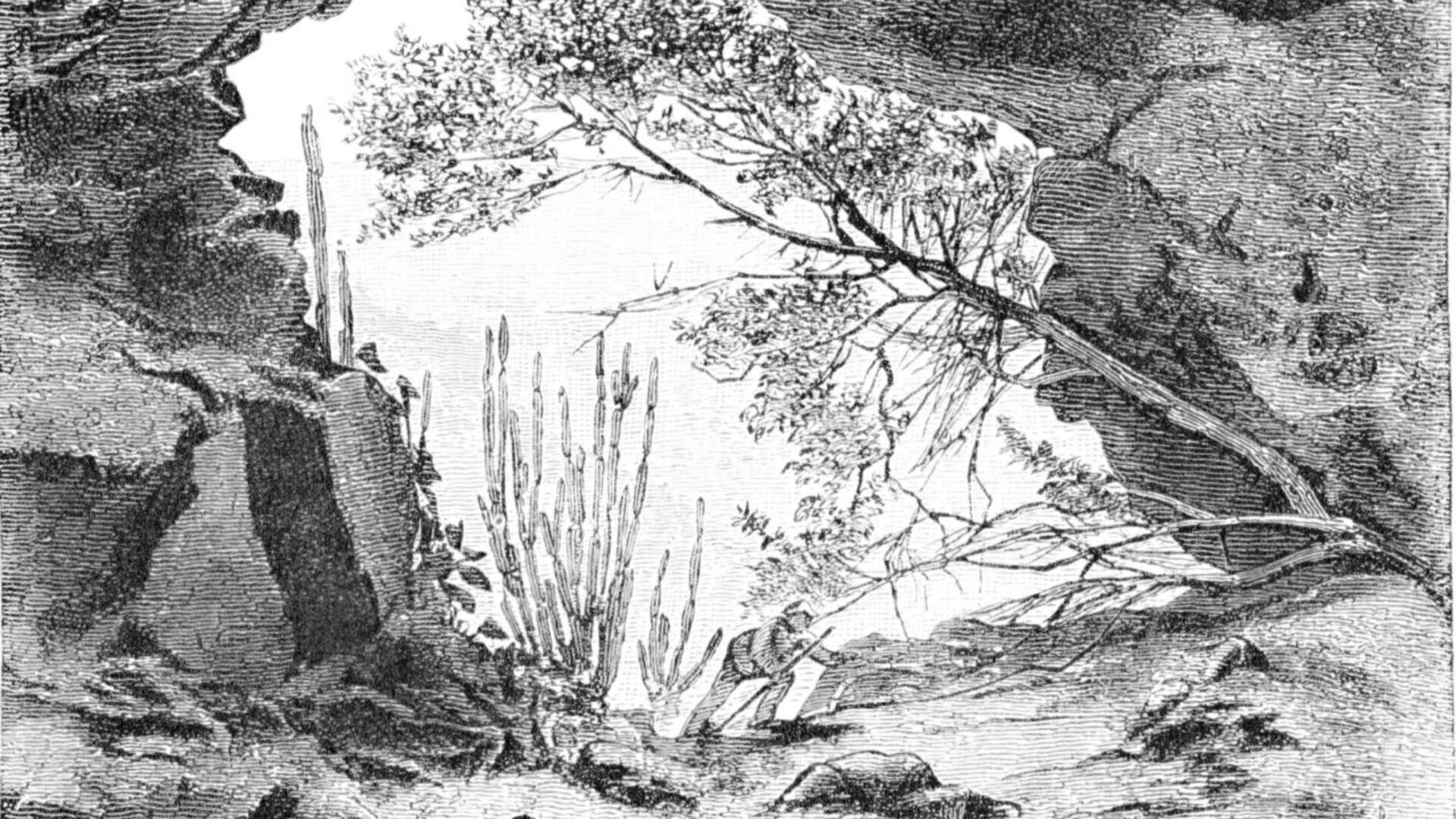
When media outlets report on a 25,000-year-old discovery in an Australian cave, the narrative is instantly predictable. Headlines proclaim the discovery of ancient spiritual traditions, sacred rites, and mystical ceremonies. But this instinct to romanticize the deep past tells us far more about modern cultural anxieties than it does about Ice Age survival strategies.
We are projecting our own obsession with structured religion and institutional symbolism onto people whose primary daily metric was raw, unvarnished survival.
When you look at the actual data from Late Pleistocene sites across First Nations Australia, a starkly different reality emerges. The artifacts being framed as esoteric sacred objects were almost certainly pragmatic, highly functional tools designed for environmental management, spatial navigation, and material science. By turning every ancient innovation into a church service, mainstream media and institutional academics miss the real story: Pleistocene Australians were master engineers, not mystic caricatures.
Pragmatism Over Piety: The Functional Reality
Consider the physical reality of living in arid and semi-arid Australia during the Last Glacial Maximum. Temperatures plummeted. Water sources shrank. Ecosystems shifted rapidly.
In this environment, energy expenditure was tightly calculated. Spending days processing pigments, carving dense hardwoods, or modifying cave structures purely for abstract metaphysical theater—without a tangible utility—would be an evolutionary liability.
- Pigment Processing: Yellow and red ochre are routinely categorized as spiritual body paint. Yet, ochre is one of the most effective natural adhesives, UV protectants, hide curers, and insect repellents known to early material science.
- Fire Traces and Hearth Structures: Labeled as ceremonial bonfires, controlled thermal structures were vital for heat-treating silcrete stone to make superior cutting tools and managing local game populations.
- Arranged Stones and Spatial Markings: Frame-shifted from "sacred labyrinths" to what they actually were: functional mapping tools, territorial boundary markers, and animal trap architecture.
Traditional Narrative:
[Artifact Discovered] -> [Unknown Function] -> [Default Assumption: Religious Ritual]

Functional Reality:
[Artifact Discovered] -> [Analyze Environmental Stressors] -> [Pragmatic Engineering Solution]
I have spent years analyzing how modern industries misinterpret complex systems because they insist on applying comfortable, contemporary frameworks to raw data. Tech companies do it with legacy code. Historians do it with deep time. When you strip away the romantic lens, the 25,000-year-old traces in Australian caves reveal an intense focus on functional efficiency.
The Danger of the Noble Savage Trope
There is an unintended condescension in reducing ancient First Nations technology to mere spiritual impulse.
When mainstream coverage insists on viewing every ancient site through a mystical lens, it strips these early populations of their technical intellect. It implies that while ancient populations in other parts of the world were busy mastering metallurgy, architecture, and empirical observation, indigenous Australians were merely chanting in caves.
This is fundamentally incorrect.
The empirical knowledge required to maintain continuous human occupation of the Australian continent through extreme climatic shifts demands rigorous scientific methodology. It requires:
- Systematic Observation: Tracking subtle ecological indicators over generations.
- Material Science: Understanding how different stone types react to specific thermal thresholds.
- Botany and Pharmacology: Processing toxic flora into edible food and medicinal treatments.
To categorize the physical artifacts of this deep scientific knowledge as "ritualistic" minimizes the rigorous empirical testing that made human survival possible over tens of thousands of years.
Dismantling the Consensus: Questions We Get Wrong
Were cave sites used exclusively for sacred ceremonies?
No. Caves provided stable microclimates, protection from extreme weather, and natural vantage points for tracking game. While social gatherings certainly occurred, viewing these spaces as the ancient equivalent of cathedrals ignores their primary function as critical survival hubs and operational bases.
Does rejecting the "ritual" label diminish Indigenous culture?
It does the exact opposite. Elevating the technical, scientific, and engineering accomplishments of ancient Australians provides a far more accurate and respectful picture of human adaptability. Recognizing a tool as a sophisticated piece of functional technology honors the intellectual capacity of its creator far more than labeling it a ceremonial trinket.
The High Cost of Bad Archeological Frameworks
The problem with defaulting to the "ritual" explanation is that it halts further scientific inquiry. Once an artifact is designated as sacred or ceremonial, researchers stop looking for its functional application.
"When you assume an unknown object served a spiritual purpose, you stop asking how it worked."
This intellectual shortcut has led to decades of misclassified artifacts. Functional hafting resins are described as ceremonial pastes. Specialized hunting blinds are cataloged as sacred circles. Thermal processing pits are labeled as altars.
There is a drawback to taking a strictly functionalist view, of course. Human beings are inherently symbolic creatures. Art, song, and narrative undoubtedly existed 25,000 years ago, just as they do today. But symbolism and functionality were rarely separated in the ancient world. The songlines that stored deep cultural memory were also highly detailed topographic maps. The stories told around fires contained critical data about resource management and weather patterns.
Symbolism was the memory storage device; the data inside that storage device was pure, practical survival.
Look at the Hardware, Stop Fetishizing the Software
If we want to actually understand the depth of human history in Australia, we need to stop viewing ancient history through the lens of modern spiritual romanticism.
Stop looking for altars in every cave. Stop treating every carved stick like a wand. Start looking at the engineering tolerances. Analyze the thermal dynamics of the hearths. Test the chemical properties of the residues.
Ancient Australians did not survive 25,000 years of brutal climate shifts through mystical hand-waving. They survived because they were the most sophisticated material scientists and environmental engineers on the planet. Start treating them like it.


