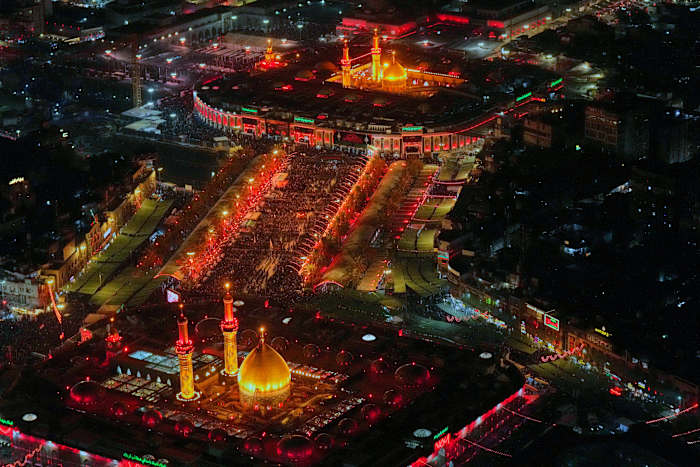
Millions of black-clad worshippers are walking the dusty roads to Karbala right now. They're marching under a scorching sun, moving toward the golden domes of the shrine of Imam Hussein. It's the Arbaeen pilgrimage, and it remains one of the largest mass gatherings on earth. Yet, this year feels entirely different.
Regional friction isn't just a background hum anymore. It's a loud, pressing reality shaping every single mile of the journey.
If you look past the sheer scale of the crowds, you'll see a nation caught in a severe geopolitical squeeze. Let's talk about what's actually happening on the ground in Iraq during Arbaeen, and why the stakes are higher than standard headlines suggest.
The Numbers Behind the World's Biggest March
Official reports from the Iraqi armed forces' operations command paint a staggering picture. Over 4.88 million foreign pilgrims crossed into Iraq since the start of Muharram. That figure doesn't even count the millions of domestic Iraqi participants pouring out of Baghdad, Najaf, and Basra.
Imam Hussein's martyrdom back in 680 A.D. sparked a tradition that refuses to fade. People think statistics capture this event. They don't. You have to picture endless tent cities, known as mowakeb, run by volunteers offering free food, medical care, and places to sleep along every major highway.
However, the demographic footprint of these crowds has shifted.
A Noticeable Absence of Global Diversity
Walk the Najaf-Karbala highway today, and you'll spot a striking visual dominance. Iranian flags flutter everywhere. High-profile diplomatic visits, like Iranian Foreign Minister Abbas Araghchi traveling through Najaf and Karbala, underline the close ties between Tehran and Baghdad.
At the same time, regular pilgrims from Europe, North Africa, and other Arab nations are noticeably fewer. People are staying home. Ongoing US-Iran flashpoints, combined with broader regional instabilities, have choked off international travel corridors for many believers outside the immediate neighborhood.
Aqeel al-Rubaie, a 45-year-old pilgrim heading toward Karbala from Baghdad, put it bluntly: the war and unfolding regional events have heavily impacted non-regional turnout. When security fears spike, travel drops.
Iraq Caught in the Middle of US-Iran Escalation
Baghdad is walking a tightrope. It's a delicate diplomatic act that few governments could pull off.
On one side, Iraq maintains a vital security and economic relationship with Washington. On the other, its geographic proximity, religious ties, and political alignments bind it closely to Iran. When tensions flare between the US and Iran, Iraq invariably finds itself in the crosshairs.
This year's pilgrimage unfolds directly under the shadow of those fears. The closure of vital shipping lanes like the Strait of Hormuz has crippled local supply chains and battered the economy. With over 90% of state revenue reliant on crude oil exports, any disruption hits ordinary citizens immediately. You can feel that economic anxiety in the air, even among the chants of devotion.
The Militia Problem Inside Baghdad
Economic pain isn't the only headache for the Iraqi government. Baghdad is wrestling with a massive domestic challenge: reining in armed factions.
Many powerful militias operating inside Iraq maintain deep ties to Iran. The state wants to consolidate its monopoly on force and push for disarmament initiatives. Militia groups aren't stepping down quietly. For instance, Kataib Hezbollah released a sharp statement right as Arbaeen kicked off, flatly rejecting disarmament calls and vowing to keep its resistance arsenal.
This creates a tense domestic backdrop. The government has to deploy heavy security to protect millions of pilgrims while simultaneously managing heavily armed domestic factions that answer to alternate chains of command.
Echoes Across the Border in Tehran
Meanwhile, the ripples of these tensions extend far beyond Iraqi borders.
In Iran, millions who couldn't secure travel or afford the cross-border trek turned out for massive domestic solidarity marches. In Tehran, black-clad crowds flooded a twenty-kilometer route toward local shrines. Those gatherings carried a distinct political edge.
Chants called loudly for retaliation following high-profile leadership casualties from recent US-Israeli strikes. Demonstrators trampled foreign flags, turning a traditional day of mourning into a visible display of geopolitical defiance.
The contrast is clear. In Karbala, the focus remains on endurance, community service, and spiritual endurance. In Tehran and other regional hubs, the focus tilts sharply toward political resistance.
Keep an eye on how Baghdad navigates the post-Arbaeen political fallout. The ability of the Iraqi state to balance foreign pressure, economic survival, and domestic militia control will dictate whether the country can avoid getting pulled into a wider regional conflict.

.png?itok=1mb05mKJ)

