The transition of Apple’s Chief Executive Officer from Tim Cook to John Ternus, effective September 1, 2026, represents the most significant structural recalibration of the company since the passing of Steve Jobs. This is not a mere management change; it is a fundamental shift in corporate DNA. Tim Cook’s tenure defined the era of the Operator-CEO—a period characterized by unprecedented supply chain optimization, massive service expansion, and financial maturation. The appointment of John Ternus, a hardware engineer by trade and pedigree, signals the board’s recognition that Apple’s next decade cannot be won through operations alone. It requires a return to product sovereignty.
The Operator Era: The Cook Legacy
Tim Cook’s fifteen-year run as CEO fundamentally changed what Apple is. When Cook succeeded Jobs, the critical vulnerability of Apple was not product design—it was operational fragility. Cook solved for scale. He institutionalized the supply chain, managed the transition from a hardware-centric company to a hardware-plus-services ecosystem, and achieved a market capitalization that defied traditional valuation models.
The Cook Era was defined by three distinct operational achievements:
- Vertical Integration of Services: Cook transformed Apple from a device-first company into a platform economy. By layering the App Store, iCloud, Apple Music, and Apple Pay over the existing hardware base, he decoupled revenue growth from unit sales velocity.
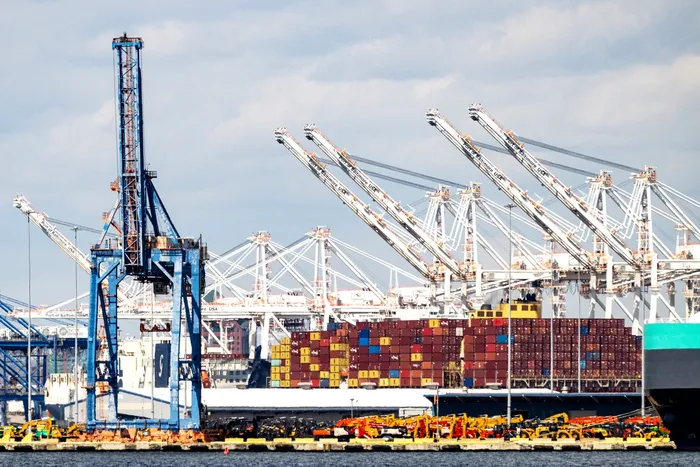
- Supply Chain Hedging: Cook’s mastery of logistics allowed Apple to maintain higher gross margins than competitors even during global shortages. He institutionalized a "just-in-time" methodology that prioritized reliability over raw innovation.
- Institutional Diplomacy: As Executive Chairman, Cook will focus on the external realities he mastered: government relations, antitrust navigation, and global trade policy. This ensures that the transition does not leave the company exposed to geopolitical volatility while the internal leadership shifts focus.
However, the "Operator Model" has a mathematical ceiling. Eventually, the optimization of existing lines reaches a point of diminishing returns. When the focus shifts primarily to managing cash flows and maintaining margins, the radical product iteration that defines Apple’s history becomes harder to justify to shareholders. This is the bottleneck Ternus is hired to break.
The Ternus Variable: Engineering as Strategy
John Ternus does not represent the "Operator" archetype. He represents the "Architect" archetype. His career path—from designing virtual reality headsets to overseeing the entire hardware stack, including the transition to Apple Silicon—places him in the lineage of the product-centric leadership that preceded the Cook era.
Ternus’s ascent signifies a strategic bet on hardware differentiation as the only sustainable moat against the commoditization of AI. While the market has been obsessed with software-level AI (LLMs and generative interfaces), Apple’s challenge is the integration of these models into physical, low-latency, energy-efficient hardware.
This transition is calculated on three specific strategic vectors:
- Hardware-Software Synthesis: Apple’s unique advantage is the control of the entire stack. Ternus, having overseen Mac, iPad, and iPhone hardware, understands the friction points where silicon architecture meets user experience. His mandate is to accelerate the development of proprietary chips that allow on-device processing to outperform cloud-dependent AI.
- Product-Led Growth: Investors should anticipate a pivot away from the services-first narratives of the mid-2020s and toward a renewed focus on hardware cycles. This means the R&D budget is likely to shift toward next-generation form factors, potential new hardware categories, and advanced material science.
- Engineering Accountability: The "Operator" model relies on middle management and quarterly earnings guidance. The "Architect" model relies on product milestones. Ternus is positioned to flatten the decision-making hierarchy in the engineering divisions, removing the layers of bureaucracy that inevitably accumulate in a multi-trillion-dollar firm.
The Board's Calculus: Risk Mitigation
The board’s decision to move Tim Cook to Executive Chairman while elevating Ternus is a classic hedge. If Apple were to replace Cook with a pure product visionary without a bridge to the old guard, the stock market might panic over the potential for operational chaos. By retaining Cook as the public face for geopolitical and regulatory matters, the board creates a protected environment for Ternus.
This structure mitigates three primary risks:
- Regulatory Turbulence: Apple is currently the target of antitrust investigations across multiple jurisdictions. Cook’s continued involvement in public-facing roles provides continuity for regulators who have spent years building rapport with him.
- Cultural Drift: Changing the culture of an organization with over 160,000 employees is a multi-year endeavor. The transition period, running through the summer of 2026, allows Ternus to inherit the operational machinery while Cook maintains the institutional culture.
- Investor Confidence: A sudden, clean break could lead to volatility. The "Chairman" buffer creates a sense of stability, signaling that the change is an evolution, not a rupture.
The Competitive Landscape
Apple currently faces a unique trilemma. First, the saturation of the smartphone market in developed economies limits unit growth. Second, the rising cost of R&D for proprietary silicon is squeezing margins. Third, the "AI-first" competition from Google and Meta places pressure on software services.
Ternus’s success will be measured by one metric: the re-acceleration of the hardware product cycle. If the iPhone and Mac remain iterative rather than revolutionary, the market will view the CEO transition as a failure. If, however, Ternus leverages his background to lead a breakthrough in hardware-software convergence—particularly in areas like spatial computing or autonomous edge processing—he will have justified the board’s choice.
Tactical Implications for Market Positioning
The transition necessitates a change in how analysts and shareholders value the company.
- Devaluation of Service Growth: If the company slows down the aggressive expansion of services to focus on hardware, revenue growth may stabilize or compress in the short term. Investors must distinguish between this intentional pivot and a loss of market share.
- Premiumization of Hardware: Expect a renewed push into the ultra-premium segment. Ternus is an engineer who understands the cost-benefit analysis of high-end components. He is likely to push the envelope on price points for hardware that delivers superior, local-compute AI capabilities.
- Structural Efficiency: Ternus is expected to consolidate leadership. The overlap in design and engineering teams that expanded under the operational scale of the Cook era will likely be pruned. Streamlining the product pipeline is essential to regain the "velocity of innovation" that Apple historically possessed.
The pivot from Cook to Ternus is the end of the optimization phase. Apple is betting that in a world of AI-driven ubiquity, the winner will not be the company with the best software features, but the company with the best integrated hardware stack. The "Operator" kept the machine running. The "Architect" must now decide what the machine builds next.
The strategic imperative for Ternus is to dismantle the internal complacency that comes with dominating a mature market. He has the technical depth to understand where the product is failing, but he must demonstrate the executive ruthlessness to cut non-performing projects that do not contribute to the core Apple experience. The market will offer a grace period for the transition, but the fundamental challenge remains: Apple must prove that it can still define the next physical interaction with technology, not just manage the one that already exists.