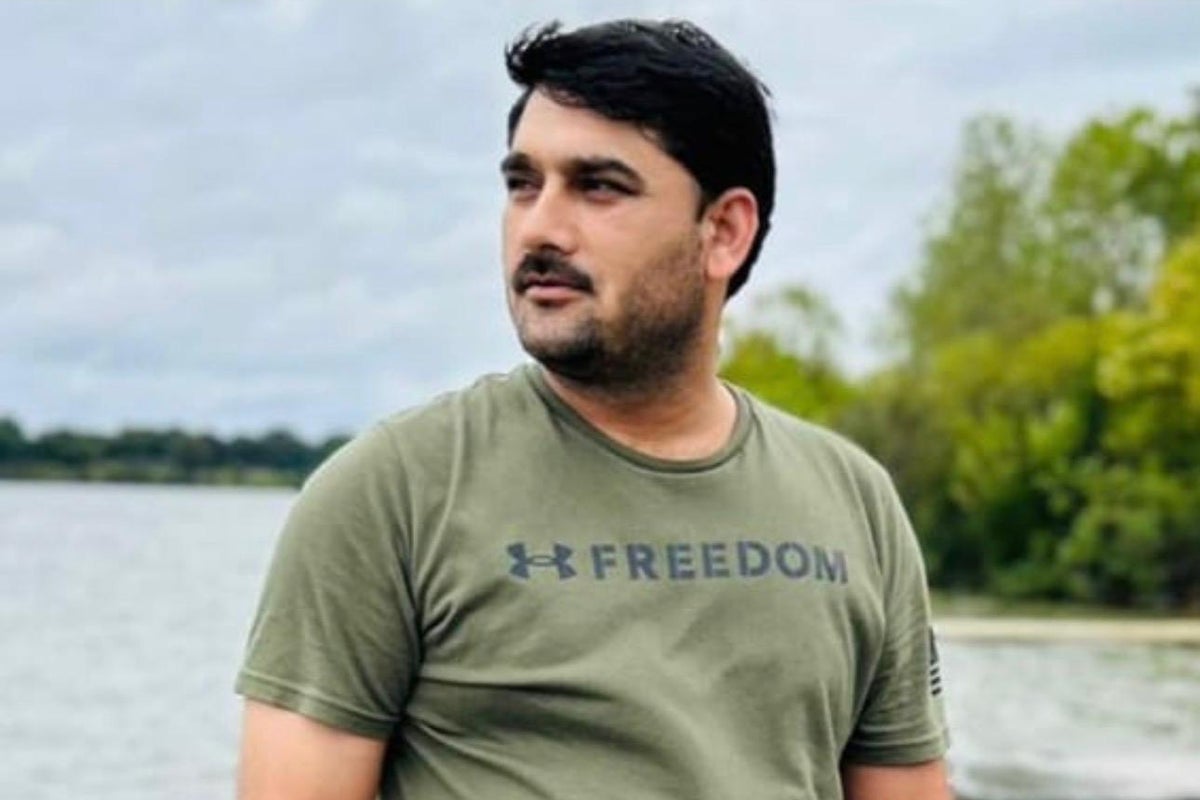
A decorated combat veteran survives a decade of brutal warfare fighting alongside American Special Forces in Afghanistan. He makes it through the chaotic 2021 Kabul airlift, builds a quiet life in Texas driving trucks, and raises six children. Then, he gets picked up by Immigration and Customs Enforcement on his driveway. Within twenty-four hours, he is dead.
That is the nightmare reality of Mohammad Nazeer Paktiawal.
For months, federal and local authorities kept quiet about exactly how this 41-year-old father died in a Dallas hospital. Now, his official death certificate has finally surfaced. The state of Texas calls his death an accident. They blame a sudden, severe allergic reaction to an unidentified substance. But the disturbing details trailing this case point to massive systemic negligence, an alleged refusal of basic medical care, and a frantic attempt to keep the full truth under wraps.
This case is not just a tragedy. It highlights a broken immigration enforcement system that treats America's former wartime partners as completely disposable.
A Terrifying Timeline of a Twenty-Four Hour Detention
To understand the sheer horror of what happened to Paktiawal, you have to look closely at the timeline. It was March 13, 2026. Paktiawal was at his home in Richardson, Texas, doing what any dad does in the morning. He was getting his kids ready for school. Suddenly, ICE agents swarmed his property. They detained him on the spot, citing unresolved, unconvicted state charges related to food stamp fraud and theft. Paktiawal had never been found guilty of these offenses, but the agency targeted him anyway.
During the arrest, his wife noticed the rising tension and panic. She knew her husband suffered from severe asthma. She grabbed his prescription inhaler and begged the arresting ICE agents to take it with him.
They refused. They turned her away and drove him off to the ICE field office in Dallas.
According to a brief one-page report later released by the agency, staff screened Paktiawal upon arrival. They claimed he denied having any underlying medical conditions or severe allergies. Given that his wife had literally just tried to hand them his asthma medication, this claim strains all credibility.
Within hours of sitting in an ICE holding room, Paktiawal began suffocating. He complained of severe chest pain and a sudden shortness of breath. Realizing they had a medical crisis on their hands, detention staff transported him to Parkland Memorial Hospital.
The next morning, things went from bad to fatal. While Paktiawal tried to eat breakfast in his hospital bed, medical personnel noticed his tongue was swelling rapidly. His airway was closing. Doctors recognized the signs of severe anaphylaxis and administered an emergency dose of epinephrine. It did not work. Within forty minutes, his heart stopped. Life-saving measures failed completely, and he was pronounced dead.
One day in custody was all it took to end the life of a man who evaded the Taliban for ten years.
The Toxicological Mystery and the Deflection of Blame
The Dallas County Medical Examiner’s Office conducted the autopsy, and the resulting death certificate lists the primary cause of death as anaphylaxis complicating acute asthma exacerbation. Essentially, an intense allergic reaction triggered a massive asthma attack that choked him to death.
But things get incredibly murky when you look at the secondary factors listed on the document. The medical examiner decided to include the toxic effects of methamphetamine, alongside heart disease and cigarette smoking, as contributing elements.
This inclusion immediately set off alarm bells for Paktiawal’s family and colleagues. Everyone who knew him insisted he never touched methamphetamine. He was a devout, hard-working family man who labored long hours at a local bakery, a market, and behind the wheel of a truck to put food on the table for his six young kids. He did not fit the profile of a meth user.
Desperate for clear answers, the family hired an independent medical examiner to perform a private, second autopsy. That effort ran into a brick wall. By the time the private pathologist got access to the body, no blood remained for independent toxicological testing. The state had used it all up or disposed of it. The family could not verify or disprove the government's claim about the drug.
Even if you take the government's toxicology report at face value, it raises an incredibly damning question. The death certificate explicitly states that the fatal injury occurred from an adverse drug reaction to an unidentified substance. It notes that the date of this injury was March 12, 2026.
That is the day before ICE agents arrested him.
If Paktiawal was already suffering from a severe, adverse reaction to an unknown substance the day before his arrest, how did ICE’s medical screening miss it entirely? Why did they ignore his wife's pleas regarding his respiratory health? If a man is actively dying from a toxic drug reaction or a severe allergic event, a competent medical check should catch it. Instead, he was shoved into a holding cell until his lungs failed.
The Information Blockade in Texas
Right now, getting the full autopsy report out of Texas authorities is proving next to impossible. Dallas County officials are actively blocking the public release of the document. They claim that making the autopsy public would interfere with an ongoing federal investigation into the death.
Advocacy groups and lawmakers are not buying it. Shawn VanDiver, the president of AfghanEvac, a prominent group dedicated to helping resettled Afghan allies, has publicly blasted the government’s lack of transparency. He noted that the family has an absolute right to know what happened to their father and husband. He wants to know what specific substance caused the anaphylaxis, how it entered Paktiawal's system, and why the paperwork contains so many contradictions.
VanDiver openly said that the whole situation looks like a cover-up.
He is not alone. Senator Richard Blumenthal, a Democrat from Connecticut, joined the fight, calling the secrecy unacceptable. Blumenthal stated he would directly pressure the Department of Homeland Security to force the release of the full autopsy.
Texas has a bad track record with this kind of detention transparency. The state’s Attorney General office previously allowed another county to lock down the autopsy report of a Vietnamese migrant who died under highly questionable circumstances in ICE custody back in July 2025. It seems to be a standard playbook, hide the medical details behind the shield of a pending investigation, and wait for the news cycle to move on.
The Dangerous Surge in ICE Custody Deaths
Paktiawal's tragic end is not an isolated incident. It is part of a broader, deeply concerning trend in American immigration enforcement. His death is tracked as part of a massive spike in detention fatalities during the current administration's second term.
Over fifty individuals have died in ICE custody during this specific presidential term alone. Most of those deaths have been quietly brushed aside by officials, blamed on pre-existing natural causes or tragic suicides. Paktiawal’s case stands out because it is the very first one officially ruled an accident.
When an agency locks someone in a cell, they take on full constitutional responsibility for that person's health and safety. You cannot strip someone of their freedom and then refuse them their prescription inhaler. You cannot skip thorough medical screenings because you have already labeled the detainee a criminal.
The treatment of Afghan evacuees makes this even worse. When the United States pulled out of Kabul in 2021, thousands of local allies who served as interpreters, scouts, and special forces operators were brought to America. They were promised safety. Instead, many were dumped into a chaotic immigration system with zero permanent legal status.
Paktiawal entered the country legally. He had a formal asylum application pending with the government. Under normal circumstances, someone with a pending asylum claim should not be aggressively targeted for deportation, especially over unconvicted state-level allegations. Yet, immigration enforcement prioritized hunting down a man who protected American soldiers overseas.
What Needs to Happen Next
We cannot allow Paktiawal's death to be forgotten or buried under bureaucratic excuses. True accountability requires immediate, targeted action from federal lawmakers and independent watchdogs.
First, the Department of Homeland Security Office of Inspector General must launch an immediate investigation into the Dallas ICE field office. We need to know who the specific officers were who refused to accept Paktiawal's asthma inhaler from his wife. Those individuals need to be named, disciplined, and held legally accountable for medical neglect.
Second, the public and Congress must demand that Texas authorities break the information blockade. The Dallas County Medical Examiner must release the full, unredacted autopsy report. If there is no cover-up, there is absolutely no reason to hide the medical findings from a grieving family.
Finally, if you or someone you know is navigating the complex immigration system while dealing with medical conditions, you must protect yourself. Never rely on ICE to do the right thing during an arrest.
Always keep copies of all medical prescriptions, diagnoses, and doctor letters outside of your home with a trusted legal representative or family member. If an enforcement action occurs, your attorney needs to immediately fax and email those medical records directly to the field office director and the facility's medical administrator. Create an undeniable paper trail. If the agency ignores a documented medical crisis, they lose their ability to hide behind the excuse of an accidental death.
Mohammad Nazeer Paktiawal survived the battlefields of Afghanistan only to die suffocating in a Texas hospital while under American guard. His family deserves the unvarnished truth, and the system that failed him needs a radical overhaul.