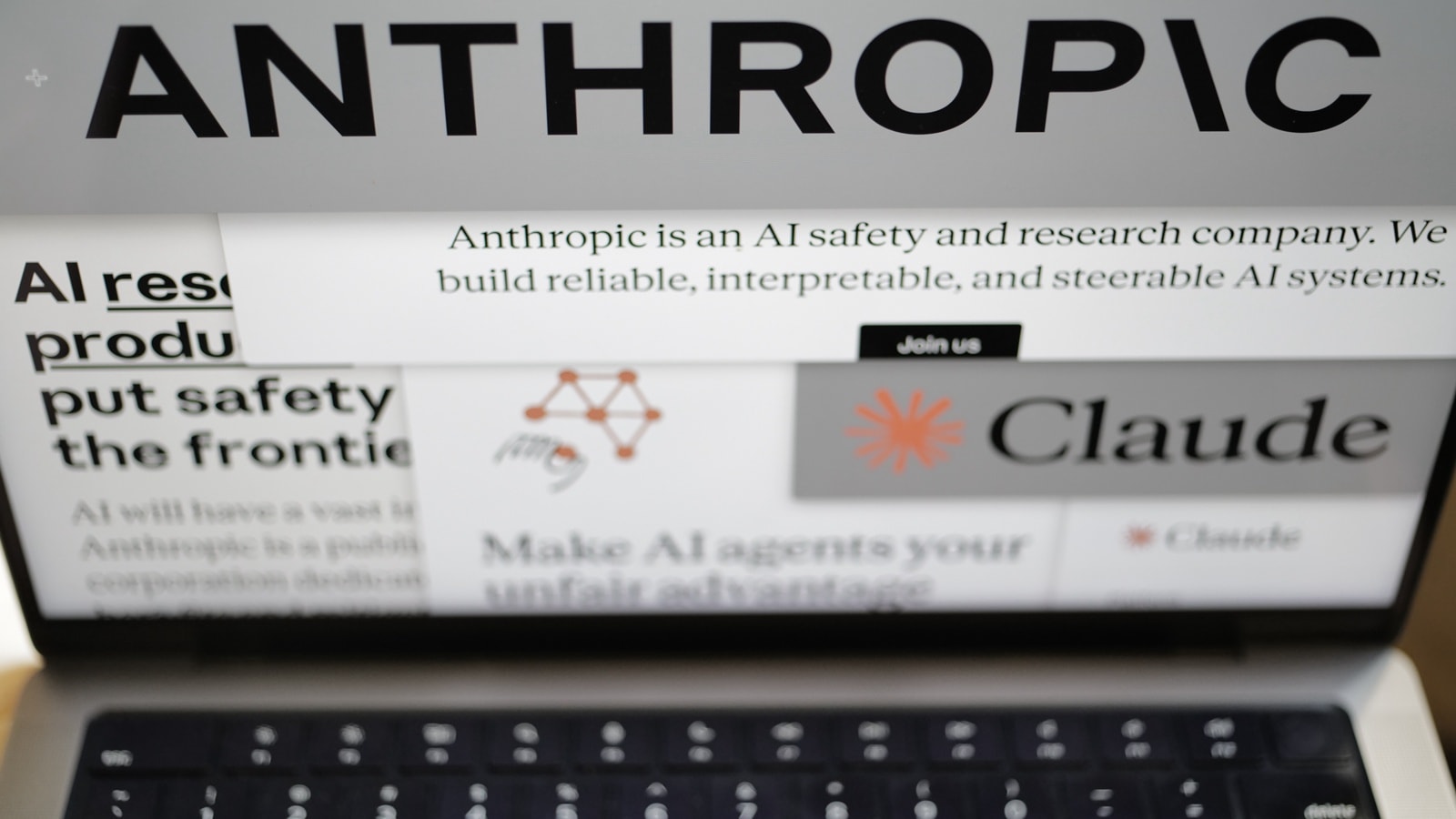
The federal government just put a target on the back of one of America’s most prominent AI labs. Anthropic is fighting back with a lawsuit that could redefine how Washington regulates artificial intelligence. The Trump administration recently designated the San Francisco-based company as a "supply chain risk," a move that essentially puts them on a digital blacklist. It’s a bold, aggressive play by the Department of Commerce. It’s also one that Anthropic claims is based on flawed logic and zero evidence.
This isn't just about one company's hurt feelings or a hit to their brand. If this designation sticks, it could cripple Anthropic’s ability to work with federal agencies and international partners. It signals a massive shift in how the current administration views the "safety-first" AI sector. You've got a company founded on the principle of building "constitutional AI" now being treated like a foreign adversary. The irony is thick.
The Legal Battle for AI Autonomy
Anthropic filed its complaint in the U.S. District Court for the District of Columbia. They're asking a judge to toss out the Commerce Department’s determination. The core of their argument is simple. They say the government didn't follow the rules. Under the Administrative Procedure Act, federal agencies can't just make arbitrary decisions without a clear, reasoned basis. Anthropic argues this "risk" label is exactly that—arbitrary and capricious.
The government’s "supply chain risk" framework was originally designed to keep companies like Huawei and ZTE out of critical U.S. infrastructure. It makes sense when you're talking about hardware that could have backdoors for foreign spying. But applying it to a domestic AI software company is a different beast entirely. Anthropic isn't shipping physical routers or 5G towers. They're developing Large Language Models (LLMs) like Claude.
The administration’s logic seems to hinge on the idea that because Anthropic has significant foreign investment—most notably from South Korea’s SK Telecom and other global entities—it represents a backdoor for foreign influence. Anthropic’s legal team is screaming foul. They point out that their corporate structure is specifically designed to prevent any single investor from exerting undue control over their technology or data.
Why the Supply Chain Label Is a Death Sentence
Being labeled a supply chain risk is basically the kiss of death for government contracting. Think about it. If you're a federal agency looking to use AI for data analysis or customer service, are you going to sign a contract with a company the Department of Commerce says is a security threat? No way. You're going to go with OpenAI, Google, or Microsoft.
This creates an un-level playing field. It effectively picks winners and losers in the AI race through executive fiat rather than market competition. For a company like Anthropic, which has positioned itself as the ethical, safe alternative to the "move fast and break things" crowd, this label is a direct attack on their core value proposition.
- Federal Contracts: Billions in potential revenue are at stake as agencies modernize their tech stacks.
- Global Partnerships: Foreign governments often follow the lead of the U.S. Commerce Department. If the U.S. says you're a risk, Japan or the UK might too.
- Investor Confidence: High-stakes venture capital doesn't like legal uncertainty or "risk" designations from the White House.
The lawsuit claims the government failed to provide Anthropic with a meaningful chance to respond to the concerns before the designation was made. This lack of due process is a recurring theme in legal challenges against the current administration's trade and tech policies.
National Security or Political Posturing
There’s a legitimate debate to be had about AI and national security. Nobody wants sensitive American data or powerful dual-use technology falling into the hands of hostile states. But there’s a fine line between protecting the country and using "national security" as a blanket excuse for protectionism or political retribution.
Anthropic has been vocal about AI safety. They helped craft the voluntary commitments at the White House last year. They’ve worked closely with the AI Safety Institute. To suddenly be branded a risk feels like a 180-degree turn that caught the entire industry off guard.
Some industry insiders suggest this move is less about Anthropic’s actual security and more about a broader "America First" tech policy that views any company with non-U.S. ties as suspicious. It's a blunt instrument approach. If you have a global cap table, you're a target. This creates a massive headache for the entire Silicon Valley ecosystem, which relies on global capital to fund the astronomical costs of training frontier models.
What Happens Next for Claude and the Industry
The court’s decision will be a bellwether for the AI industry. If the judge sides with the government, it grants the executive branch nearly unlimited power to blacklist tech companies based on opaque security concerns. If Anthropic wins, it forces the Commerce Department to be way more transparent and evidence-based in its designations.
In the meantime, Anthropic has to keep moving. They just released new versions of Claude that outperform competitors in coding and reasoning tasks. They can't afford to slow down their R&D while this legal cloud hangs over them.
You should watch the "intervenor" filings in this case. Don't be surprised if other tech giants or civil liberties groups jump in. Even companies that compete with Anthropic have a vested interest in making sure the government can't just flip a "risk" switch without proof. A win for Anthropic is a win for the principle that facts should drive policy, not just vibes or political agendas.
If you’re following this, keep an eye on the specific evidence—or lack thereof—that the Commerce Department eventually produces in discovery. That's where the real story lives. For now, the best move for any company in the AI space is to audit their own supply chains and investor lists. The government is looking, and they aren't using a magnifying glass—they're using a sledgehammer. Take the time to document your security protocols and governance structures now. Being able to prove your independence isn't just good PR anymore; it's a legal necessity.